Healthy Pool Salts: What They Do and Don't Do
30 September 2026 · 15 min read
What if “healthy pool salt” changes how the water feels but doesn’t remove the need to sanitise it? The label may suggest a gentler swim, yet healthy pool salts can contain different minerals and serve a different role from standard sodium chloride pool salt. Neither the word “healthy” nor a mineral blend alone tells you whether the water is safe to swim in.
It’s reasonable to want clear answers before adding anything to your pool, particularly when a product makes claims about skin, eyes or general health. Mineral systems still rely on proper water care, and claims about benefits to the body shouldn’t be treated as established medical outcomes.
This guide explains the differences between pool salt and mineral products, what minerals may change about pool water, and what they can’t promise. It also shows what to check on a product label, how to consider chlorinator compatibility and pool volume, and why the correct dose matters. Use it to assess health claims without confusing them with sanitation requirements, and to choose and use pool minerals responsibly.
Key Takeaways
- “Healthy pool salts” is a broad marketing phrase, not a guarantee of health benefits. Check the ingredients and evidence behind any claim.
- Compare conventional pool salt, magnesium minerals and branded mineral systems by their stated ingredients, pool compatibility and dosing instructions.
- Before adding minerals, identify your pool system, confirm the water volume and follow the product label. The right dose depends on the product and your pool’s conditions.
- Use a pool-volume dosing calculator to estimate how much product you may need, then check the result against the current product instructions.
- Magnexa supplies magnesium pool minerals in 10 kg and 25 kg bags, plus starter packs, with delivery limited to South East Queensland areas including Brisbane, Moreton Bay, Sunshine Coast, Ipswich, Logan, Redlands and the Gold Coast.
What does healthy pool salt mean for your pool water?
“Healthy pool salts” is a broad market phrase, not a regulated health category with one standard formulation. It may describe conventional pool salt or mineral blends marketed for swimming pools. The phrase alone doesn’t tell you what’s in the bag, how the product is meant to be used, or whether it suits your pool system.
Check the label for ingredients, intended use, compatibility guidance and dosage instructions. Don’t assume that every product described as healthy contains the same minerals or works with the same chlorinator. A change in how water feels is also different from a proven medical benefit. Assess claims about skin, eyes or general wellbeing separately from the product’s practical role in pool water.
Is healthy pool salt a specific type of pool product?
No single formulation is implied by the phrase. A product might contain sodium chloride, magnesium-containing minerals or a blend. Check the label to see what’s in the product and how it’s intended to be used with your pool setup. If the ingredients, directions or compatibility information are unclear, confirm them with the supplier or a qualified pool-care professional before adding it.
What makes pool water suitable for swimming?
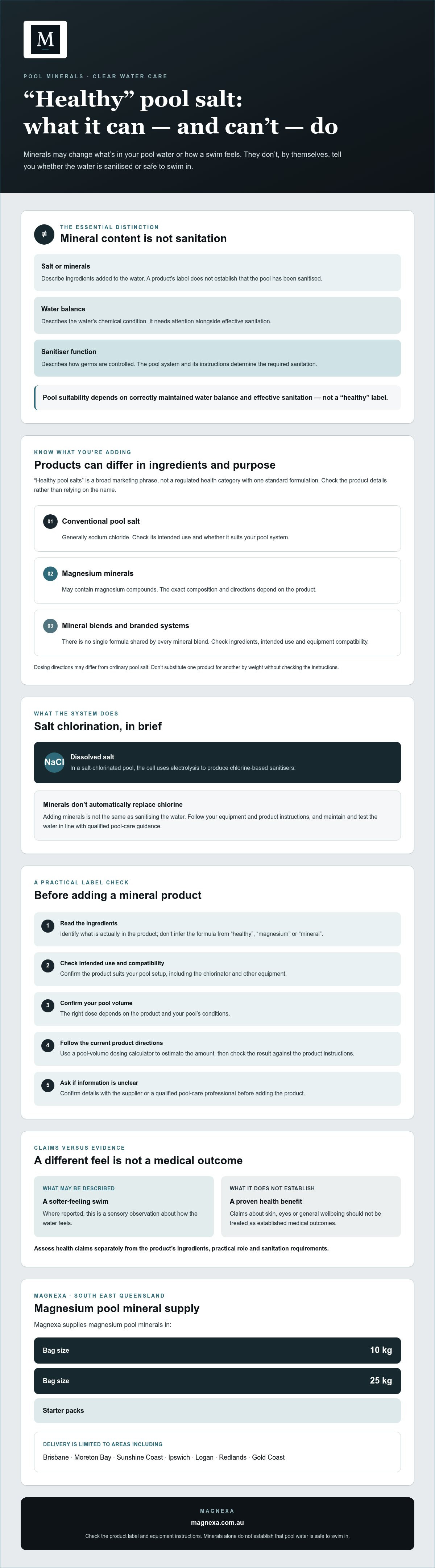
Water balance and effective sanitation both need attention. Salt and minerals are ingredients added to the water; they don’t, by themselves, prove it has been sanitised. In a salt-chlorinated pool, the cell uses electrolysis to produce chlorine-based sanitisers from dissolved salt. Read more about how salt water chlorination works. Adding minerals doesn’t automatically replace chlorine or another suitable sanitiser. The pool system and its instructions determine what sanitation is required.
Salt or minerals alone don’t establish that pool water is safe to swim in. Suitability depends on correctly maintained water balance and effective sanitation, not on a product’s “healthy” label. Follow current product and equipment instructions, and seek qualified pool-care advice if you’re unsure how a mineral product fits your setup. A softer-feeling swim, where reported, is a sensory observation, not evidence of a medical outcome.
How pool salts, magnesium minerals and sanitation work together
Pool salt and magnesium minerals describe ingredients added to water, not the method used to sanitise it. Conventional pool salt is generally sodium chloride. Mineral products may contain magnesium compounds or other ingredients, but there’s no single formula shared by every product labelled as a mineral blend.
Read the product label rather than guessing from words such as “magnesium” or “mineral”. Check the full ingredient list, intended use, recommended dose and compatibility information. Dosing directions may differ from those for ordinary pool salt, so don’t substitute one product for another by weight without checking the instructions.
Are pool minerals the same as pool salt?
No. The names may be used loosely in marketing, but the ingredients can differ. A bag labelled pool salt may identify sodium chloride, while a mineral product may list magnesium-containing ingredients or a blend. The exact composition and intended use depend on the product. Before adding it, check that it suits your pool and existing equipment, including the chlorinator. If the label doesn’t answer that, ask the supplier or seek qualified pool-care advice.
Do magnesium minerals replace chlorine in a pool?
Don’t assume they do. Adding minerals is not the same as sanitising the water. A salt chlorinator uses dissolved salt and electrolysis to produce chlorine-based sanitiser, with the details depending on the equipment and system. Other sanitising methods also have their own operating requirements. Follow the instructions for your pool equipment and the mineral product, and keep testing and maintaining the water in line with qualified pool-care guidance.
Mineral content describes what’s in the water; water balance describes its chemical condition; sanitiser function describes how germs are controlled. These are related parts of pool care, but one doesn’t guarantee the others. Consider product directions, equipment guidance and water test results together when working out how they apply to your pool.
Considering a mineral product? Review magnesium pool mineral options alongside your equipment instructions, and confirm the product details before dosing.
Healthy pool salts compared: what claims and labels can tell you
The phrase “healthy pool salts” doesn’t identify a standard ingredient or prove a health benefit. Compare the stated contents and directions instead. A useful label tells you what you’re adding, what it’s intended to do and whether it suits your pool equipment.
| Product type | Ingredients to check | Intended use | Compatibility and dosing |
|---|---|---|---|
| Conventional pool salt | Check whether the label identifies sodium chloride and any relevant product specifications. | Typically added to a salt-chlorinated pool as directed for its system. | Confirm suitability for your chlorinator and follow the product and equipment instructions. |
| Magnesium mineral product | Check the listed magnesium-containing ingredients and any other components. Blends vary. | Intended for use in pools where the product and system instructions allow it. | Look for explicit compatibility information and a dose for your pool setup. |
| Branded mineral system | Review the full stated composition rather than relying on the system name. | May be designed to work as part of a particular pool system. | Check whether specified equipment is required and use its current dosing guidance. |
Which pool salt claims should you check carefully?
Words such as “healthy”, “natural” or “soothing” don’t replace ingredient details. Saying water feels softer is a sensory claim; it doesn’t establish a measurable water-care result or a medical benefit. Claims about skin, relaxation or general wellbeing need appropriate supporting evidence. Don’t infer a health outcome from the presence of minerals or from how the water feels after swimming.
What should a useful pool mineral label explain?
Check that the label identifies the product, explains how to apply it and notes any equipment restrictions. It should give a dose for a defined pool volume or a clear method for calculating one. Check whether the directions account for existing water conditions or mineral levels; don’t assume they do. If compatibility or dosing is unclear, ask the supplier or a qualified pool-care professional before use.
Use the manufacturer’s current label, not a dose copied from another product or a general online recommendation. The ingredients, pool volume and existing water conditions all matter. Keep three types of information distinct: sensory descriptions tell you how a swim may feel, testing gives measurable information about water conditions, and health claims require evidence relevant to the claimed outcome. This makes it easier to compare products without treating marketing language as proof.
How to choose and use healthy pool salts without guesswork
A reliable dose starts with the pool, not the bag. Work through these checks before adding minerals:
- Identify the pool system. Note the sanitising method and relevant equipment, including the chlorinator if the pool has one.
- Read the product label. Check the ingredients, intended use, compatibility and application directions.
- Confirm the pool volume. Use a measured or documented volume rather than a rough guess.
- Calculate the amount. Apply the selected product’s dosage instructions and account for current water conditions where the label requires it.
Don’t estimate a dose by comparing bag sizes or copying directions from another product. Don’t mix products or add them together unless their labels say to do so. If the instructions don’t explain how to account for existing mineral levels, check with the supplier or a qualified pool-care professional before dosing.
How do you calculate the amount of pool minerals?
First establish the pool volume, then use the dosage stated for the specific product. Existing mineral levels and other water conditions may affect what’s needed, so volume alone may not give you the full answer. Magnexa’s dosing calculator can help estimate quantities using pool volume. Treat the result as an estimate and check it against the current product instructions before adding anything.
What should you check before changing your pool water?
Confirm that the product is intended for your pool type and compatible with its sanitising system and equipment. Review the equipment guidance and your current water-care routine, especially if you’re changing products or converting an existing pool. If you’re uncertain about the system, water chemistry or compatibility, pause and seek qualified pool-care advice.
Before you buy or add minerals, check:
- Do you know the pool’s sanitising system and volume?
- Does the label list ingredients, intended use and equipment restrictions?
- Are the dose and application steps clear for this product?
- Have you considered existing water conditions and followed the equipment instructions?
If you’ve confirmed your pool volume and want to estimate a product quantity, use Magnexa’s pool dosing calculator and verify the result against the product label.
Where to find magnesium pool minerals in South East Queensland
For pool owners considering healthy pool salts, Magnexa supplies magnesium pool minerals in 10 kg and 25 kg bags, as well as starter packs intended for mineral pool conversions. These are product formats, not recommendations for how much your pool needs. The right quantity depends on pool volume, product instructions and existing water conditions.
Magnexa supplies pool minerals, not pool maintenance, cleaning, equipment installation or repairs. Before choosing a product, check its current label for ingredients, intended use and compatibility with your pool system. For quantity planning, use the dosing calculator with your pool volume, then compare the estimate with the product instructions.
Which South East Queensland areas does Magnexa deliver to?
Delivery is limited to South East Queensland, including:
- Brisbane and Moreton Bay
- Sunshine Coast
- Ipswich, Logan and Redlands
- Gold Coast
These area names don’t confirm delivery to every address within them. Check current coverage for your location before ordering. Magnexa’s delivery area is regional, so don’t assume interstate or nationwide delivery is available.
When is a mineral starter pack or individual bag appropriate?
A starter pack is intended for a mineral pool conversion. Check its contents and directions to confirm it suits your pool and equipment. Individual 10 kg and 25 kg bags offer different package sizes, but neither size determines the correct dose or guarantees one bag will be enough. Use the product instructions and pool-volume dosing calculator to plan the quantity, then verify the result against the current label.
If you’re converting an existing pool, check how to introduce the product alongside your current system and water-care routine. If compatibility or dosing guidance isn’t clear, confirm the details before adding minerals. Let the product label and equipment instructions guide your decision rather than assumptions based on another pool or product.
Before ordering, confirm that the product fits your pool, calculate the required quantity and check delivery coverage for your address in South East Queensland.
Choose pool minerals with clear instructions
Healthy pool salts may change the minerals in your water, but the label doesn’t prove a health benefit or remove the need for effective sanitation. Check what the product contains, whether it suits your pool system, and how its directions account for pool volume and current water conditions.
Magnexa supplies magnesium pool minerals in 10 kg and 25 kg bags, plus starter packs for mineral pool conversions. Its dosing calculator can help estimate the quantity for your pool. Delivery is focused on South East Queensland, including Brisbane, Moreton Bay, the Sunshine Coast, Ipswich, Logan and Redlands, and the Gold Coast. Confirm coverage for your address before ordering.
Ready to compare options and plan the amount you need? Check the mineral options and dosing calculator, then confirm your selection against the current product instructions. With the right information, you can make a measured choice and keep water care on track.
Frequently Asked Questions
What are healthy pool salts?
Healthy pool salts is a broad product phrase, not a guarantee about water quality or health. It may refer to conventional pool salt or mineral products marketed for swimming pools. Formulations vary, so check the label for ingredients, intended use and directions. Pool water still needs appropriate sanitation and routine testing. Adding salt or minerals alone doesn’t show that the water is safe to swim in.
Are magnesium pool minerals healthier than regular pool salt?
Not necessarily. The word “healthier” doesn’t prove a medical or skin benefit. Magnesium mineral products and conventional pool salt can differ in ingredients, intended use and system requirements, so compare the labels before choosing. Some swimmers may notice a difference in water feel, but that’s separate from a health outcome. Whichever product you use, maintain the pool’s required sanitation and water-testing routine.
Do healthy pool salts replace chlorine?
Don’t assume they do. Mineral salts and sanitation don’t automatically serve the same function. Some pool setups use minerals alongside a sanitising system, while equipment requirements vary. Check the current instructions for your product and pool system, and maintain the required sanitiser level. Keep testing the water as directed. Don’t stop an existing sanitation routine based only on wording or claims on a product label.
Can pool minerals help sensitive skin?
Some swimmers may notice a different water feel, but that doesn’t show that minerals treat sensitive skin or a medical condition. Product composition, water balance and individual responses vary. Don’t rely on a pool product to treat skin symptoms. Check the product label and keep the pool water properly maintained. If swimming causes ongoing irritation or discomfort, stop relying on product claims and seek appropriate health advice.
How much magnesium pool salt should I add?
The amount depends on your pool volume, the product’s stated dose and the minerals already in the water. Don’t use a generic dose without checking those details. Establish the pool volume, read the current product instructions and calculate the quantity before adding anything. Magnexa’s dosing calculator can help estimate the amount for your pool. Check the estimate against the product directions before use.
What happens if I add too much pool mineral salt?
The effect depends on the product, the amount added, existing water conditions and pool equipment. An incorrect dose may take the water outside the product’s recommended range or affect compatibility with the system. Don’t add other chemicals to compensate without checking their instructions. Test the water and review the product label. If you’re unsure how to correct the dose, contact a qualified pool-care professional.
Is magnesium pool salt suitable for every pool?
No. Suitability can depend on the sanitising equipment, filtration setup, existing water chemistry and the product’s instructions. Check compatibility before adding minerals, especially if you’re converting an established pool or using equipment with specific requirements. Use only a product intended for swimming pools and follow its directions. If the equipment guidance is unclear, contact the manufacturer or ask a qualified pool professional.
Where can I buy magnesium pool minerals in South East Queensland?
Magnexa supplies magnesium pool minerals in 10 kg and 25 kg bags, plus starter packs for mineral pool conversions. Delivery is focused on South East Queensland, including Brisbane, Moreton Bay, the Sunshine Coast, Ipswich, Logan and Redlands, and the Gold Coast. Check current delivery coverage for your address before ordering. Use the dosing calculator to estimate the quantity, then confirm it against the product instructions.
Frequently Asked Questions
More articles