Healthier Pool Water for Kids: What Parents Need to Know
14 October 2026 · 16 min read
Healthier pool water for kids starts with effective disinfection and good hygiene, not with whether the water contains minerals. A pool that feels soft is not automatically safer for children.
Parents may wonder whether magnesium or other mineral water feels gentler than a conventional chlorinated pool, especially if a child gets irritated eyes or swallows water while swimming. Minerals can affect how pool water feels, but they don’t replace sanitation. A strong chlorine smell can also signal a build-up of chloramines, formed when chlorine reacts with sweat and other organic matter.
This guide separates water comfort from microbiological safety and explains how to reduce contamination around the pool. It covers useful habits before and after swimming, why children should avoid swallowing pool water, and how to assess magnesium minerals without treating them as a health remedy. You’ll also find practical points for comparing mineral and conventional pools.
Key Takeaways
- Healthier pool water for kids depends on effective treatment and suitable water balance. Comfort and cleanliness are separate measures.
- Swimmer hygiene and faecal accidents can affect pool water. Good habits help limit contamination.
- A simple before, during and after swimming routine can help, including using a designated nappy-changing area and washing hands.
- Compare mineral and conventional pools by their treatment purpose, water feel and ongoing sanitation needs.
- Magnesium minerals are a water-feel choice. Use a dosing calculator to estimate the quantity needed for your pool.
What does healthier pool water for kids actually mean?
For parents, healthier pool water for kids means water that is appropriately treated, clean and comfortable to swim in. These qualities are related, but they are not interchangeable. Water can feel pleasant and still need attention, while clear water can still contain germs.
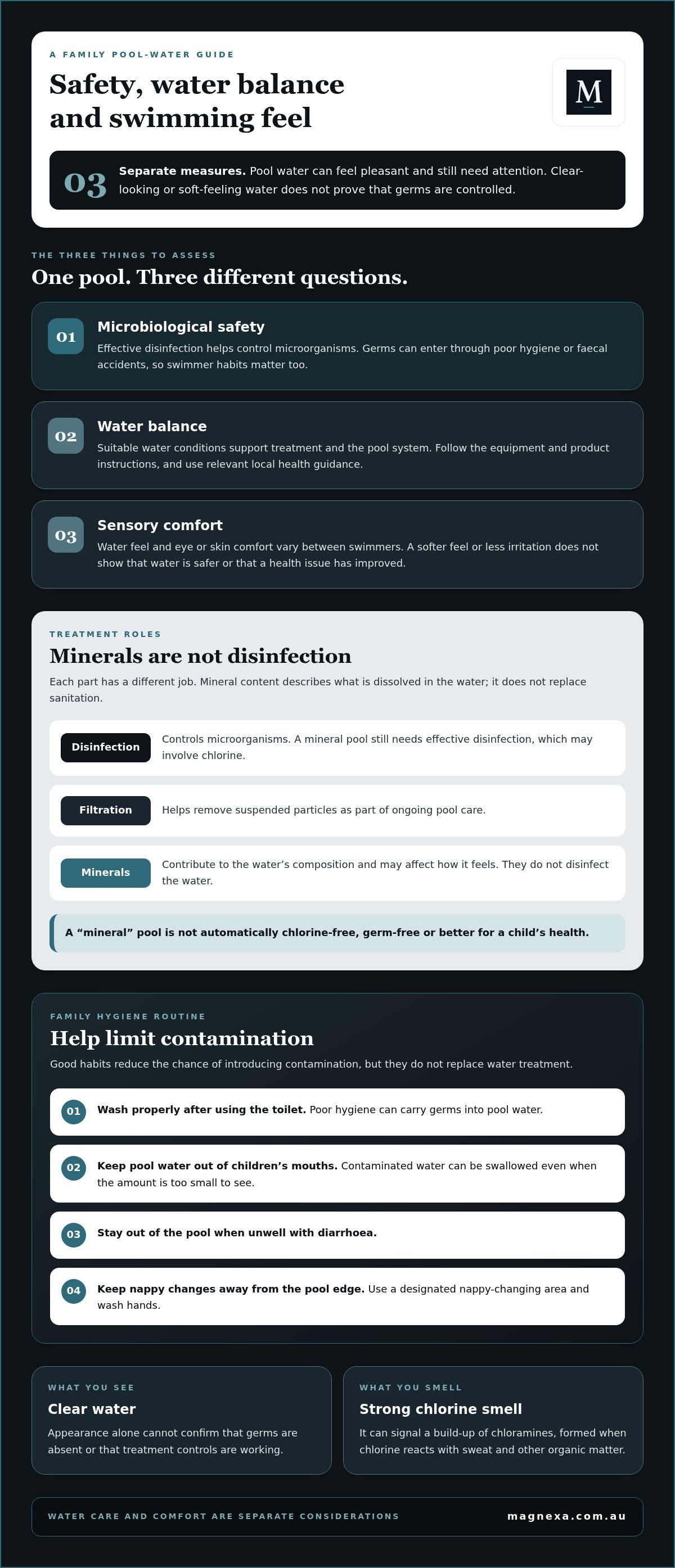
Consider pool water in three ways. Microbiological safety is about controlling germs through effective disinfection. Water balance means keeping treatment and water conditions within suitable ranges so the pool system can work as intended. Sensory comfort is what swimmers notice, including the water’s feel and how their skin or eyes feel during and after a swim. Comfort varies between people and does not prove that water is safe or provide evidence of a health benefit.
Clear-looking water is not a test for germs or a substitute for checking and maintaining pool treatment. The overview of Swimming pool sanitation explains how disinfection and water conditions relate to controlling waterborne risks. Appearance alone cannot confirm that those controls are working.
Water safety and water feel are different questions
Disinfection helps control microorganisms. Suitable water balance supports effective treatment and appropriate swimming conditions. Neither can be judged reliably by a child’s first impression of the water. Comfort is separate and personal. A softer feel or less irritation may matter to a family’s swimming experience, but it does not show that the pool is safer or that a health issue has improved.
If a child reports stinging eyes or discomfort, treat it as a reason to look at the pool’s condition, not as a diagnosis. Several factors can affect water feel, and mineral content alone cannot confirm the cause.
What parents can reasonably expect from a mineral pool
Some pool owners choose minerals because they prefer how the water feels. Some swimmers notice a difference; others may not. That preference is valid, but it is separate from sanitation. Magnesium minerals do not disinfect pool water or remove the need for effective sanitation and routine water care. Mineral systems still need suitable disinfection, which may involve chlorine.
Keep the decision practical: consider whether you want a different swimming feel, while treating water testing, correct treatment and hygiene as separate requirements. Don’t assume that “mineral” means chlorine-free, germ-free or better for a child’s health. A mineral pool is a water-treatment choice, not a treatment for irritation or other health conditions. For a closer look at what minerals may change and where their limits are, see magnesium pool benefits and limitations.
Make the comparison by asking two separate questions: is the water being managed for cleanliness and safe swimming, and does its feel suit your family? The first depends on proper water care. The second comes down to comfort and preference.
How disinfection and hygiene help keep children’s pool water safer
Chlorine is widely used to disinfect swimming pools, but its presence does not make every risk disappear instantly. Pool water needs effective disinfection, filtration and routine care. Swimmers also affect water quality by bringing in sweat, dirt and other organic material. Germs can enter through poor hygiene or faecal accidents, so a safer family pool depends on both water treatment and swimmer habits.
Mineral content describes what is dissolved in pool water; the disinfection system controls germs. Magnesium salts do not disinfect water or replace chlorine or another required sanitation method. A mineral pool still needs effective disinfection, filtration and ongoing water care. Mineral water may feel different, but that sensation says nothing about whether germs are being controlled.
Why a mineral pool still needs effective sanitation
Mineral salts and disinfectants have different jobs. Minerals contribute to the water’s composition and may affect how it feels. Disinfection controls microorganisms, while filtration helps remove suspended particles. A pool can contain minerals and still rely on chlorine, including chlorine produced by a salt-water chlorinator. “Mineral” does not mean chlorine-free or chemical-free. Understand the pool’s treatment system and follow its equipment and product instructions.
Public health guidance focuses on controlling germs and reducing contamination, not on whether water contains minerals. The CDC Healthy Swimming guidelines set out practical ways to reduce recreational water illness risks, including good swimmer hygiene. Australian families can also refer to state health department advice for local guidance.
How germs can enter pool water
Some germs spread by the faecal-oral route. Contaminated faecal matter can enter pool water and then be swallowed by another swimmer. The amount may be too small to see. A faecal accident is one possible source, but germs can also be carried into the pool when swimmers do not wash properly after using the toilet.
NSW Health identifies Cryptosporidium as a parasite that can spread through contaminated recreational water. This is an example of a possible pathogen, not evidence that every pool contains it. Children may swallow water while playing, so remind them to keep pool water out of their mouths. Don’t swim when unwell with diarrhoea, and keep nappy changes away from the pool edge. These habits reduce the chance of introducing contamination, but they do not replace treatment.
There is no single treatment level or maintenance interval that applies to every pool system. Follow the pool equipment and chemical product instructions, and use relevant local health guidance for water-care advice. If you’re considering magnesium for the water feel, explore magnesium pool salts as a mineral option, while keeping sanitation as a separate requirement.
Mineral or conventional pool water: what changes for children?
When comparing pool types, focus on what minerals change and what they do not. A mineral pool may feel different from a conventional pool, but the experience is subjective and varies between swimmers. It is not a medical outcome. Minerals do not make a pool self-sanitising or confirm that the water is safe and properly maintained.
The key distinction is between water composition and the disinfection system. A mineral pool can still use a chlorine-based system to control germs. A conventional chlorinated pool is not inherently unhealthy or unsafe either. Safety depends on appropriate sanitation and care, not on the pool label.
| What to compare | Mineral pool | Conventional pool |
|---|---|---|
| Treatment purpose | Minerals are added to the water; they don’t replace disinfection. | Disinfection controls germs. Chlorine is commonly used. |
| Possible water feel | Some swimmers may notice a different feel. Experiences vary. | Feel varies with the pool’s water conditions and each swimmer’s perception. |
| Ongoing sanitation | Still requires effective disinfection, filtration and routine care. | Requires effective disinfection, filtration and routine care. |
What minerals may change, and what they cannot establish
Mineral content may affect how water feels, but it will not guarantee softer-feeling water for every child. One swimmer may notice a difference while another does not. That preference can inform a pool choice, but it cannot establish that the water is safer or that a child’s skin condition will improve. Minerals should not be treated as a remedy for eczema, rashes, dryness or other health concerns. For a measured look at skin-related claims, see this discussion of pool minerals for sensitive skin.
Why chlorine and mineral content aren’t opposites
Some mineral pools use a chlorine-based disinfection system. Minerals and disinfectants have different roles: adding minerals does not remove the need to control germs, and chlorine-based sanitation does not rule out a mineral option. Neither “mineral” nor “chlorinated” alone tells you whether a pool is being managed correctly. The WHO Guidelines for safe recreational water environments address recreational water safety through factors such as microbial risks and chemical exposure.
If a child has stinging eyes, don’t assume minerals will resolve the problem or that chlorine is automatically the cause. Eye discomfort alone cannot identify the pool’s condition. Look at water care and treatment rather than relying on the pool type as an explanation. This guide to magnesium pool eye irritation discusses possible reasons for stinging eyes.
To assess healthier pool water for kids, keep the questions separate: is the pool being effectively treated and cared for, and does its feel suit your family? The first is about sanitation and maintenance. The second is a matter of personal comfort.
A practical family routine for healthier pool water
A simple routine helps limit what swimmers bring into the pool and makes good habits easier for children to follow. It supports water treatment, but does not replace it. Continue to manage the pool according to its care instructions, even when everyone follows the checklist.
Before and during a swim
Set expectations before the children get in. Repeat the same steps each time so they become familiar habits rather than an afterthought.
- Shower with soap and water before swimming. This helps wash sweat and other material off the body before it enters the pool.
- Use the toilet before getting in, then take regular toilet breaks. Young children may need reminders, especially when they’re busy playing.
- Change nappies only in a designated nappy-changing area. Keep changes away from the pool edge, and wash your hands with soap and water afterwards.
- Remind children not to swallow pool water. Encourage them to keep their mouths closed while swimming and playing.
- Stay close and supervise actively. Watch children in and around the water. Supervision reduces the chance of unsafe behaviour, but it does not disinfect the pool or replace water care.
These steps apply to mineral and conventional pools alike. A different water feel does not change the need for basic hygiene.
After swimming and when a child should stay out
After swimming, help children wash their hands, particularly if they’ve used the toilet or helped with a younger sibling’s nappy. If there’s a faecal accident in the pool, keep swimmers out and follow the pool-care instructions and applicable public-health guidance. Don’t assume removing visible material alone is enough.
A child with diarrhoea should stay out of the pool. Faecal matter can introduce germs into the water, even when it isn’t readily visible. Swimming while unwell also makes good hygiene harder to maintain. For other infections, follow current public-health advice rather than guessing how long to wait. If you’re concerned about a child’s symptoms, seek appropriate health advice.
Keep this routine alongside the pool’s normal care. Follow instructions for its treatment products and equipment, and don’t change chemical dosing based on a child’s comfort or the pool’s mineral content. Hygiene reduces contamination entering the water; it does not guarantee that every risk is removed.
For healthier pool water for kids, combine family habits with consistent, appropriate pool treatment. If you’re considering minerals as a choice for water feel, explore magnesium pool minerals, while keeping sanitation and hygiene as separate parts of pool care.
Magnesium pool minerals: a considered option for family pools
Magnesium pool minerals are a water-treatment choice for pool owners interested in how their pool water feels. They are not a child-health treatment, and adding minerals does not prevent illness or guarantee irritation-free swimming. A mineral pool still needs effective disinfection, filtration and routine water care. Keep those requirements separate from whether your family prefers the feel of mineral water.
Start with your pool’s current setup. Consider how it is treated now, what a conversion would involve, and whether you’re choosing minerals for water feel rather than a promised health outcome. The mineral choice alone cannot tell you whether the pool is correctly treated or safe to swim in. For a broader explanation of what magnesium pool salt does and does not do, see this magnesium pool salt guide.
When a family might consider pool minerals
A family might consider minerals if they’re interested in a different swimming experience and understand that preferences vary. A child’s comfort in the water is worth noticing, but it does not show whether disinfection is effective. Minerals will not treat eczema, prevent illness or ensure a child’s eyes and skin won’t feel irritated. Maintain sanitation and water care regardless of the pool’s mineral content.
Think of the decision as a preference, not a health claim. If your pool already uses a particular treatment system, its existing setup matters when considering a change. Learn more about possible skin-related claims in this discussion of pool minerals for sensitive skin, which separates water feel from medical benefits.
Work out quantities and local supply
Pool volume helps determine how much mineral product is required, so avoid choosing a quantity by guesswork. Measure or confirm your pool’s volume, then use Magnexa’s dosing calculator to estimate the amount for your pool. This gives you a practical starting point based on your pool details rather than a general rule that may not suit your setup.
Magnexa supplies magnesium pool minerals in 10 kg and 25 kg bags, as well as starter packs for mineral pool conversions. Use the calculator to understand the quantity involved before selecting an option. Mineral dosing is separate from sanitation: adding the estimated minerals does not remove the need to follow your pool’s treatment instructions and maintain its disinfection system.
Magnexa delivers across South East Queensland, including Brisbane, Moreton Bay, the Sunshine Coast, Ipswich, Logan, Redlands and the Gold Coast. If magnesium minerals suit your pool plans, explore Magnexa pool minerals and use the dosing calculator to estimate the quantity for your pool.
Make your next pool decision with confidence
Before changing anything, decide whether you want to alter the water feel, change the pool setup or improve how consistently the pool is cared for. A clear priority makes it easier to compare options without treating a mineral label as a promise of better health or safer water.
For healthier pool water for kids, base the decision on your family’s needs and the pool’s existing treatment system. Note what you want to change, then consider how a mineral option would fit alongside ongoing sanitation and care. A measured choice is more useful than expecting one ingredient to solve every concern.
If magnesium minerals suit what you’re looking for, explore Magnexa pool minerals and use the dosing calculator to estimate the quantity for your pool. Clear priorities can help you support comfortable family swims while keeping water care practical.
Frequently Asked Questions
Is magnesium pool water safer for kids than chlorinated water?
Not simply because it contains magnesium. A pool’s safety depends on whether its water is appropriately disinfected and managed, not on whether it is labelled mineral or conventional. Magnesium minerals may change the water feel, but they do not establish that germs are controlled. For families in Brisbane, Moreton Bay, the Sunshine Coast, Ipswich, Logan, Redlands or the Gold Coast, assess water care separately from comfort.
Can children swim in a pool if they have diarrhoea?
No. Keep a child with diarrhoea out of the pool because faecal matter can introduce germs into the water, even if there’s no visible accident. Don’t rely on a quick clean-up or the pool’s appearance as a reason to swim. If you’re unsure whether a child is well enough to return to swimming, follow current public-health advice and seek appropriate health guidance for their symptoms.
Can pool minerals replace chlorine for children’s swimming?
No. Pool minerals are not a substitute for chlorine or another effective disinfection method. A mineral system may still use chlorine-based sanitation, and the pool owner needs to maintain the treatment system according to its instructions. Don’t reduce or stop disinfection because minerals have been added. When comparing systems, identify how the pool controls germs first, then consider whether you prefer the water feel.
What should children do before swimming to help keep pool water clean?
Have children shower with soap and water before entering the pool, and ask them to use the toilet first. For younger swimmers, build in toilet breaks rather than waiting until they urgently need one. If a nappy needs changing, use the designated change area, not the poolside, and wash hands afterwards. These steps help limit what gets into the water; they don’t replace pool treatment.
Can kids swallow a little pool water?
Children should try not to swallow pool water, even during play. A small accidental mouthful is not a reason to panic, but pool water can carry germs, so encourage children to spit it out and keep their mouths above water when splashing. Don’t let them drink from the pool. If a child becomes unwell after swimming or you’re concerned about symptoms, seek advice from a health professional.
Do mineral pools stop children’s eyes or skin from getting irritated?
No. Minerals cannot guarantee irritation-free swimming or treat a skin or eye condition. Each child’s response varies, and discomfort alone does not identify the cause. If a child’s eyes sting or their skin feels uncomfortable, have them leave the water and rinse with clean tap water. If symptoms persist or concern you, seek appropriate health advice. Don’t assume changing mineral content will resolve the problem.
Does clear pool water mean it is safe for children?
No. Clear water only shows that you can see through it; it does not confirm that disinfection is effective or that germs are absent. Follow the pool’s testing and treatment instructions, even if the water looks clean. If it becomes cloudy, unusually coloured or has visible debris, keep children out while you follow the pool-care guidance. Appearance is a useful observation, not a safety test.
Frequently Asked Questions
More articles