Pool Minerals for Sensitive Skin: What They Can, and Can’t, Do
11 October 2026 · 16 min read
Could a mineral pool feel gentler without addressing why your skin stings? If you’re looking at pool minerals for sensitive skin, that distinction matters. Itching, dryness or stinging after a swim can make mineral water sound like an obvious solution, but the label alone doesn’t tell you how the pool is sanitised or balanced.
Minerals such as magnesium can change the feel and composition of water, but they don’t guarantee irritation-free swimming or treat a skin condition. Mineral systems vary, and many still use a sanitiser such as chlorine. Water balance, time in the pool and your own skin’s response can also affect comfort.
This guide explains what pool minerals may change and what they can’t promise. You’ll learn why “mineral pool” can describe different setups, and which practical steps, from checking water balance to rinsing after a swim, may help you assess your experience. We’ll also cover when ongoing symptoms warrant advice from a health professional. The aim is to help you judge the water and your routine without treating minerals as a medical solution.
Key Takeaways
- “Sensitive skin” describes how skin feels; it isn’t a diagnosis. Notice when irritation starts and whether it continues after swimming.
- Pool minerals for sensitive skin may change the water’s composition, but they don’t remove the need for sanitising or regular water testing.
- Compare pool types by their treatment and upkeep, then judge comfort by your own experience rather than assuming one option suits everyone.
- Use a before, during and after swim routine, and follow the pool operator’s or product’s maintenance directions.
- Choose minerals based on pool volume and treatment instructions. A dosing calculator can help estimate the quantity needed.
Pool minerals for sensitive skin: what might cause irritation?
Preferring the feel of one pool over another is not the same as having a diagnosed skin condition. You might find that some water leaves your skin feeling tight or itchy, while another pool feels more comfortable. That experience is worth noticing, but it doesn’t identify the cause or mean you need a particular treatment.
Mineral water is not a proven treatment for eczema, allergies or other skin conditions. Pool minerals can change the water’s composition and feel, but they can’t establish why your skin reacts or guarantee that it won’t. The phrase pool minerals for sensitive skin describes a pool-water preference, not a medical outcome.
Why can skin feel uncomfortable after a swim?
Dryness, itch, redness and stinging are symptoms, not evidence of one specific cause. They may relate to water balance or sanitiser, how long you swim, or how your skin responds to pool water. Other parts of your swimming routine may also matter, so the sensation alone can’t identify the cause.
Pool water needs treatment to keep it suitable for swimming. Both the treatment method and the condition of the water matter. Swimming pool water treatment provides general background on how pools are managed. If discomfort follows a swim, note when it starts, how long it lasts and whether it happens in different pools. Those details can help you describe the pattern to a health professional.
If symptoms keep returning, are severe, or don’t settle, seek advice from a qualified health professional. Don’t rely on changing minerals to manage a possible skin condition or work out what is causing a reaction.
What does “sensitive skin” mean in a pool context?
In everyday use, “sensitive skin” means skin that seems to react easily or feel uncomfortable in certain situations. It describes your experience; it isn’t a diagnosis. Temporary tightness after a swim doesn’t by itself show that you have eczema, an allergy or another condition. Recurring or pronounced symptoms shouldn’t be dismissed as ordinary sensitivity.
A clinician can assess persistent symptoms and consider whether a skin condition or another factor is involved. Avoid diagnosing yourself based on a reaction to one pool, and don’t assume magnesium or another mineral will resolve it. Mineral pools differ in their composition and treatment approach. For more on what magnesium may change in the water, see magnesium pool benefits and their limits.
Keeping preference and diagnosis separate makes the next decision clearer: assess the pool as a treatment system, and treat ongoing skin symptoms as a health question.
What pool minerals change, and what they cannot promise
Adding mineral salts changes the dissolved substances in pool water. The exact change depends on the mineral product and dose, as well as the pool’s existing treatment. Some swimmers may notice a different feel, but that’s a change in the water, not proof of a skin-health outcome. Minerals don’t establish why a swimmer feels itchy or guarantee that irritation will stop.
A change in pool-water composition is not evidence that a mineral pool treats or improves a skin condition. Magnesium in the water should not be presented as a medical treatment. There’s also no need to assume it is absorbed through the skin to explain how a pool feels. For people considering pool minerals for sensitive skin, the useful question is how the whole treatment system works and is maintained.
Minerals and sanitiser do different jobs
Minerals are part of a pool’s water composition. They are not automatically a sanitiser. Pool water still needs an appropriate sanitising method to control microorganisms, and the system must be maintained according to its instructions. Some mineral pool systems use chlorine. Adding minerals alone doesn’t make a pool safe to swim in.
Chlorine is used to disinfect pool water, but its presence or absence can’t be judged by how the water feels. A mineral system shouldn’t be assumed to be chlorine-free, and no sanitising setup can promise relief from skin irritation. Check which treatment the pool uses and follow the maintenance directions for that system. The straightforward guide to magnesium pool salt explains how magnesium salt fits into a pool context.
Why pool balance matters to skin comfort
Sanitiser and pH need regular testing and should be kept within applicable pool guidance and product instructions. These checks help maintain water that is suitable for swimming and allow the treatment system to work as intended. Mineral content doesn’t replace them, and a water test can’t diagnose the cause of someone’s skin symptoms.
Poorly maintained water may feel uncomfortable, but there isn’t one universal explanation for every swimmer’s reaction. A swimmer’s skin response, time in the pool and the pool’s overall condition may all be relevant. If you manage the pool, test it routinely and correct readings according to your treatment system’s directions. If you’re visiting a pool, check that it appears well maintained and follow the pool operator’s guidance.
If you’re considering a mineral change, start with the pool’s volume and current treatment method. Magnexa’s magnesium pool minerals are an option to consider as part of a properly maintained system, not as a remedy for skin symptoms.
Mineral pool or conventional pool: compare the experience fairly
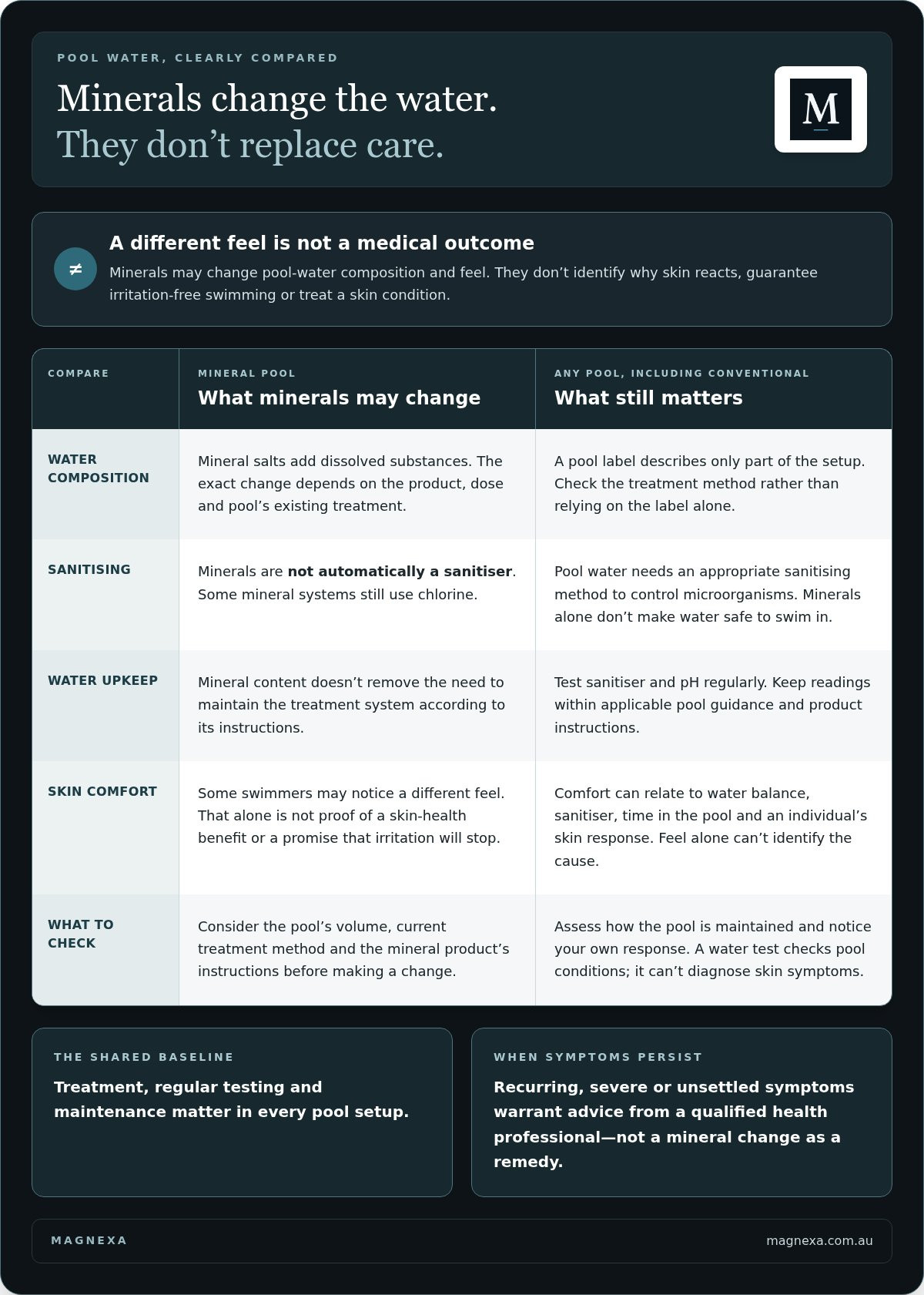
A pool’s label tells you only part of the story. “Mineral” and “conventional” can describe different treatment setups, but neither label confirms how well the water is maintained or how it will feel to a particular swimmer. Both types need suitable water treatment and regular checks. When comparing pool minerals for sensitive skin, look at the actual treatment and water condition rather than assuming one category is gentler.
| Factor | Magnesium mineral pool | Conventional pool |
|---|---|---|
| Water treatment | Mineral salts change the water’s composition. The system may also use a sanitiser. | Uses its chosen sanitising method, commonly chlorine-based treatment. |
| Maintenance | Requires water testing and maintenance suited to the minerals and sanitising system. | Requires water testing and maintenance suited to its sanitising system. |
| Possible swimmer experience | Some swimmers describe mineral water as softer-feeling; comfort varies. | Water feel varies with its condition and the individual swimmer. |
The table is a starting point, not a ranking. Mineral pools aren’t untreated or automatically chemical-free, and adding minerals doesn’t remove the need to sanitise the water. A swimmer’s report that water feels softer is a personal observation. On its own, it doesn’t establish a medical benefit or show that the water will reduce irritation for someone else.
What is different about a magnesium mineral pool?
Magnesium pool salt adds dissolved minerals to the water as part of a pool-treatment approach. It doesn’t define the entire system: sanitiser, dose, pool conditions and product instructions also matter. Water composition can differ between pools. For ingredient details and directions for use, rely on the specific product information rather than general claims about mineral pools.
Which factors make a comparison meaningful?
Compare measured water balance and maintenance, not just the treatment name. If possible, note the pool’s readings and sanitising approach alongside how long you swim and whether you rinse afterwards. These details make your experience easier to interpret, although they can’t prove what caused a reaction. Personal skin responses differ, so one swimmer’s comfort can’t reliably predict another’s.
If you’re comparing pools, keep conditions as similar as practical: swim for a similar length of time, follow the same rinse routine and observe how your skin feels afterwards. Don’t treat one swim as a conclusive test. A change in comfort may be worth noting, but it doesn’t show by itself that minerals caused the difference or that a pool is suitable for everyone with sensitive skin.
Weigh magnesium pool benefits against these limits: water feel is subjective, while a medical outcome needs evidence beyond a swimmer’s impression. The overview of magnesium pool benefits and what the water can and cannot do explains that distinction.
A practical swim routine for easily irritated skin
A consistent routine can help you notice patterns without assuming minerals are the answer. Keep the pool’s condition and your own response in view. At a public pool, follow the operator’s directions. For a home pool, follow the product and maintenance instructions.
Use these steps as a practical guide, not as treatment for a skin condition. If a health professional has given you specific advice, follow it.
- Before you swim, check the pool. Look for signs that it’s being maintained, and check available water readings against applicable pool guidance. If you manage the pool, test and adjust the water according to the treatment product’s directions. Don’t assume a mineral label means the water is correctly balanced or sanitised.
- Consider your skin and keep exposure manageable. If your skin is broken or symptoms are actively getting worse, avoid swimming until you’ve sought appropriate clinical advice. If you’re trying to understand whether time in the water affects your comfort, keep the swim duration manageable and note it. There’s no single duration that suits everyone.
- Pay attention while you’re in the water. If stinging, itching or other discomfort becomes difficult to tolerate, leave the pool rather than pushing through. Don’t use a change to pool minerals as a reason to keep swimming through worsening symptoms. Your response is useful information, but it doesn’t identify the cause on its own.
- Rinse and dry gently afterwards. Rinse your skin with fresh water, then pat it dry with a clean towel instead of rubbing. This removes pool water from the skin’s surface and reduces friction from drying. Follow any individual care directions you’ve received from a health professional.
- Record what happens next. Briefly note when symptoms started, how long they lasted, how long you swam and whether you rinsed afterwards. If the same pattern occurs across different pools, include that detail. These observations can help a clinician assess recurring symptoms; they aren’t a substitute for an assessment.
Seek advice from a qualified health professional if symptoms persist, are severe or concern you. Don’t rely on pool minerals for sensitive skin to resolve ongoing symptoms, and don’t try to diagnose the cause from one swim. Stop swimming if discomfort becomes significant, then use your notes to explain the pattern when seeking advice.
If you’re considering a mineral change as a pool-treatment choice, explore Magnexa’s magnesium pool minerals and base the dose on your pool volume and the product directions.
Choosing pool minerals for sensitive skin: a measured next step
A mineral-pool conversion is a choice about how you want to treat and manage your pool. It isn’t a guaranteed way to stop itching or make swimming suitable for everyone with sensitive skin. Decide whether the treatment approach fits your pool and its existing setup, then consider comfort as an individual response rather than a promised result.
Before adding minerals, identify the pool’s current treatment method and volume. A dose that’s right for one pool may not suit another. Product directions matter too, so don’t estimate the quantity from the pool’s appearance or copy a dose used by someone else.
Work out the pool quantity before adding minerals
Start with the most accurate pool-volume estimate available. Check the product’s dosing directions, including any guidance for pools already using another treatment. Existing water conditions and the intended mineral system can affect how you work out a dose. Magnexa’s magnesium pool dosing calculator helps estimate the mineral quantity for your pool based on its volume.
Use the calculator as a quantity estimate, not a substitute for product instructions. If you’re unsure of the pool volume, improve that estimate before dosing; an inaccurate starting figure can make the calculated amount inaccurate too. Follow the directions for adding minerals and maintaining the pool’s existing treatment system. Don’t assume a mineral addition replaces sanitiser, water testing or other routine care.
When a mineral-pool change makes sense
A mineral approach may suit pool owners interested in changing the water’s composition or trying a different treatment setup. It’s a pool-management decision, not medical care. Swimmers’ comfort can vary, and a change in water feel doesn’t establish that minerals will prevent or resolve skin symptoms. If irritation persists or concerns you, speak with a qualified health professional rather than relying on a pool conversion.
For pool owners in South East Queensland, including Brisbane, Moreton Bay, the Sunshine Coast, Ipswich, Logan, Redlands and the Gold Coast, Magnexa delivers pool minerals within the region.
For a measured next step, explore Magnexa magnesium pool minerals and work out the quantity for your pool before deciding whether the treatment approach fits. Choose minerals based on pool requirements, not on a promise of relief for sensitive skin.
Make your next pool decision with clear expectations
Before changing your pool setup, decide what you want to change: the water-treatment approach, the feel of the water, or both. Keep a simple record of your current pool readings and swimming routine. If you later make a change, avoid changing several things at once. That gives you a clearer basis for judging the pool experience without treating a change in comfort as proof of a medical effect.
Choosing pool minerals for sensitive skin is a pool decision, not a substitute for advice about recurring symptoms. If your skin keeps reacting, speak with a qualified health professional while you assess the pool separately.
Magnexa supplies magnesium pool minerals in 10 kg and 25 kg bags, with a dosing calculator to estimate the quantity for your pool and delivery across South East Queensland. Use the calculator and product directions to plan a dose that suits your pool volume and treatment setup. Explore Magnexa magnesium pool minerals and use the available dosing guidance to plan your next step with realistic expectations.
Frequently Asked Questions
Can pool minerals help sensitive skin?
Some swimmers may prefer the feel of mineral-treated water, but that preference doesn’t show that minerals treat skin sensitivity or a skin condition. Individual responses vary. Comfort can also depend on the pool’s measured condition and treatment setup. If you’re comparing pools, note which one you swam in and when symptoms appeared. For recurring reactions, seek clinical advice rather than treating a mineral conversion as a guaranteed fix.
Is a magnesium pool chlorine-free?
A magnesium pool isn’t automatically chlorine-free. Magnesium minerals change the water’s mineral content; sanitisation is a separate part of pool treatment. The sanitiser and maintenance targets depend on the pool setup and product instructions. Follow those directions and applicable pool guidance rather than relying on a general chemical recipe. If you’re unsure what treatment a pool uses, check its operating information before assuming it contains no chlorine.
Can you be allergic to magnesium pool minerals?
A reaction after swimming doesn’t establish an allergy to magnesium or identify another cause. Itch, redness or stinging can have several explanations, including the pool’s condition or an individual skin response. If symptoms become concerning, leave the water and avoid further exposure while they’re active. Seek assessment from a qualified health professional, particularly if reactions are severe or keep happening. Don’t use a mineral change to self-diagnose.
Does a mineral pool help with eczema?
Mineral pool water shouldn’t be treated as an eczema remedy or cure. People with eczema can respond differently to swimming and pool conditions, so a mineral system can’t guarantee comfort. Follow your clinician’s advice about swimming, especially during a flare or if the skin is broken. If swimming appears to worsen symptoms, or they persist afterwards, seek medical guidance rather than relying on a change in pool minerals.
Should I shower after swimming in a mineral pool?
Rinsing with fresh water after swimming is a straightforward hygiene step. Afterwards, pat your skin dry gently instead of rubbing it with a towel. This routine won’t prevent every reaction and shouldn’t replace an individual care plan from a health professional. If discomfort continues despite adjusting what you do after swimming, note when it starts and discuss the pattern with a qualified health professional.
What should I do if my skin itches after swimming?
Leave the pool if itching or discomfort develops, then rinse with fresh water and avoid further exposure while symptoms are active. Don’t try to diagnose the cause or prescribe your own treatment based on one swim. Note when the itching began and whether it settles. Seek medical assessment for persistent, severe or recurring symptoms. If symptoms seem like an emergency, get urgent care.
Frequently Asked Questions
More articles