
Magnesium Pool Dosing Calculator: Work Out the Right Pool Mineral Quantity
8 October 2026 · 15 min read
A calculator can give you a number, but it can’t confirm your pool volume or existing mineral levels. If you’re working out how much magnesium mineral to add, a magnesium pool dosing calculator is a useful starting point. Its result is only meaningful when you understand the information and assumptions behind it.
That matters when your pool volume is an estimate, the water already contains minerals, or the result doesn’t translate neatly into a bag plan. You need to know how the figure was calculated and what to do with it next.
This guide explains what information to enter, how to interpret the result and what to check before dosing. It also covers how to match the calculated quantity to 10 kg or 25 kg bags, and when a starter pack may suit a mineral pool conversion. For pool owners across South East Queensland, it explains how local delivery fits into the plan. The goal is a useful estimate, not false precision.
Key Takeaways
- Use the magnesium pool dosing calculator as an estimate, and check the assumptions behind its result.
- Confirm your pool volume before calculating. An inaccurate figure can affect the quantity you plan for.
- Consider your pool’s existing mineral levels and the product instructions before deciding how much to add.
- Follow the product label for handling, application and equipment-specific directions.
- Once you have a calculated quantity, plan around 10 kg or 25 kg mineral bags. Starter packs are an option for a pool conversion, with delivery across South East Queensland.
Magnesium pool dosing calculator: what quantity does it help you work out?
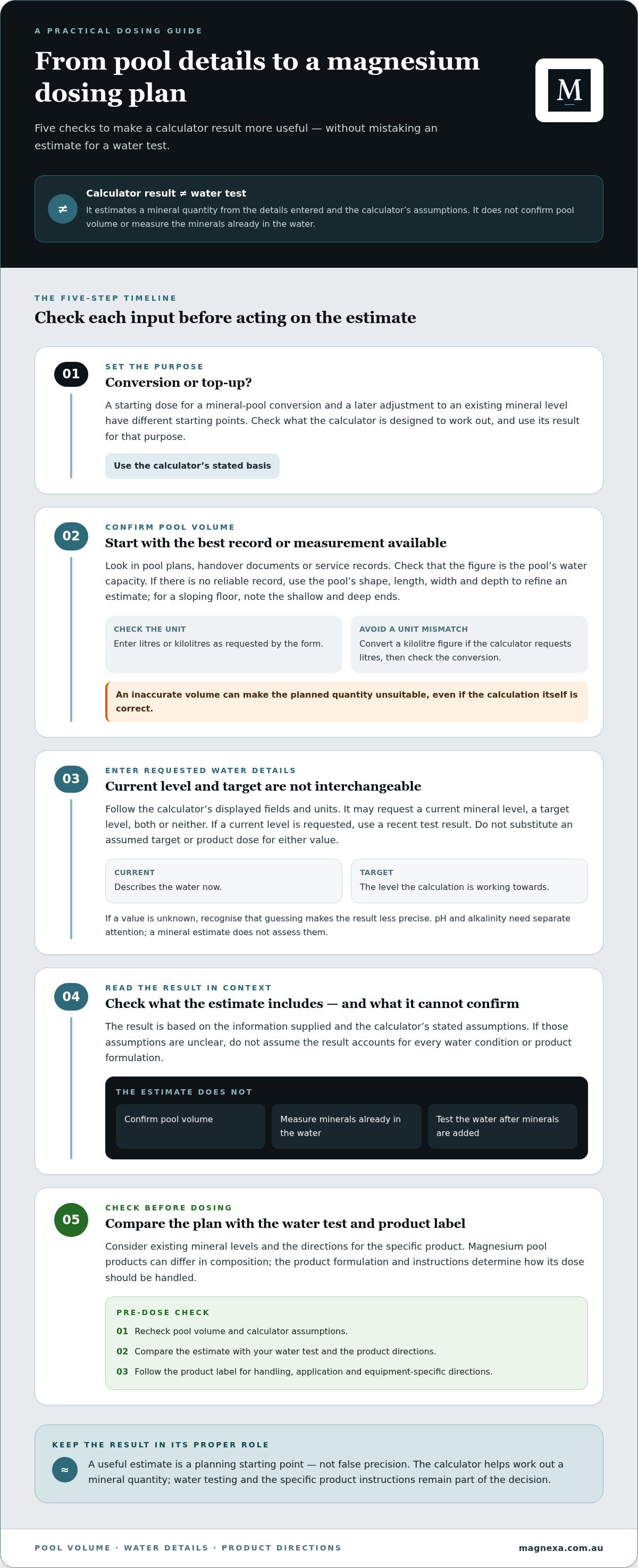
A magnesium pool dosing calculator estimates the mineral quantity for a pool using the information entered and the assumptions built into the calculation. The result is an estimate, not a water test.
Check what the calculator is designed to work out. It may be intended for an initial conversion or for adjusting an existing mineral level. These are different tasks: a starting dose and a later top-up can have different starting points. Use the result for the purpose stated by the calculator, and follow the mineral product’s directions.
When should a pool owner use a magnesium dosing calculator?
Use one when planning a conversion to a mineral pool or when a water test indicates a mineral shortfall that needs correcting. First, establish the pool’s volume as accurately as possible. If the volume is too high or too low, the calculated quantity may not suit the pool, even if the calculation itself is correct.
If you’re unsure of the volume, check the pool’s original documents or work it out from its shape and dimensions before calculating. Treat a rough estimate as approximate, not exact. The calculator helps you plan a mineral quantity, but it doesn’t replace water testing or the product directions.
What a dosing result can and cannot tell you
The result estimates a quantity from the information supplied and the calculator’s stated assumptions. It doesn’t confirm your pool volume, measure the minerals already in the water or test the water after minerals are added. If the calculator doesn’t explain what its result represents, don’t assume it accounts for every water condition or product formulation.
Mineral quantity is only one part of pool care. A calculator doesn’t assess broader water balance, equipment requirements or ongoing care. Magnesium pool products can also differ in composition, so consider the result alongside the directions for the specific product you plan to use. Magnesium chloride is a key mineral compound associated with magnesium pools, but the product’s formulation and instructions determine how its dose should be handled.
For background on mineral pool basics, the magnesium pool salt guide explains the role of pool minerals. Use the calculator to form a plan, then compare that plan with your water test and product label. This keeps the estimate in its proper role: a practical starting point, not a substitute for checking the pool itself.
What information does a magnesium pool dosing calculator need?
The calculator’s fields determine what its result means. Read the form carefully and use the wording and units shown beside each field. Don’t assume a field asks for the same information as another calculator, and don’t enter a target value unless the form requests one.
The inputs that can materially change the calculated quantity are pool volume, any current mineral level requested, and any target level requested. The calculator may not ask for all of them. Follow its displayed fields and note the units you enter. If a value is unknown, avoid substituting a guess without recognising that it makes the result less precise.
How to estimate pool volume before calculating
Start by looking for a recorded volume in the pool’s plans, handover documents or previous service records. Check that the figure describes the pool’s water capacity, rather than a different pool or an equipment specification.
If no record is available, gather the pool’s shape, length, width and depth. For a pool with a sloping floor or varying depth, note the shallow and deep ends so you can estimate an average depth. Use a calculation method suited to the pool’s shape rather than applying one formula to every design. If the estimate is unreliable, refine your measurements before relying on the calculated mineral quantity.
Enter the volume in the unit requested by the calculator. Pool volumes are commonly recorded in litres or kilolitres, but the form’s label is the guide. Don’t enter a value in one unit and treat it as another. For example, convert a figure recorded in kilolitres if the calculator requests litres, then check the conversion before submitting it.
Why the current water and target matter
If the calculator asks for a current mineral level, use a recent test result and enter it in the unit shown. If it asks for a target, use the calculator’s terminology and stated basis. These values are not interchangeable: the current level describes the water now, while the target is the level the calculation is working towards. Don’t enter an assumed target or a product dose in place of either value.
Mineral quantity is only one part of water management. Other measurements, including pH and alkalinity, need separate attention. A mineral estimate doesn’t assess those conditions or replace testing the water. Enter values you can support, then review the result and the calculator’s stated assumptions before acting on it.
To calculate a quantity for your pool, use Magnexa’s magnesium pool dosing calculator and follow the labels shown on the form.
Why calculator results differ from a generic magnesium pool dose
A generic dose is a broad starting figure. A pool-specific estimate uses information about the pool and the calculation’s stated basis. Neither is exact without checking the assumptions and product instructions. A magnesium pool dosing calculator is useful when its inputs reflect the pool being treated. If the volume or starting mineral level is wrong, the result won’t reflect the actual conditions.
This comparison shows what a generic amount may leave out:
Pool volume
Generic amount: may assume a standard pool size.
Pool-specific estimate: uses the volume entered, if requested.
Starting mineral level
Generic amount: may not account for minerals already in the water.
Pool-specific estimate: may use a measured starting level, if the calculator asks for it.
Product instructions
Generic amount: may overlook differences between products.
Pool-specific estimate: still needs to be checked against the directions for the product being used.
This comparison is about the information considered, not a claim that one method is automatically more accurate. Accuracy depends on the calculation basis and the quality of the information entered.
How pool volume and starting conditions change the estimate
A larger volume of water will generally call for a different mineral quantity than a smaller volume, all else being equal. The precise relationship depends on the calculator’s method and the product directions. Copying a quantity from another pool can therefore be misleading, even if the pools look similar.
Existing minerals matter too. If the calculator uses a current level, a measured starting point may change the amount it estimates to reach its stated target. Use the fields and calculation basis shown in Magnexa’s calculator. Don’t assume it adjusts for a factor it doesn’t request, and enter supported values only.
Why bag size is not the same as a dose
A calculated dose is the total quantity indicated by the estimate. Bag size is the amount of mineral supplied in each pack. Magnexa offers pool minerals in 10 kg and 25 kg bags, but those pack sizes aren’t dose recommendations. Work out the required quantity first, then plan how the bags will supply it. Don’t round the dose to a whole bag and treat that as the correct amount.
The product directions remain the practical reference for measuring and adding minerals. The pool mineral treatment guide provides related context on using pool minerals. A calculator estimate and bag size help with planning, but neither replaces the product’s application instructions.
How to use your magnesium pool dose safely and methodically
A magnesium pool dosing calculator gives you a figure to plan around, not permission to add minerals by guesswork. Before opening a bag, check the pool volume and calculator entries, then read the product directions for the way you intend to use it. Measure the quantity rather than estimating by eye.
Use this sequence:
- Confirm the volume. Check your pool records or measurements and make sure the calculator uses the same units.
- Review the result. Check the number and unit displayed. Confirm it relates to your purpose, such as an initial conversion or an adjustment.
- Read the product directions. Follow the label for handling, application and any equipment-specific requirements.
- Measure the amount. Use a suitable method to measure the quantity you plan to add. Don’t rely on an approximate scoop or bag fraction.
- Add as directed. Follow the label’s instructions for applying the mineral to your pool.
Don’t add an unmeasured extra amount “for good measure”. The result is based on particular inputs; adding more changes the planned dose without accounting for pool volume, starting conditions or product directions. If your inputs were wrong, correct them and recalculate rather than compensating by eye.
Before adding minerals to the pool
Review the pool volume and each calculator entry. Compare the result with the product quantity you have, but don’t let bag size determine the dose. Read all supplied directions and follow the stated handling precautions. Record the calculator result, the quantity selected and the amount you actually add. This helps distinguish the planned quantity from what went into the water.
After dosing: check the water and keep a record
Follow the product directions for circulation, testing and any timing requirements. Instructions vary by product, so don’t assume a particular wait or re-testing interval. Record the date, quantity added and any water-test results. Keep these notes with your pool records so you have a clearer starting point for later decisions than memory alone.
Mineral dosing is one part of ongoing water care, not a substitute for checking other pool conditions. Use the pool mineral balance checklist to keep broader water-care checks in view. For your next dose, use Magnexa’s magnesium pool dosing calculator, then follow the product label through application.
Get the calculated magnesium pool minerals delivered across South East Queensland
Once you have a mineral quantity to work from, plan the supply. Magnexa offers magnesium pool minerals in 10 kg and 25 kg bags. The right combination depends on the calculated amount and the product directions, so work from your result rather than assuming a standard number of bags. A magnesium pool dosing calculator can help establish the starting quantity; it doesn’t determine how to round or apply it.
Match the calculated quantity to available bag sizes
Compare the total quantity shown by the calculator with the amount supplied in each bag. The 10 kg and 25 kg sizes give you options for planning an order, but they’re pack sizes, not dose recommendations. Decide on the bag count only after calculating the quantity for your pool and checking the product instructions. If the pack sizes don’t divide neatly into the calculated quantity, follow the label rather than adding extra mineral simply to use a full bag.
For an existing mineral pool, calculate the quantity needed for the situation you’re addressing, then match that quantity to the available bags. The magnesium mineral refill delivery guide covers ordering minerals for a refill. Keep the calculator result and product directions in view when deciding what to order.
Choose the right next step for your pool
If your pool is already mineralised, start by calculating the quantity needed for its current requirements. If you’re planning a conversion, a starter pack is another option. Read the mineral pool conversion guide to understand the conversion process and plan the mineral supply around your pool.
Magnexa delivers across South East Queensland, including Brisbane, Moreton Bay, Sunshine Coast, Ipswich, Logan, Redlands and the Gold Coast. Pool owners in these areas can plan local delivery once they’ve worked out the quantity and selected suitable bag sizes. Keep your pool volume, calculator result and product instructions together while planning, so the amount ordered and the amount applied remain clear.
Ready to work out the quantity for your pool? Use the magnesium pool dosing calculator and view Magnexa’s mineral options.
Make your next mineral adjustment a measured one
Pool water changes over time, so a mineral quantity that suited one adjustment may not suit the next. Treat each dosing decision as a separate calculation, using current information rather than carrying an old figure forward. This makes your decisions easier to review and reduces reliance on memory when planning future pool care.
A magnesium pool dosing calculator is most useful as part of that decision process. Enter reliable details, consider the result alongside the product directions and measure the amount you add. Don’t add minerals simply because the water looks different. Check what a water test and the product guidance indicate before changing your plan.
Magnexa’s calculator gives you a practical place to begin. When you’re ready to plan your next step, use the magnesium pool dosing calculator and review the mineral options for your pool. Work through the figures and you can move ahead with a clear, considered plan.
Frequently Asked Questions
How much magnesium do I add to my pool?
There isn’t one quantity that suits every pool. The amount depends on the pool’s water volume, its current mineral condition and the product directions. Use a magnesium pool dosing calculator with reliable pool details, then compare the estimate with the label before adding anything. If you’re correcting a water-test result, use that information where the calculator requests it. Don’t copy a dose from another pool.
Can I use a magnesium pool dosing calculator if I do not know my pool volume?
Use the calculator once you have a reasonable volume estimate. An unknown or guessed volume makes the result less dependable. Look for the capacity in pool plans, handover documents or previous records. If you need to estimate it, measure the pool’s shape and dimensions, including changes in depth. For an irregular pool, break the measurements into sections and refine the estimate before using it to plan a mineral quantity.
Does a magnesium dosing calculator account for minerals already in the pool?
Only if the calculation asks for a current mineral reading and uses that value. Don’t assume every calculator adjusts for minerals already in the water. Test your pool if you need a current reading. If the tool requests a starting level, enter the test result in the displayed units. If it doesn’t request one, don’t treat the output as an account of existing minerals.
Can I use the calculator when converting a salt pool to a magnesium pool?
Yes, it can help you plan the mineral quantity for a conversion, provided you use the correct pool volume and follow the calculator’s stated basis. Before adding minerals, check the product directions and your chlorinator’s requirements. Existing salt levels and the mineral product’s formulation may affect how the conversion should be carried out. Treat the calculator as a quantity-planning tool, not confirmation that your equipment is suitable for every mineral product.
What happens if I add too much magnesium mineral to my pool?
Adding more than directed can raise the mineral concentration beyond the amount you intended and may affect the pool’s water balance. The outcome depends on the product, quantity and existing water condition, so don’t try to correct it by adding another chemical without testing. Stop adding minerals, check the product directions and test the water. Use the test results and product guidance to decide what adjustment, if any, is appropriate.
Can I use magnesium pool minerals with a saltwater chlorinator?
Compatibility depends on the chlorinator and the mineral product. Check the equipment instructions and mineral label for requirements before adding anything, including any specified salinity or operating conditions. Mineral blends can differ, so don’t assume a product will suit your system simply because it is sold for pools. If the directions don’t clearly address your setup, use the equipment manufacturer’s guidance before proceeding.
How many bags of magnesium pool minerals should I order?
Work out the required total quantity first, then compare it with the available pack sizes. Magnexa offers magnesium minerals in 10 kg and 25 kg bags, but the number of bags depends on your calculator result and the product directions. Don’t order using a generic pool estimate or treat a whole bag as an automatic dose. For a planned conversion, a starter pack may also suit your preparation.
Frequently Asked Questions
More articles