Magnesium Pool Eye Irritation: What Causes Stinging Eyes?
13 October 2026 · 16 min read
A magnesium pool can still leave your eyes stinging. The label doesn’t guarantee irritation-free swimming, and magnesium pool eye irritation can be hard to explain when the water is marketed as gentler. Water balance, sanitiser conditions, time in the pool and personal sensitivity can all play a part.
If your eyes sting during or after a swim, it’s reasonable to wonder whether the water is balanced or whether magnesium pools differ from conventional pools. Magnesium water still needs effective sanitisation, and an imbalance can affect comfort in either type of pool.
This article explains common causes of eye irritation, how magnesium and conventional pools compare, and what to check in the water, including pH and sanitiser readings. It also covers practical steps to take after a swim and when persistent or severe symptoms warrant medical advice.
Key Takeaways
- Magnesium pool eye irritation can happen; the pool type alone won’t tell you what’s causing the sting.
- Water balance, sanitiser conditions and swimmer exposure can all contribute, so don’t assume there’s just one cause.
- Compare magnesium and conventional pools by their water systems and sanitisation, not by comfort claims on a label.
- If your eyes sting, stop swimming if needed, rinse them and check the pool’s readings with suitable test equipment.
- Mineral choice and correct dosing are separate from diagnosing eye symptoms. A dosing calculator can help estimate the mineral quantities your pool needs.
Magnesium pool eye irritation: what might be causing the sting?
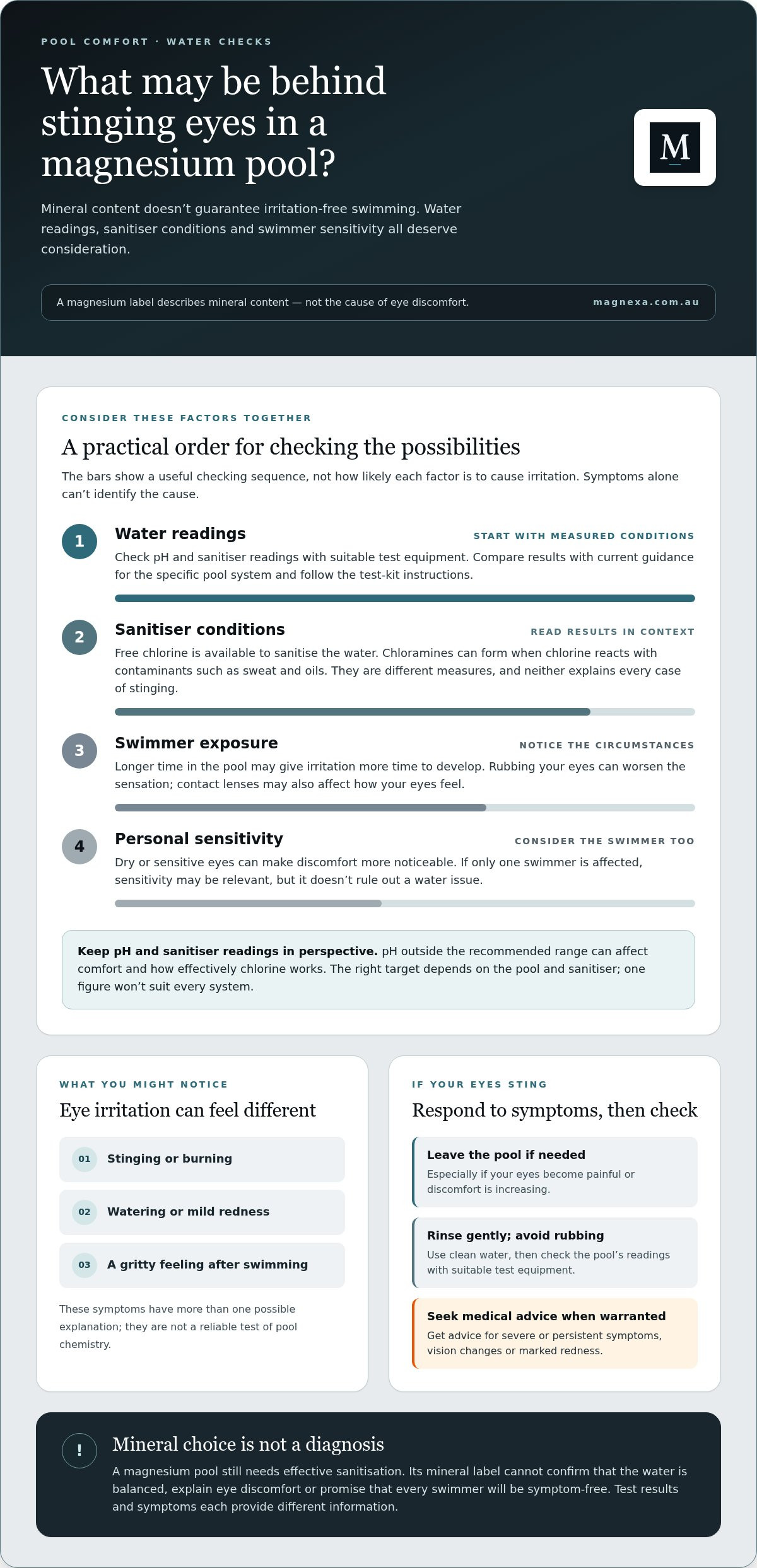
Magnesium pool water doesn’t guarantee irritation-free swimming. A magnesium mineral label describes the pool’s mineral content, not whether its water is balanced or how your eyes will respond. Pools using minerals may still rely on sanitisation, including chlorine, so magnesium in the water doesn’t rule out irritation from sanitiser or its by-products.
Eye irritation can feel like stinging, burning, watering or redness. Brief discomfort during a swim may settle after you leave the water and rinse your eyes, but it doesn’t identify the cause. Water balance, sanitiser by-products, how long you’ve been swimming and individual sensitivity can overlap. Contact lenses, dry or sensitive eyes, and rubbing your eyes may also affect how they feel.
Pool type alone cannot identify the cause of stinging eyes. A mineral label and a swimmer’s symptoms aren’t substitutes for checking the water condition. Chemical exposure can also irritate eyes, though that doesn’t mean it’s the cause in a particular pool. For example, certain chemicals, like the herbicide 2,4-D, can cause eye irritation in water. This is a separate example of chemical irritation, not evidence that 2,4-D is present in a pool.
Can magnesium pool water still irritate your eyes?
Yes. Mineral content alone doesn’t show whether pool water will irritate your eyes. A mineral pool still needs effective sanitisation, and its measured water condition can change with dosing, use and other factors. A pool labelled magnesium may feel different to an individual swimmer, but that sensation can’t confirm that the water is correctly balanced or explain what is causing discomfort.
When investigating magnesium pool eye irritation, separate the system from its readings. The system tells you what minerals are used; testing tells you about relevant water parameters at the time. A pool with suitable readings may be more comfortable than one with unsuitable readings, but no mineral label can promise that every swimmer will be symptom-free.
What can eye stinging feel like, and when is it a concern?
Stinging can feel sharp or burning. Your eyes may water, look mildly red or feel gritty after swimming. These symptoms can have more than one explanation, so don’t treat them as a reliable test of pool chemistry. Mild discomfort that eases after leaving the water is different from pain that continues or worsens.
Leave the pool if your eyes become painful or the discomfort is increasing. Rinse them gently with clean water and avoid rubbing them. Seek medical advice if symptoms are severe, persistent or include vision changes or marked redness. A clinician can assess your symptoms; a pool test alone can’t determine whether an eye problem needs treatment.
How water balance and sanitiser can contribute to pool eye irritation
Stinging eyes don’t point to one cause. Water balance, sanitiser conditions, swimmer exposure and personal sensitivity can occur together, so symptoms alone can’t confirm what has changed in a pool. Checking the water provides more useful evidence than relying on how it smells or feels.
pH measures how acidic or alkaline water is. If it moves outside the range recommended for the pool and its sanitising system, it can affect swimmer comfort and how effectively chlorine works. The right target depends on the pool and sanitiser, so use current, applicable Australian guidance and the test-kit or product instructions rather than assuming one figure fits every pool.
Water balance, sanitiser conditions and personal sensitivity are separate considerations. A result in one area doesn’t rule out an issue in another. This matters when investigating magnesium pool eye irritation: mineral content doesn’t replace testing the pool water.
Why pH and sanitiser conditions matter
Free chlorine is the portion available to sanitise pool water. Chloramines are compounds that can form when chlorine reacts with contaminants introduced by swimmers, including sweat and oils. They’re different measures, and neither should be assumed to cause every case of stinging. The American Academy of Ophthalmology explains that pool chemicals can strip away the tear film, causing dry and irritated eyes, which helps explain why discomfort may involve more than one factor.
Interpret pH and chlorine readings together. If pH is too high, chlorine can become less effective; if sanitiser conditions are unsuitable, the water may not be managed as intended. A single reading or a swimmer’s reaction can’t establish the full picture. Test with suitable equipment, follow its instructions and compare results with current guidance for the specific pool system.
Other possible contributors to stinging eyes
Not every swimmer responds to pool water in the same way. Existing eye dryness or sensitivity may make discomfort more noticeable. Longer exposure can give irritation more time to develop, while rubbing the eyes may worsen the sensation. These factors don’t prove that the water is balanced. They’re reasons to consider the swimmer as well as the pool when symptoms appear.
Look for patterns, but don’t treat them as a diagnosis. If several swimmers notice discomfort, checking the water readings is a sensible step. If only one person is affected, personal sensitivity may be relevant, but it doesn’t rule out a water issue. Magnesium chloride or other mineral ingredients shouldn’t be treated as a remedy for eye symptoms.
- Record when discomfort starts and whether it affects other swimmers.
- Check pH and sanitiser readings against current guidance for the pool system.
- Consider exposure time and personal eye sensitivity alongside the test results.
Mineral dosing is a separate pool decision, not a way to diagnose irritation. If you’re working out quantities for a magnesium system, Magnexa’s magnesium pool minerals and dosing calculator can help you compare mineral options and calculate quantities for your pool.
Magnesium pool vs conventional pool: does either prevent eye irritation?
No. Neither a magnesium label nor a conventional pool label guarantees freedom from eye irritation. These labels describe aspects of the water system, not how the pool is performing when you swim or how your eyes will respond. To compare pools fairly, separate mineral content from sanitisation and measured water condition.
What changes between magnesium and conventional pool water?
The main distinction is mineral content and the equipment or process used to manage the water. “Conventional” can cover different pool setups, just as mineral pools aren’t all identical. Don’t assume every magnesium pool uses the same sanitiser or that every conventional pool has the same mineral profile. Check the system details and test results together.
Sanitisation remains necessary in a magnesium pool. The method and readings depend on the pool system, so generalising across all setups can mislead. A label can’t confirm whether water is balanced, whether sanitiser is being managed as intended or whether a swimmer’s discomfort is related to the pool. Testing is still needed.
How to interpret claims about gentler or more comfortable water
Some swimmers describe mineral water as feeling different, but how the water feels isn’t proof that it prevents eye symptoms. People can respond differently to the same pool, and one swimmer’s comfortable experience won’t predict another’s. Magnesium pool eye irritation can’t be assessed from the mineral label alone.
Keep comfort claims separate from measurable water conditions. If you’re comparing systems, look at the pool’s actual sanitisation and test readings, then consider your own response. A broader magnesium pool benefits guide may help explain what mineral systems are designed to offer, while information about pool minerals for sensitive skin addresses a different question. Neither replaces water testing or medical advice for ongoing eye symptoms.
What to check when your eyes sting after swimming
Use symptoms as a reason to pause and check conditions, not as proof of a particular chemical problem. Follow these steps before deciding what to do with the pool water:
- Stop swimming if discomfort starts or worsens. Leave the water rather than continuing to see whether the sting will pass.
- Rinse your eyes gently with clean water. Avoid rubbing them, which can add to irritation.
- Check the pool readings. Use suitable test equipment and compare results with current guidance for your pool system.
A simple pool-water check after eye irritation
Start with pH and the sanitiser readings relevant to the system. For chlorine pools, this can include free chlorine and total chlorine, which help assess sanitiser conditions and the presence of combined chlorine. Check other parameters, such as total alkalinity, if current pool-system guidance recommends them. Testing needs can differ between systems, so don’t apply a generic range without confirming it fits your pool.
A single result is only a snapshot. Readings can vary, and test strips or other equipment must be used and interpreted according to their instructions. If a result is unexpected, repeat the test as directed or use suitable testing equipment to cross-check it. Don’t add chemicals based on eye symptoms alone.
Recent chemical additions, heavy swimming use or a possible contaminant can provide useful context for interpreting results. They don’t prove what caused the irritation. Note what happened and when, then follow product labels and the pool-system instructions if an adjustment is needed. Avoid mixing products or making several changes at once, as this can make it harder to understand what the readings show.
When to leave the pool and get medical advice
Leave the water if discomfort is significant or getting worse. Persistent pain, vision changes or severe redness call for prompt medical advice. Rinsing may help clear pool water from the eyes, but it isn’t a treatment for an eye condition. Don’t try to manage ongoing symptoms by adjusting pool chemistry or swimming again to see if the irritation returns.
If other swimmers report symptoms, check the water promptly, but don’t assume a particular reading is responsible. Likewise, one swimmer’s symptoms can reflect personal sensitivity or another eye issue. Whether you’re investigating conventional pool irritation or magnesium pool eye irritation, use test results to assess the water and medical advice to assess persistent eye symptoms.
Mineral quantities are a separate pool-system matter, not a remedy for stinging eyes. If you’re planning or dosing a magnesium pool, use the pool dosing calculator to work out mineral quantities for your pool.
Choosing magnesium pool minerals with realistic expectations
Mineral choice is one part of managing a pool. It isn’t a remedy for stinging eyes, and changing minerals won’t identify or treat an eye problem. If symptoms continue, assess the water separately and seek medical advice when needed. Choose minerals for the pool system you intend to run, then manage and test the water according to that system’s instructions.
What magnesium minerals can and cannot tell you
Magnesium minerals add mineral content to pool water. The label or amount used doesn’t establish whether sanitisation is effective, whether the water is balanced or why a swimmer’s eyes sting. Base mineral quantities on your pool’s volume and intended setup. Magnexa’s dosing calculator helps pool owners work out quantities, but it isn’t a water test or a way to diagnose symptoms.
Before calculating a dose, use your pool’s volume and follow the requirements for the system you’re using. Magnexa supplies pool minerals in 10 kg and 25 kg bags. Correctly calculating the required quantity is a practical step in setting up or managing mineral content; it doesn’t replace checking other water readings or following sanitiser instructions.
For broader context on mineral systems and pool ownership, the magnesium pool salt guide can help you consider the product separately from the eye-irritation question. Treat product information as a guide to mineral choice, not as evidence of health effects. Magnesium minerals shouldn’t be relied on for eye protection or symptom relief.
A measured next step for South East Queensland pool owners
If you’re in Brisbane, Moreton Bay, the Sunshine Coast, Ipswich, Logan and Redlands, or the Gold Coast, start with your pool’s volume and intended setup, then work out the required quantity. Magnexa supplies magnesium pool salts and minerals, with delivery across South East Queensland. Mineral supply is distinct from pool maintenance: adding minerals doesn’t test, balance or sanitise the water for you.
Keep the decisions separate. Use readings and current pool-system guidance to investigate water conditions; use the dosing calculator to plan mineral quantities. If you’re weighing up a magnesium system, the magnesium pool salt guide provides general product and pool-owner context without treating minerals as an answer to magnesium pool eye irritation.
Once you’ve established the mineral quantity that suits your pool setup, explore Magnexa magnesium pool minerals. Choose minerals for your pool’s requirements, not as a promised solution to eye symptoms.
Make your next pool decision with clear information
Before changing your pool system, keep a simple record of its readings, recent chemical additions and when discomfort occurs. A consistent record gives you a clearer basis for reviewing water conditions and deciding what to adjust. It also helps keep mineral selection separate from investigating magnesium pool eye irritation.
If magnesium minerals suit your pool plans, base quantities on your pool volume and intended setup. Magnexa’s dosing calculator helps work out the amount required, and pool minerals are available in 10 kg and 25 kg bags. These are practical planning details, not a promise that minerals will prevent or relieve eye symptoms.
Use the information that answers your actual question: test results for water conditions, and medical advice for persistent eye concerns. Then make mineral choices for the pool you want to run, with realistic expectations about what they can do.
Explore Magnexa magnesium pool minerals and use the dosing calculator to plan the quantity for your pool.
Frequently Asked Questions
Can magnesium pool water cause eye irritation?
It’s possible to experience irritation in any pool, but magnesium content alone can’t identify the cause. Water balance, sanitiser conditions, time in the water and personal sensitivity are all factors to consider. If your eyes become significantly uncomfortable, leave the pool rather than continuing to swim. Seek medical advice if symptoms are severe or don’t settle. A pool label can’t diagnose what’s affecting your eyes.
Does a magnesium pool stop your eyes from stinging?
No. A magnesium pool isn’t automatically irritation-free, and its label can’t replace a water test. Some swimmers may describe mineral water as feeling different, but that perception doesn’t prove it prevents eye irritation. Check the pool’s readings against guidance for its system, and notice how your own eyes respond. A change in mineral type shouldn’t be treated as a solution to ongoing symptoms.
Can chlorine make your eyes sting in a pool?
Chlorine-related conditions may contribute, but stinging alone can’t show that chlorine is responsible. Free chlorine is the sanitiser available in the water; chloramines can form when chlorine reacts with contaminants such as sweat. Water balance is another consideration, and these factors can overlap. Check relevant readings with suitable equipment and interpret them using current guidance for that pool. Mineral systems don’t necessarily avoid chlorine.
Does pool pH affect eye irritation?
It can be relevant. pH describes how acidic or alkaline pool water is, and it’s one part of water balance that may affect swimmer comfort. Test it with suitable equipment and follow the pool system’s instructions and current applicable guidance. A pH result is only one piece of information: it can’t diagnose an eye condition or explain every episode of stinging, especially if symptoms continue after swimming.
What should I do if my eyes sting after swimming?
Leave the water if the discomfort continues, rinse your eyes gently with clean water and avoid rubbing them. If you manage the pool, check its readings and note any recent chemical additions; these details may help assess conditions but don’t prove the cause. Seek medical advice for persistent pain, marked redness or vision changes. Don’t use pool adjustments as treatment for an eye problem.
Are mineral pools chlorine-free?
Not necessarily. “Mineral pool” describes a system or its mineral content, not a universal absence of sanitiser. Setups differ, so follow the instructions for the specific system and test the water as directed. Magnesium minerals don’t replace sanitisation. Don’t assume a mineral label tells you which sanitiser is used or whether the pool is being managed correctly; those details depend on the pool and its readings.
Can sensitive eyes react differently to magnesium pool water?
Yes. People can respond differently to the same water, and eye sensitivity may relate to factors beyond mineral content. Note whether symptoms occur in one pool or several, how long you swam and whether they persist afterwards. Check the pool readings too, rather than assuming sensitivity or an allergy. For separate background, read about pool minerals and sensitive skin; that topic isn’t evidence of an eye treatment.
Frequently Asked Questions
More articles