Switch to a Mineral Pool in Queensland: Comparison
4 October 2026 · 14 min read
What if changing your pool water doesn’t mean replacing the whole setup? If you’re searching “switch to mineral pool Queensland”, the practical question is what needs to change in your existing pool and what can stay.
Minerals, salt and chlorine each play different roles, and compatibility depends on your equipment and current water-care system. A mineral conversion still requires sanitisation and balanced water. Whether you need to drain the pool or change equipment depends on your setup, so don’t assume either is necessary.
This guide explains what to assess before you switch, including pool volume, sanitiser, chlorinator and water balance. It also covers how mineral water fits into ongoing care, what to check before considering equipment changes or draining, and how to plan the mineral quantity. Use these steps to compare your options and choose a supply and dosing approach that suits your pool, rather than starting with a mineral product alone.
Key Takeaways
- Before you switch to mineral pool Queensland, identify your current sanitiser, pool volume and equipment so you can plan around your existing setup.
- Mineral content and sanitisation are separate considerations. Check the mineral product directions and equipment manufacturer guidance before making changes.
- Compare systems by water feel, equipment compatibility, testing routine and ongoing product requirements, not by the word “mineral” alone.
- Use your pool volume and the product’s verified directions to estimate mineral quantities. A dosing calculator can help with the calculation.
- Magnexa supplies mineral bags and starter packs, with delivery across South East Queensland, including Brisbane, Moreton Bay, Sunshine Coast, Ipswich, Logan, Redlands and the Gold Coast.
Switching to a mineral pool in Queensland: what changes?
A mineral pool has dissolved minerals added to its water, while a separate treatment process sanitises the water. Mineral content and sanitisation are connected parts of the pool setup, but they aren’t the same thing.
If you want to switch to mineral pool Queensland, begin by checking the pool you already have. Your sanitiser, chlorinator, filtration equipment and water condition all affect what a conversion involves. A mineral system may appeal if you want a different water feel or a mineral-based treatment approach. It doesn’t guarantee a particular health benefit, and the same conversion won’t suit every pool.
What does mineral water mean in a swimming pool?
Mineral water in a pool means minerals have been added according to the chosen product’s directions. Composition and target levels vary, so don’t assume all mineral blends are alike. Minerals don’t automatically sanitise the pool. It still needs an appropriate sanitising process, which may include chlorine generated by a compatible chlorinator. Mineral pools aren’t inherently chemical-free or chlorine-free.
Is a mineral pool different from a saltwater pool?
A conventional saltwater system uses dissolved salt and a chlorinator to produce chlorine for sanitising. In a saltwater chlorinator, electrolysis generates chlorine from salt; see how salt water chlorination works. A mineral pool has a mineral product added, but its sanitising arrangement depends on the system and product. Some setups use a chlorinator, so the label “mineral” doesn’t tell you by itself how the water is sanitised.
Both types need routine water testing and care. What to test and which levels to maintain depend on the system and product directions. Check those instructions before adding minerals or changing how you operate existing equipment. For a closer look at one common mineral ingredient, read magnesium pool salt explained.
The practical difference isn’t simply “salt versus minerals”. Consider how the product changes the water, how it works with your sanitiser and equipment, and what ongoing care it requires. Before planning a switch, establish what your current system does and assess the water condition. Then compare the product directions with your equipment guidance instead of assuming your setup can be used unchanged.
What happens to your pool equipment and water when you switch?
A conversion changes the mineral content of the water, not the need to sanitise it. The mineral product supplies dissolved minerals; your sanitiser and any chlorinator continue to perform separate treatment roles. Before you switch to mineral pool Queensland, compare your water and equipment with the product directions and equipment manufacturers’ guidance.
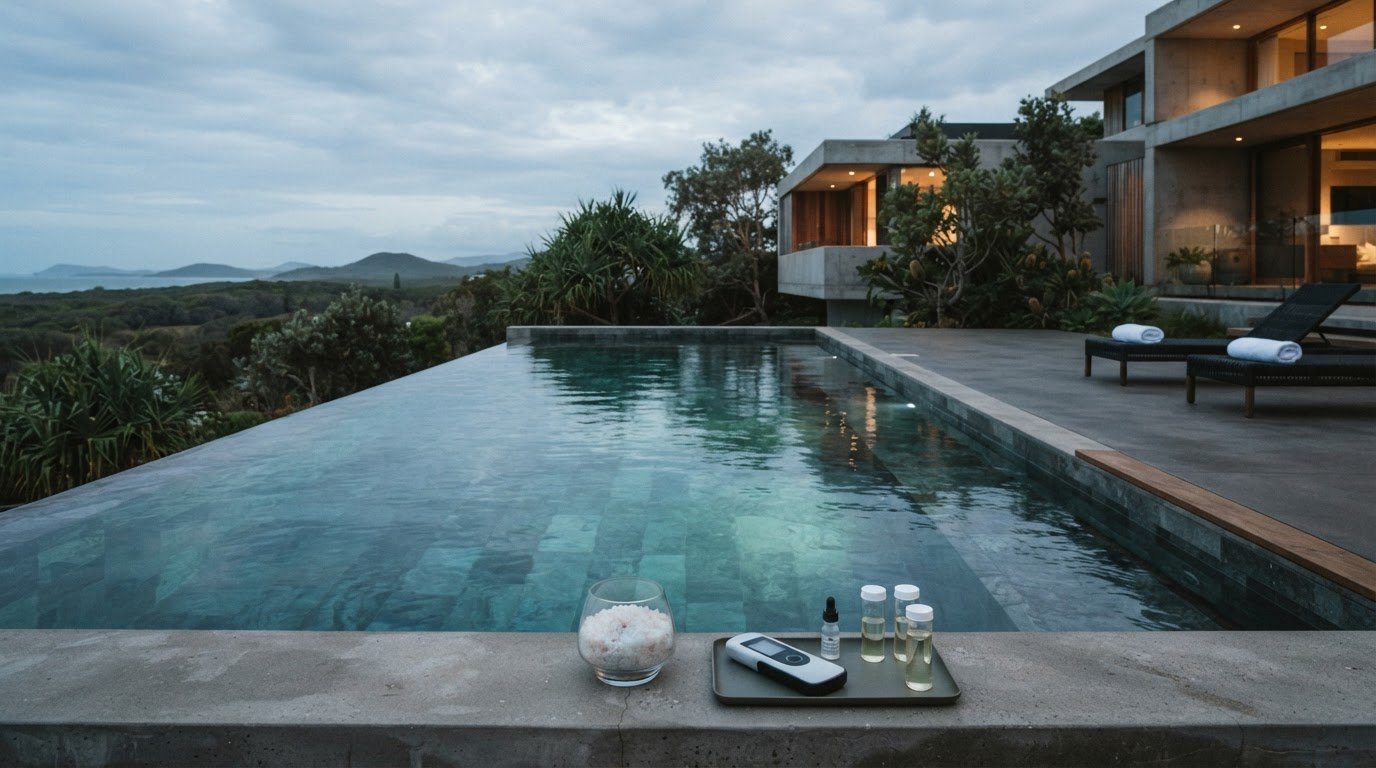
Start with a recent water test and a reliable pool-volume estimate. Record the sanitiser in use, the chlorinator make and model, and the filtration equipment, including the filter type. These details help you check whether the product suits your setup and what adjustments, if any, its instructions require.
Can you keep your existing chlorinator and filtration equipment?
Possibly. Compatibility depends on the chlorinator’s specifications and the mineral product. Check the manufacturer’s guidance for approved water conditions and mineral use, then compare it with the product directions. Record your filter and other equipment details too, as conversion requirements may cover more than the chlorinator. Replace equipment only when verified system requirements call for it.
Does switching mean draining the pool or changing water balance?
Not as a blanket rule. Whether water needs to be removed depends on its current condition and the conversion method specified for the product. A water test gives you a starting point. Follow the product directions for preparation, additions and retesting. Adding minerals doesn’t correct an existing imbalance or remove the need to monitor the water afterwards.
Keep testing after the conversion. Mineral levels and sanitiser performance are separate checks, and the correct targets depend on the product and system. Follow its instructions rather than applying a generic dose or water-balance target. For public and commercial pools, Queensland Health water quality guidelines provide guidance relevant to pool and spa water quality. For residential pools, conversion instructions still need to match the product and equipment in use.
For a chlorine pool, the conversion sequence and water preparation matter. The guide to converting a chlorine pool to a mineral pool covers the process in more detail. Once you’ve established the pool volume and checked system requirements, Magnexa’s pool minerals and dosing calculator can help you plan the mineral quantity.
Mineral pool versus your current system: how to compare the fit
To decide whether to switch to mineral pool Queensland, compare the proposed product with your current water treatment, equipment and care routine. Adding minerals is only one part of the setup. A suitable choice also depends on the water feel you prefer and what your pool system can accommodate.
| Factor | Existing system | Mineral conversion |
|---|---|---|
| Water feel | Use your current experience as the baseline. | Minerals may change the water’s feel; personal preference varies. |
| Equipment | Record the sanitiser, chlorinator and filtration setup you already use. | Compare product directions with equipment manufacturer guidance. Compatibility depends on the specific system and mineral product. |
| Water care | Continue testing and following the requirements of your current treatment system. | Minerals don’t replace sanitisation or routine testing. Follow the product’s directions for water targets and care. |
| Product quantity | No conversion mineral quantity is needed. | Estimate the amount from pool volume and the product’s verified dosing instructions. |
Which pool owners may prefer a mineral conversion?
A mineral conversion may suit owners who want to try a different water feel or mineral balance, provided the product fits their pool setup. If you’re looking for a change in how the water feels, remember that preference is personal and doesn’t guarantee a particular skin or health outcome. If you want to keep your existing equipment, check compatibility just as carefully as you choose the mineral product.
What trade-offs should Queensland pool owners weigh?
Plan for the mineral quantity your pool needs, ongoing water testing and the care routine required by the selected system. Factor in equipment compatibility too. A conversion may involve different product handling or water targets, so follow the product directions rather than assuming your current routine will carry over unchanged.
Queensland’s climate or location alone doesn’t determine whether a mineral system suits a pool. Pool volume, water condition, equipment specifications and your priorities matter more. A pool owner who wants a different mineral balance and is comfortable following product-specific directions may find it a good fit. Someone who doesn’t want to check equipment and water-care requirements may prefer to keep their current system.
For a practical overview of the sequence, read the guide to mineral pool conversion steps. Use it alongside the chosen product instructions to assess the conversion before deciding.
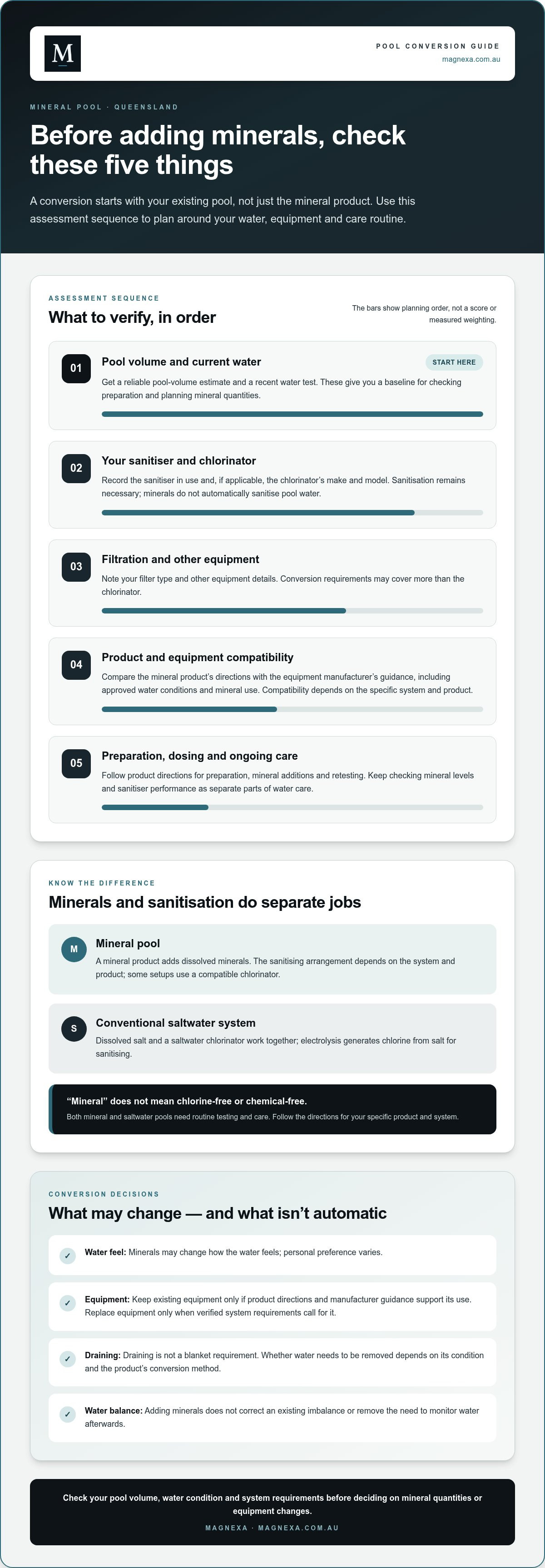
How to assess your pool before planning a Queensland conversion
A useful conversion estimate starts with accurate pool details, not a guessed dose. Before you switch to mineral pool Queensland, gather the information below. It gives you a practical basis for checking product directions and estimating the quantity required.
What information should you gather first?
- 1. Identify your current system. Note the sanitiser in use and record the chlorinator make and model, if fitted.
- 2. Record the pool volume. Use reliable plans, measurements or an existing pool record. For an irregular shape or varying depth, avoid relying on a rough visual estimate.
- 3. Test the water. Keep the results together, including the test date. They show the water’s condition before any change.
- 4. List the equipment. Record the filtration setup and other relevant pool equipment so you can compare its specifications with the chosen mineral product’s directions.
- 5. Note recent changes. Write down recent water treatments and unusual water conditions. These details can help you interpret the test results and plan the conversion.
How do you estimate the mineral quantity?
Pool volume and the product’s dosing directions determine the starting quantity. Use your recorded volume, then follow the product instructions for its target level and calculation method. Don’t transfer a dose from another pool or product: different formulations may have different directions. Check any target level or ratio against current guidance for the exact product you plan to use.
Magnexa’s pool minerals dosing calculator is a practical planning tool. Enter your pool details to estimate the mineral quantity and plan your supply. Treat the result as an estimate, not a water test or a replacement for product instructions. Testing is still necessary to understand the water’s condition and guide ongoing care.
If you don’t know the pool volume, resolve that first. A dose calculated from an inaccurate capacity can produce an unreliable estimate. Once you have the volume, test results and equipment details, you can compare the calculator’s estimate with the product directions and organise an appropriate quantity of minerals.
Where to get mineral pool supplies in Queensland
Magnexa delivers magnesium pool minerals across South East Queensland, including Brisbane, Moreton Bay, the Sunshine Coast, Ipswich, Logan, Redlands and the Gold Coast. The delivery area is regional, not statewide.
If you’re planning to switch to mineral pool Queensland, first work out what your pool needs. Use an accurate volume estimate and the chosen product’s directions to calculate the required mineral quantity. A dosing estimate can help you plan the amount to order, but it doesn’t replace water testing or equipment compatibility checks.
Which mineral supply format suits your conversion?
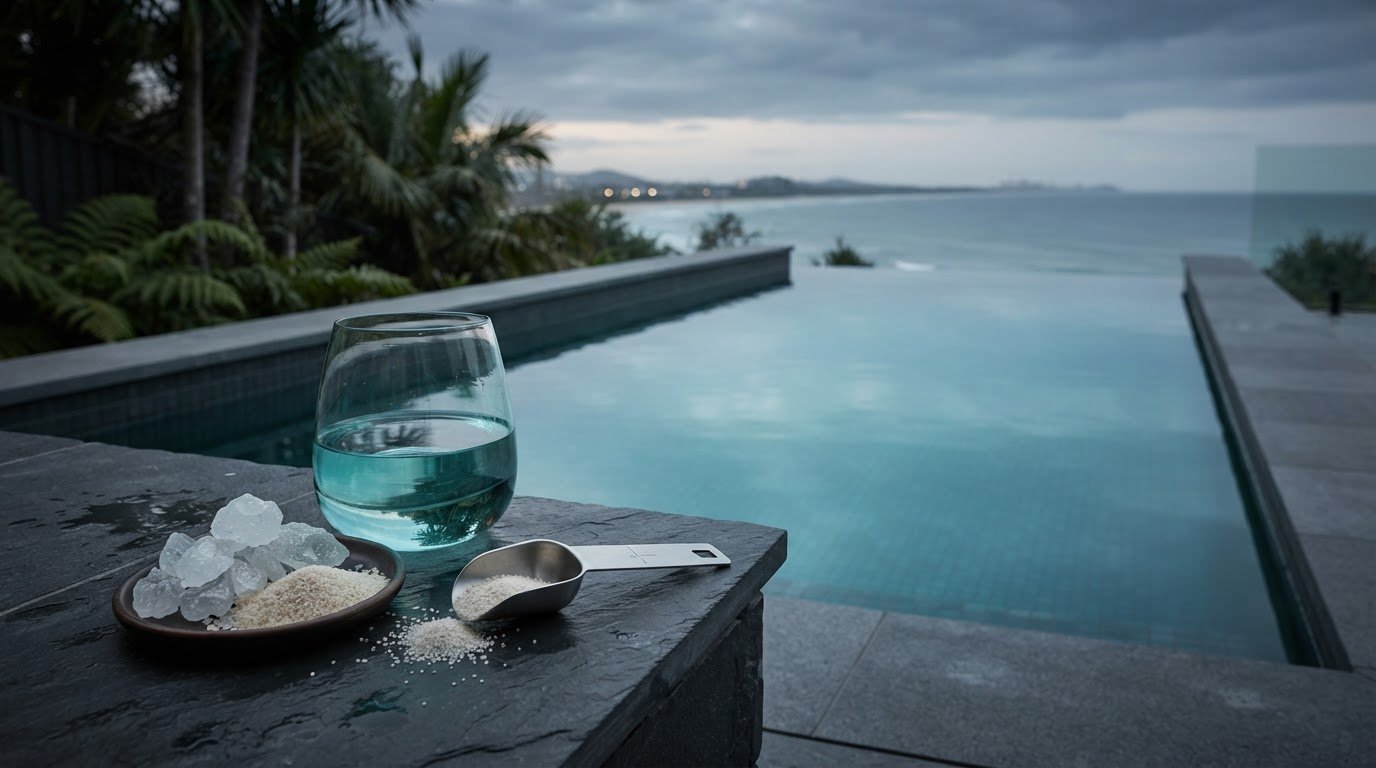
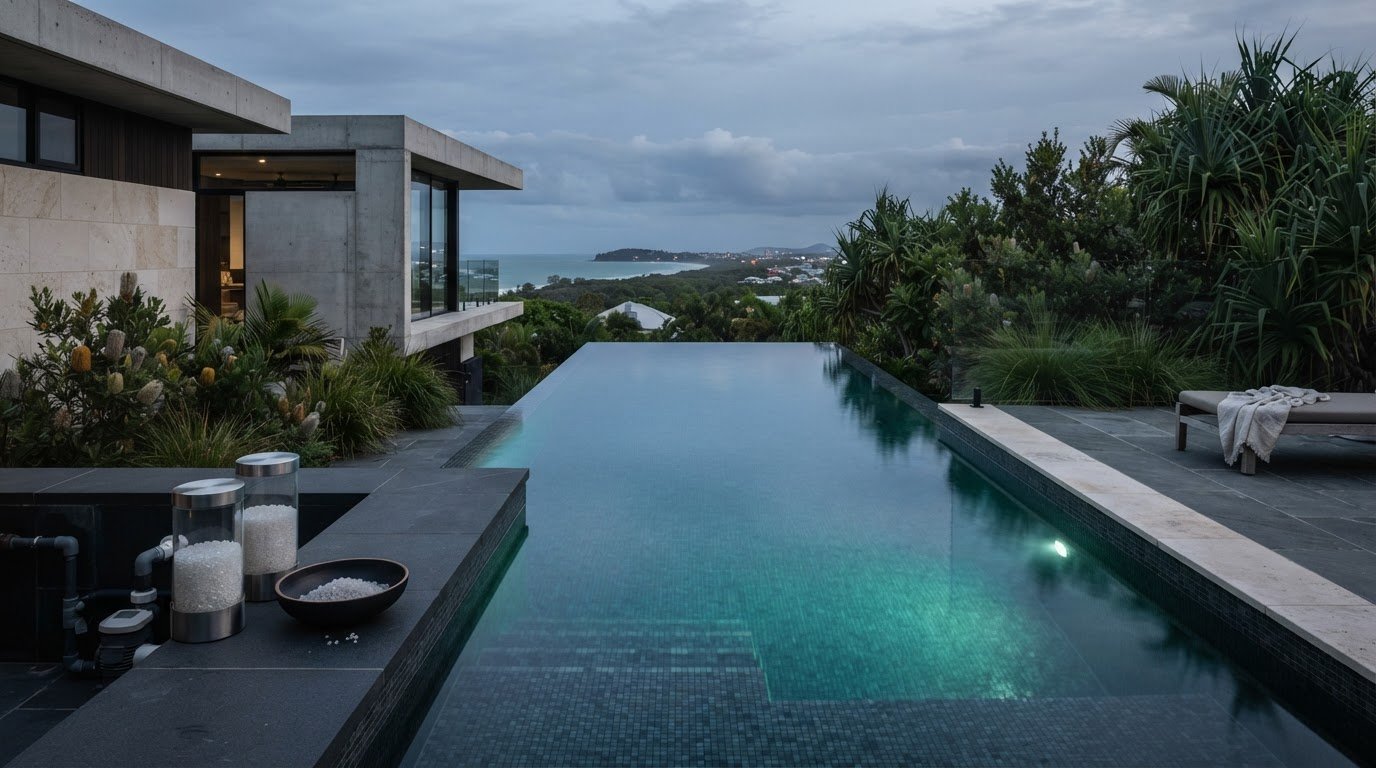
Magnexa supplies pool minerals in 10 kg and 25 kg bags, as well as starter packs. The right format depends on the quantity indicated by your pool volume and the product’s dosing directions. Once you have an estimate, compare it with the available bag sizes to plan your supply.
A starter pack is another option to consider when planning a conversion. Read its product directions alongside your pool details, and don’t assume the same quantity or instructions apply to every pool. Base your calculation on the specific product you intend to use, not a general dose.
Magnexa’s dosing calculator helps estimate mineral quantities from your pool details. Use the result as a planning estimate, then follow the product instructions and continue testing the water as required. This ties the supply decision to your pool rather than a one-size-fits-all amount.
Does Magnexa deliver mineral pool supplies across Queensland?
Magnexa delivers across South East Queensland, including Brisbane, Moreton Bay, the Sunshine Coast, Ipswich, Logan, Redlands and the Gold Coast. Delivery doesn’t extend to every part of the state.
Once you’ve checked your pool volume, water condition and equipment requirements, compare the mineral supply formats and estimate the amount needed. View mineral pool supplies and plan your quantities.
Make your conversion plan with the pool details in hand
Whether you switch to mineral pool Queensland depends less on the label and more on the pool in front of you. Pool volume, water condition, sanitiser and equipment specifications help determine which mineral product and care routine fit. Minerals change the water composition, but they don’t replace sanitisation or routine testing.
Start with accurate pool details and the product directions. Magnexa’s dosing calculator helps estimate mineral quantities from pool information, and 10 kg bags, 25 kg bags and starter packs provide options for different conversion needs. Delivery is available across South East Queensland, including Brisbane, Moreton Bay, the Sunshine Coast, Ipswich, Logan, Redlands and the Gold Coast.
With the right information, you can compare your existing setup with the requirements of a mineral system and plan next steps without assuming every pool needs the same changes. View mineral pool supplies and calculate your pool quantities.
A measured approach makes the decision clearer. Let your pool, equipment and preferred water-care routine guide your choice.
Frequently Asked Questions
Can I switch my saltwater pool to a mineral pool without draining it?
It depends on your pool’s water condition, existing system and the chosen product’s conversion directions. Draining isn’t automatically required, but it can’t be ruled out for every pool. Test the water first, record recent treatments and follow the product instructions for preparing the pool. This gives you a sound basis for deciding whether the existing water can be used as part of the conversion.
Do mineral pools still use chlorine?
Mineral content and sanitisation are separate. A mineral product adds minerals to the water, but the pool still needs an appropriate sanitising process. Some systems use a chlorinator to produce chlorine; the exact setup depends on the system and product. Don’t assume a mineral pool is chlorine-free or that adding minerals replaces sanitiser. Follow the product directions and keep testing the water as part of ongoing care.
Will my existing pool chlorinator work with magnesium minerals?
It may, but compatibility depends on the chlorinator’s specifications and the magnesium mineral product. Check the equipment manufacturer’s guidance alongside the product directions before adding minerals or changing settings. Note the chlorinator make and model, along with your filtration equipment, so you can compare the actual system requirements. Don’t assume every saltwater chlorinator suits every mineral product, or that equipment needs replacing without a stated requirement.
How much mineral salt do I need for my pool?
The quantity depends on your pool volume and the dosing directions for the specific mineral product. Use an accurate volume, then apply the product’s stated calculation method and target level. Magnexa’s dosing calculator can help estimate quantities from pool details. Treat the result as a planning estimate, not a substitute for testing the water or following product instructions. Available formats include 10 kg and 25 kg bags and starter packs.
Is a mineral pool the same as a saltwater pool?
No. The terms describe different aspects of pool water treatment. A saltwater pool commonly uses a chlorinator to generate chlorine from dissolved salt. A mineral pool has minerals added, while its sanitising method depends on the system. Some setups may use a chlorinator too. Product composition and care requirements vary, so compare the chosen mineral product’s instructions with your current equipment and water-care routine.
How long does it take to switch to a mineral pool in Queensland?
There isn’t one reliable timeframe for every conversion. The work involved depends on the pool’s existing equipment, water condition and the product’s preparation and dosing instructions. Gathering a recent water test, accurate pool volume and equipment details helps clarify what needs to happen before adding minerals. Follow the product directions for preparation and retesting rather than relying on a general timeline for a different pool.
Does Magnexa deliver mineral pool salt throughout Queensland?
Magnexa delivers across South East Queensland, including Brisbane, Moreton Bay, the Sunshine Coast, Ipswich, Logan, Redlands and the Gold Coast. Pool owners can use the dosing calculator to estimate mineral quantities from their pool details and review the available 10 kg bags, 25 kg bags and starter packs.
Frequently Asked Questions
More articles