Soft Pool Water Minerals: What They Change and What They Do Not
18 October 2026 · 16 min read
A softer-feeling pool doesn’t prove it has low calcium hardness. That distinction matters when you’re considering soft pool water minerals: how water feels is a sensory impression, while calcium hardness is a measured part of water balance. Magnesium minerals can change the water’s mineral mix, but touch alone can’t tell you whether the pool is balanced.
If the water feels smooth, you might wonder whether minerals are responsible or whether low hardness is putting the pool surface and equipment at risk. Both questions need measured answers. Water with too little calcium can be aggressive, while excess calcium can contribute to scale. Adding minerals without checking the existing balance may not address the cause.
This article explains what “soft” can mean, how feel differs from a calcium-hardness reading, and which checks to make before changing mineral levels. It also explains why magnesium minerals are a water choice, not a replacement for sanitising or routine pool care. If you’re planning a mineral addition, Magnexa’s dosing calculator helps you work out quantities using your pool volume.
Key Takeaways
- “Soft” can describe how pool water feels, not a calcium-hardness test result. Treat the sensation as a clue, not a diagnosis.
- Soft pool water minerals can change the mineral mix, but calcium hardness is only one part of pool-water balance.
- Before adjusting minerals, test the water and consider the pool surface, fill-water source and recent top-ups.
- Smooth or slippery-feeling water alone doesn’t confirm an imbalance. Use test results and visible signs together.
- Magnesium pool minerals are one option for a mineral pool. Use the dosing calculator to plan quantities for your pool volume.
Soft pool water minerals: what “soft” means in a swimming pool
In everyday pool talk, “soft” can mean water that feels smooth or slippery to a swimmer. In water testing, hardness is a measured mineral level. These meanings relate to water, but they aren’t interchangeable. A swimmer’s description can’t tell you the calcium-hardness result, and that result can’t predict exactly how the water will feel to everyone.
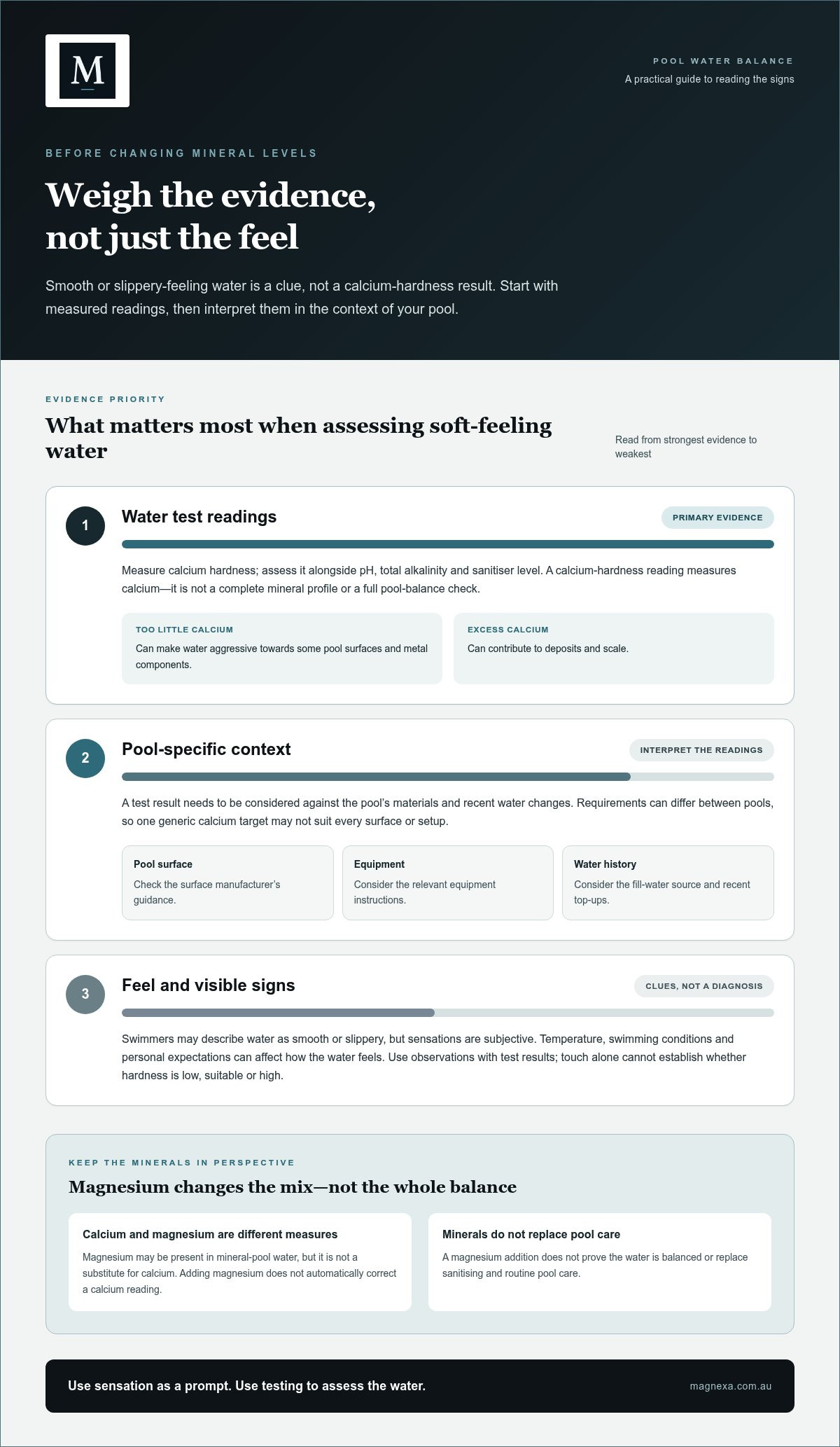
Water feel is a personal impression; calcium hardness is a test measurement. Calcium and magnesium are minerals in water, but a calcium-hardness reading measures calcium hardness, not every mineral present or the pool’s overall balance. Other readings, including pH, total alkalinity and sanitiser level, also matter when assessing pool water.
In general water terminology, hard water has a higher mineral content, particularly calcium and magnesium. Hard water is characterized by a high mineral content, primarily calcium and magnesium ions. Pool testing uses more specific measurements, so the everyday label “soft” isn’t a complete description of pool chemistry. Treat it as a prompt to consider both how the water feels and what the test results show.
What does soft pool water feel like?
There’s no single sensation that proves water is soft. One swimmer might call it smooth or slippery; another may describe the same water as ordinary. Those observations are useful, but they’re subjective and don’t replace a water test. They also can’t establish that mineral water will produce a particular skin, eye or wellness outcome.
Feel can be an unreliable way to compare pools. Temperature, recent swimming conditions and personal expectations can all affect how someone describes the water. If swimmers disagree, that doesn’t mean one person is wrong. It means sensation alone isn’t a consistent measure of mineral content.
Does soft-feeling water mean low calcium hardness?
No. A smooth or slippery sensation can’t establish whether calcium hardness is low, within the pool’s required range or high. You need a test result to assess measured calcium hardness. Interpret the result in relation to the pool surface and equipment, as their requirements can differ.
That check matters because water with too little calcium hardness can be aggressive towards some pool surfaces and metal components over time. Excess calcium can contribute to scale. The right interpretation depends on the actual test result and the pool’s surface requirements, not on whether one swimmer thinks the water feels soft.
Treat “soft” as a description of sensation, not a diagnosis. Record what swimmers notice, then use water testing to find out what the pool’s mineral measurements show. Separating observation from measurement helps you identify whether the concern is about feel, balance or both.
How magnesium and calcium minerals affect pool-water balance
Calcium and magnesium both contribute to water’s mineral content, but they have different roles in pool testing. A calcium-hardness test measures calcium in the water. It doesn’t provide a complete mineral profile or show whether every part of the pool’s chemistry is balanced.
Mineral content and pool balance are related, but distinct. A pool can contain magnesium and still need its calcium hardness, pH, total alkalinity and sanitiser level assessed separately. Adding magnesium minerals doesn’t, by itself, establish that the water is balanced or replace sanitising and routine care.
Water chemistry also uses “total hardness” to describe the contribution of calcium and magnesium together. That broader measure isn’t the same as a calcium-hardness result. Keep the specific test parameter in view: a calcium reading tells you about calcium, while a wider mineral profile requires other information. This distinction helps prevent a magnesium addition from being mistaken for a calcium adjustment.
Calcium hardness and magnesium: different parts of the picture
Calcium hardness is a specific reading of calcium in pool water, usually expressed as a concentration. Magnesium is another mineral that may be present in mineral-pool water, but it isn’t a substitute for calcium. A calcium-hardness result therefore shouldn’t be read as a measure of all minerals. For a closer look at magnesium in pools, see this guide to magnesium pool salt basics.
Think of these readings as separate pieces of information, not competing descriptions of the same thing. If a pool has magnesium minerals, the calcium-hardness result still has its own purpose. It doesn’t show the pool’s full mineral composition, and adding magnesium doesn’t automatically correct a calcium reading. Consider each test result in light of the pool’s operating guidance.
Why pool surfaces and equipment need balanced water
Mineral levels matter because water interacts with the surfaces and components it touches. If calcium hardness is too low for the pool’s requirements, water may become aggressive towards some surfaces or metal parts. If calcium is too high, deposits and scale may form. These are possible issues at opposite ends of the balance, not outcomes that can be diagnosed by feel alone.
There isn’t one calcium-hardness target that suits every pool surface and setup. Use the pool surface manufacturer’s guidance and relevant equipment instructions to interpret the result. A target that works for one pool may not suit another, so don’t adjust calcium based on a generic figure without considering your pool’s materials.
Take a measured approach: use the calcium-hardness result to assess calcium, then consider it alongside other water readings and the pool’s requirements. Magnesium pool minerals can change the water’s mineral composition, but they don’t remove the need to understand balance. If you’re considering that option, explore magnesium pool salts and minerals alongside the checks that guide your decision.
Soft-feeling mineral water versus hard water: how to read the signs
A swimmer’s description is one observation, not a diagnosis. Smooth or slippery-feeling water doesn’t confirm low calcium hardness, just as residue on a fitting doesn’t prove the pool has high calcium. Compare observations with test results. The table below shows what each sign can and can’t tell you.
| Observation | Possible visible signs | Relevant check | Sensible interpretation |
|---|---|---|---|
| Smooth or slippery feel | May occur without an obvious visible change | Calcium hardness and other pool-water readings | A subjective description, not proof of low hardness |
| Hard-feeling water | Deposits may be present, but feel alone is inconclusive | Calcium hardness, pH and total alkalinity | Use results to assess balance; don’t diagnose from sensation |
| Residue or deposits | Marks on surfaces or fittings | Calcium hardness and other relevant readings | A reason to investigate, not a confirmed cause |
| Cloudiness or surface change | Water looks persistently cloudy, or a finish appears altered | Test readings and pool-surface guidance | Several causes are possible; gather evidence before adjusting |
Signs can overlap. A deposit is a reason to check hardness, but its appearance alone can’t identify the cause. Persistent cloudiness may also have more than one explanation. Don’t add minerals or other chemicals based on a single symptom. Record what you see and the relevant readings first. Comparing them helps you avoid changing several things without knowing which change matters.
Which signs suggest a test is worth doing?
Visible deposits, persistent cloudiness or a change to the pool surface are sensible reasons to investigate. Note where the change appears and whether it is new or recurring, then test the water before making adjustments. Since one symptom can have several possible causes, keeping a record of readings and observations gives you a clearer basis for deciding what to check next.
Fill water is part of the picture. Across South East Queensland, its characteristics can vary, so a neighbour’s result or an old reading may not describe your pool. If you’ve topped up or refilled, record when it happened and consider testing the source water as well as the pool. Comparing the results can help put a later reading in context.
What can a water test tell you about minerals?
A calcium-hardness result reports calcium hardness, not every dissolved mineral in the water. Test strips and other methods cover different parameters, so check which readings your test provides. A result that doesn’t include magnesium can’t estimate the pool’s full mineral composition. For more information about that mineral, read about magnesium chloride in pool water.
Use readings to guide the next step, not to confirm a feeling after the fact. For soft pool water minerals, the useful question is whether the measured results suit the pool and its surface, not whether one swimmer calls the water soft.
How to assess soft pool water minerals before changing your pool
Before changing mineral levels, identify what you’re trying to address. Is the concern a swimmer’s description of the water, a test result, a visible deposit or a surface change? Each points to a different question. Adding minerals because the water feels soft can change the pool without addressing the cause. For soft pool water minerals, use measured results and the pool’s requirements to guide any adjustment.
- Identify the concern. Record what you’ve noticed and where, such as a slippery sensation, marks on fittings or persistent cloudiness. Keep observations separate from test results.
- Test the water. Record the readings your test method provides, including calcium hardness and other relevant pool-water measures. Check the test instructions to see which parameters it covers.
- Review the pool. Note the pool volume and surface type, then compare the readings with current guidance for the pool surface and equipment. Consider the water source and any recent top-ups or refills, which may affect how you interpret a result.
- Decide whether a change is needed. If the readings indicate an adjustment, follow guidance suited to your pool. If they don’t, don’t add minerals solely to change how the water feels.
A practical check before adding minerals
Keep a simple record of pool volume, surface type, recent water additions and current test results. If you’ve topped up or refilled, include when it happened and, where possible, the source-water readings. This makes it easier to interpret a change instead of treating one number in isolation. Check pool and surface guidance before acting, because requirements can differ between pool types.
When is a mineral adjustment appropriate?
An adjustment makes sense when test results show a measured need and the proposed change suits the pool. A smooth or slippery sensation isn’t enough to establish that need. Avoid applying one universal dose or target to every pool. The magnesium pool dosing calculator helps plan mineral quantities using pool volume, but it doesn’t test the water or determine whether an adjustment is required.
Once you’ve assessed the water and decided a mineral addition is appropriate, use the calculator to plan a quantity for your pool volume. Explore magnesium pool minerals as a considered pool-water choice, alongside the testing and balance checks your pool needs.
Choosing magnesium pool minerals for a softer-feeling pool
Magnesium pool minerals are one option for changing a pool’s mineral composition. They don’t guarantee a particular feel, prove that calcium hardness is low or correct an imbalance by themselves. Choose them as a pool-water product, not as a shortcut around testing. The pool’s current readings, volume and surface requirements still guide whether adding minerals makes sense and what quantity to use.
What to consider when selecting pool minerals
Start with the reason for adding minerals. If you want to use a magnesium mineral pool system, check the pool’s current water condition and follow relevant product and pool guidance. Don’t choose a quantity based only on a swimmer’s description of softness. A mineral addition doesn’t replace testing, sanitising or routine pool care, and it shouldn’t be treated as a promise of a particular skin or health result.
Magnexa supplies magnesium pool salts and minerals in 10 kg and 25 kg bags, as well as starter packs designed for mineral pool conversions. Choose an option based on your pool and the quantity required, not just the bag size. Have your pool volume and current water information ready before planning an addition. If the test results don’t show a reason to change the mineral level, there may be no need to add minerals simply to pursue a particular sensation.
A measured next step for South East Queensland pool owners
Once you’ve decided a mineral addition suits your pool, use the dosing calculator to estimate quantities from your pool volume. It helps with quantity planning, but it doesn’t test the water or determine whether an adjustment is needed. Use it alongside your recorded results and guidance for your pool surface. That keeps the calculation relevant to your pool rather than relying on a generic dose.
Magnexa delivers pool minerals across South East Queensland, including Brisbane, Moreton Bay, the Sunshine Coast, Ipswich, Logan and Redlands, and the Gold Coast. Magnesium minerals are a product choice, not a substitute for balanced water or regular sanitising. If you’ve checked your readings and want to consider this option, explore Magnexa pool minerals and use the dosing calculator to plan a quantity for your pool.
The practical takeaway is simple: a softer feel isn’t evidence of low hardness, and a mineral product won’t establish balance on its own. Treat “soft” as a description, use test results to assess the water, and choose magnesium pool minerals only when they fit your pool’s needs. This lets you consider soft pool water minerals without mistaking feel for a measurement or expecting minerals to replace routine care.
Make your next pool decision with confidence
Before choosing soft pool water minerals, decide what you want to change and what evidence supports that change. A clear goal helps you avoid adding minerals simply to chase a particular sensation. Keep your pool’s test results and surface guidance close as you consider the options, and take a measured approach rather than changing several things at once.
If magnesium minerals fit your plans, choose a quantity based on your pool’s needs, not on feel alone. Magnexa’s pool dosing calculator can help you plan the amount for your pool volume. Review your results, then make the change that suits your pool and its requirements.
Explore Magnexa magnesium pool minerals and use the dosing calculator to plan your pool’s quantity.
Frequently Asked Questions
Can magnesium minerals make pool water feel softer?
Pool owners may choose magnesium minerals in pursuit of a different water feel, but they can’t guarantee a softer sensation. Perception varies, and the result depends on source water and the pool’s wider chemistry. If you’re considering soft pool water minerals, test the pool before adding them. A change in feel alone doesn’t show calcium hardness or confirm balance. Record readings before and after a change to compare measured results.
Does soft pool water need chlorine or another sanitiser?
Yes. Minerals alone don’t sanitise pool water. Keep using the sanitising system suited to your pool, and follow its operating instructions and the directions for the products you use. Don’t reduce sanitiser simply because the water feels softer. After adding minerals, check the relevant readings and continue your established water-care routine rather than assuming the mineral addition has changed the pool’s sanitising needs.
Can a household water softener be used to fill a swimming pool?
Don’t assume water from a household softener is suitable for your pool. Its output may not suit the pool surface, equipment or existing water balance. Before using softened water for a fill or top-up, test it and consider how it may affect the pool’s readings. Record the source-water and pool results, then follow guidance for your pool and equipment before making further adjustments.
Is soft pool water bad for a concrete or tiled pool?
The word “soft” alone can’t show whether water is suitable for a concrete or tiled pool. Check the measured readings and compare them with the surface and equipment guidance. If you notice a change to grout, the finish or fittings, note where it appears and when you first saw it. That record can help distinguish a developing surface concern from a temporary change in how the water feels.
Can rainwater make pool water softer?
Rain can dilute some dissolved components in pool water, but the effect depends on rainfall, pool volume and the water’s chemistry beforehand. Don’t use a change in feel to estimate what has changed. After heavy rain or a substantial top-up, note the event and test the pool before adding minerals or other treatment. Comparing readings from before and after the water change gives you a more useful basis for action.
Do magnesium pool minerals replace pool salt or chlorine?
No single mineral product should be treated as a replacement for every part of pool care. The minerals, salt and sanitising method in use depend on the pool setup and product directions. Keep those decisions separate: check what your system requires, follow equipment guidance and maintain routine testing. If you’re changing the pool’s mineral setup, plan the change around the full system rather than assuming magnesium minerals cover sanitising as well.
How often should I test pool-water hardness?
Test hardness when investigating deposits, a surface concern or a change in water condition, and after a substantial refill or top-up. Follow pool and equipment guidance for routine testing, as frequency depends on use and water changes. Pool owners in Brisbane, Moreton Bay, the Sunshine Coast, Ipswich, Logan and Redlands, and the Gold Coast should use readings from their own pool and fill water rather than assuming another pool’s results apply.
Frequently Asked Questions
More articles