Bulk Pool Minerals for Logan Pools: Options and Running Costs
24 October 2026 · 15 min read
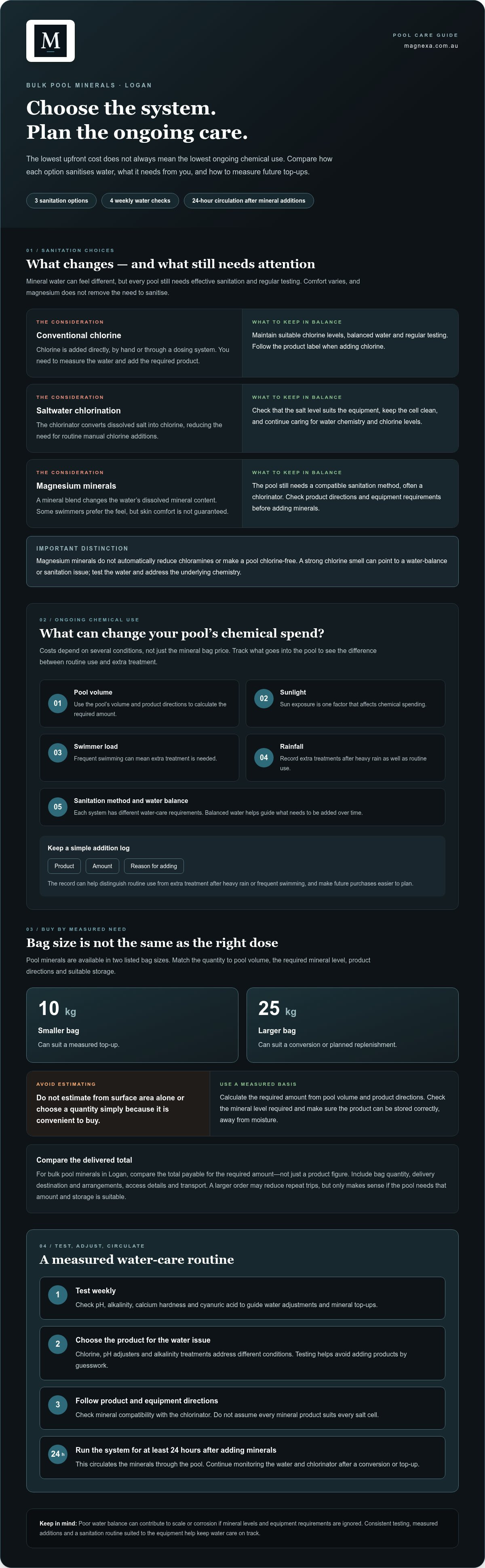
For bulk pool minerals in Logan, the key options are conventional chlorine, saltwater chlorination and magnesium mineral systems. Ongoing costs depend on pool volume, sanitation method and how often water or minerals need topping up. The lowest upfront cost does not always mean the lowest ongoing chemical use.
Compare more than the price per bag. Each system has different water-care requirements, and water balance affects what you need to add over time. Regular testing helps you make measured adjustments instead of guessing.
This guide compares the three options, explains what affects chemical costs and covers how to test, top up and maintain pool minerals. It also outlines what to consider when choosing a system for your Logan pool, so you can weigh the ongoing care alongside the initial decision.
Key Takeaways
- Compare chlorine, saltwater and magnesium systems by how they sanitise water and what ongoing care each requires.
- Estimate chemical use by considering pool volume, water balance and the demands of your sanitation system.
- Test pH, alkalinity, calcium hardness and cyanuric acid weekly to guide water adjustments and mineral top-ups.
- After adding minerals, run the system for at least 24 hours to circulate them through the pool.
- Choose pool and spa chemicals according to the water issue you need to correct, rather than adding products by guesswork.
Chlorine, salt water and magnesium mineral options
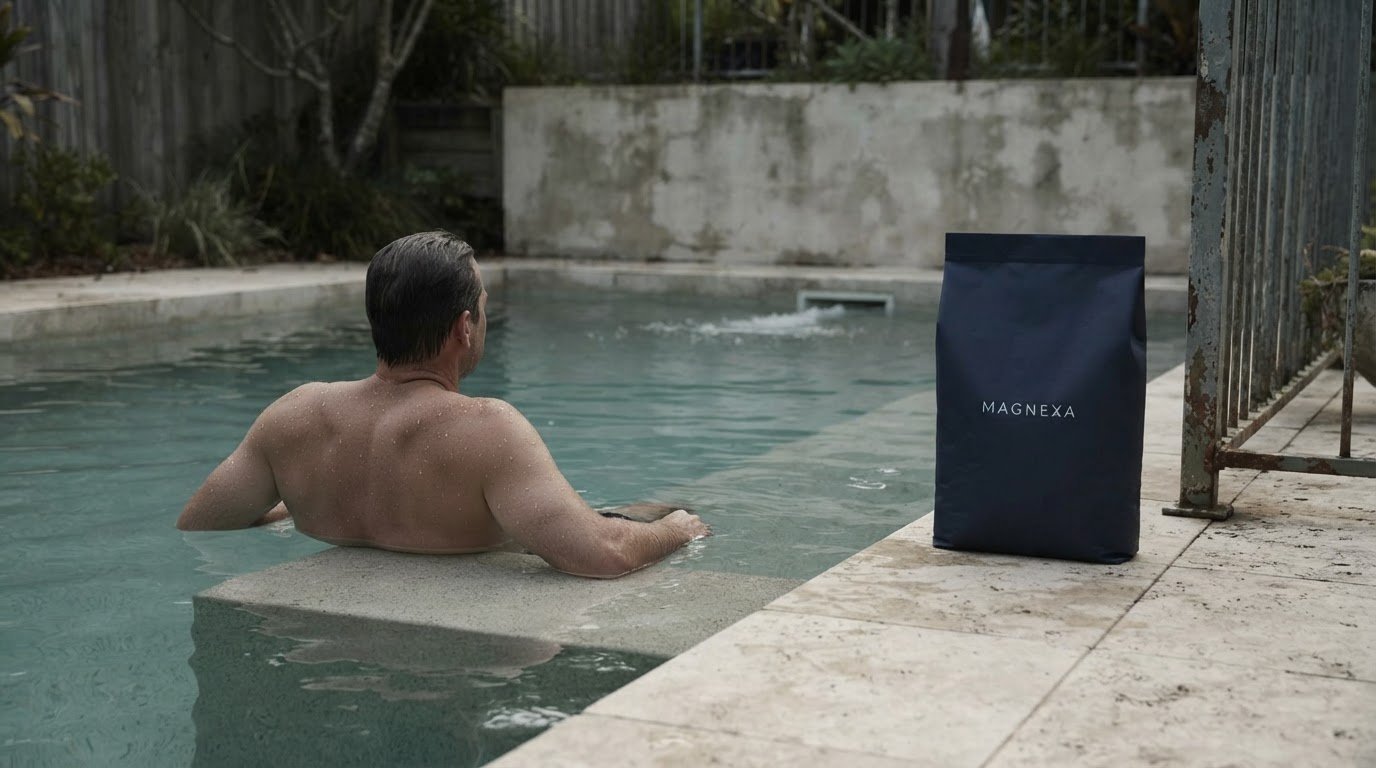
For a Logan pool, the key decision is how to sanitise the water, not whether it needs sanitation. Mineral pools can feel different, but they still need effective sanitising and regular testing. Some swimmers prefer the feel of magnesium mineral water, though comfort varies. Poor water balance can contribute to scale or corrosion if mineral levels and equipment requirements are ignored. Maintenance includes testing the water, following product directions and keeping the chlorinator operating correctly.
A saltwater pool still uses chlorine. Its chlorinator converts dissolved salt into chlorine to sanitise the water, reducing the need for routine manual chlorine additions. The cell and water chemistry still need attention. In a conventional chlorine pool, chlorine is added directly, such as by hand or through a dosing system. Both approaches require suitable chlorine levels, balanced water and regular testing.
- Chlorine: A straightforward sanitation option. Measure the water and add the required chlorine product according to its label.
- Saltwater: A chlorinator generates chlorine from dissolved salt. Check that the salt level suits the equipment and keep the cell clean.
- Magnesium minerals: A mineral blend changes the water’s dissolved mineral content. The pool still needs a compatible sanitation method, often a chlorinator.
Minerals do not automatically reduce chloramines. Chloramines form when chlorine reacts with contaminants, including swimmer waste. A strong chlorine smell can point to a water-balance or sanitation issue, rather than a need for more minerals. Test the water, address the underlying chemistry and maintain circulation. Some swimmers prefer the feel of magnesium mineral water, but skin comfort varies and is not guaranteed.
Magnesium pools may still contain salt and use chlorine. The blend determines which minerals are added, while the chlorinator instructions specify compatible operating conditions. Do not assume every mineral product suits every salt cell. Before adding minerals, check the product directions and equipment requirements. After conversion, monitor the water and chlorinator rather than treating the pool as chlorine-free.
When comparing bulk pool minerals in Logan, consider the sanitation system, mineral product and equipment already installed. A product is a poor fit if its requirements conflict with the chlorinator or the maintenance routine you can follow. If you want to avoid chlorine altogether, note that a magnesium system does not remove the need for sanitation. Choose a system whose water-care steps you can maintain consistently.
Pool dimensions can also be part of the selection check. Round pools are listed with a depth of 1.45m at level. Small pools are listed with depths from 1.0m to 1.78m, while large pools are listed with depths from 0.98m to 1.96m. Compare the pool’s listed depth and configuration with the product and equipment guidance before choosing a mineral option.
Chemical use and running costs
Pool chemical spending depends on water volume, sunlight, swimmer load, rainfall and sanitation method. In Logan, recording each product you add helps distinguish routine use from extra treatment after heavy rain or frequent swimming. Note the product, amount and reason to make future purchases easier to plan.
Bulk Mineral Prices and Delivery
Delivered prices for bulk pool minerals for Logan pools depend on the bag quantity and delivery arrangements. Compare the total payable for the required amount, rather than a product figure alone. Include the delivery destination and number of bags when comparing options. This gives you a clearer basis for weighing one planned top-up against repeated smaller purchases.
Home and pool-business delivery depends on the supplier’s arrangements for the destination and order. Include access details and the required quantity when arranging delivery, then account for transport alongside the chemical budget. A larger order may reduce repeat trips, but it only makes sense if the pool needs that amount and the minerals can be stored correctly.
Logan Suppliers and Purchase Options
Pool shops and pool-chemical wholesalers are local channels to consider when looking for bulk pool minerals in Logan. A pool shop may suit a planned water-care purchase, while a wholesaler may suit owners comparing quantities for a larger pool or business. The right option depends on the mineral type, pack size and whether collection or delivery fits the job.
Before purchasing, identify the pool’s sanitation system and the mineral product it requires. A salt chlorinator, for example, has operating requirements that affect product suitability. Keep the product label and equipment instructions together when planning a top-up. This helps you avoid choosing a mineral product based only on the word “salt” or the bag size.
Bulk Quantities and Bag Sizes
Pool minerals are available in 10 kg and 25 kg bags. A smaller bag can suit a measured top-up, while a 25 kg bag provides a larger quantity for a conversion or planned replenishment. The correct amount depends on pool volume and the mineral level required, not simply on the number of bags that are convenient to buy.
Use the pool’s volume and product directions to calculate the required quantity before reserving bags. Do not estimate from surface area alone. For bulk pool minerals in Logan, match the bag quantity to the calculated dose and your available storage space. This helps prevent leftover product from being exposed to moisture or stored poorly.
Running costs also include products beyond minerals. Chlorine, pH adjusters and alkalinity treatments address different water conditions, so adding them without testing can waste product and disrupt balance. Record each addition and its purpose. Over time, the log helps distinguish routine treatments from those needed after rain, heavy use or a water-balance correction.
For a measured purchase, compare your pool’s calculated requirement with the available pool mineral bag options and delivery arrangements before choosing a quantity.
Testing pool water and topping up minerals
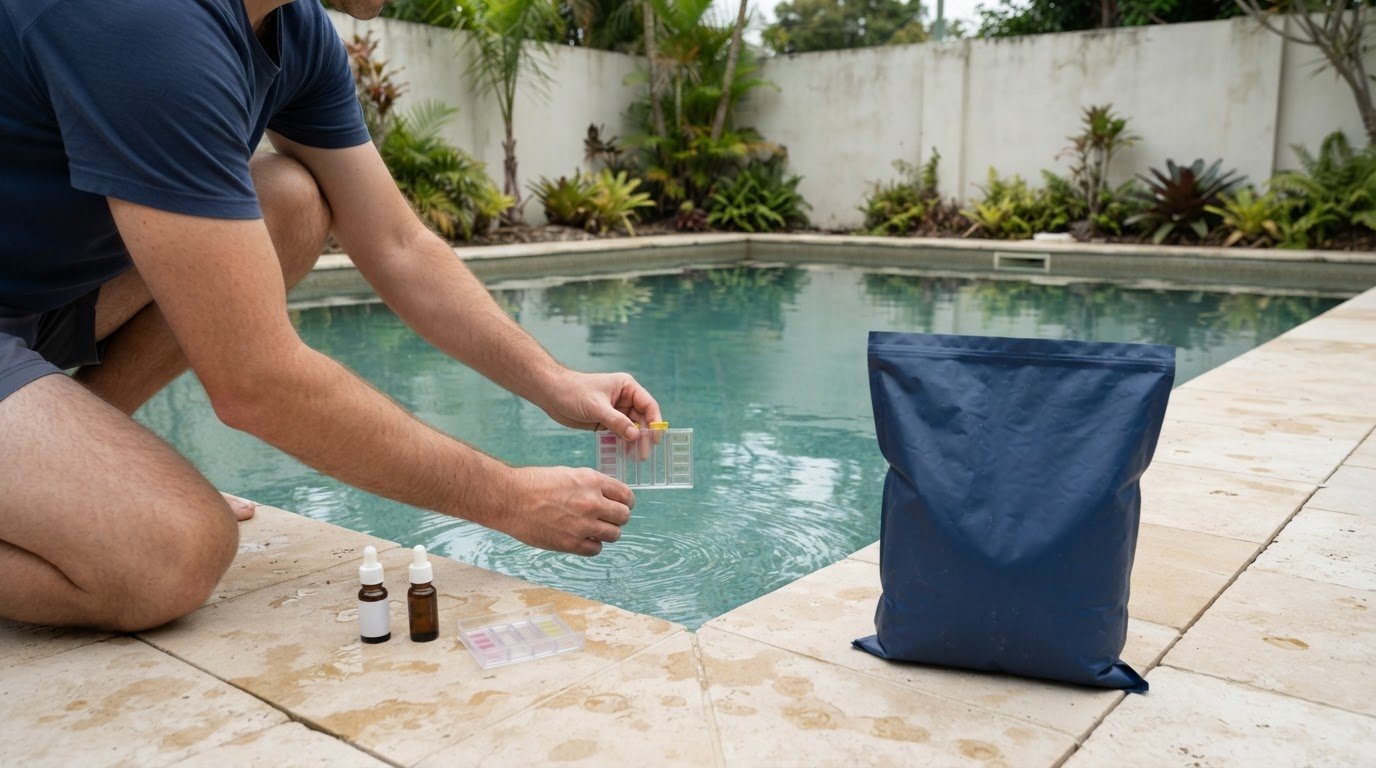
Test mineral pool water regularly, including pH, alkalinity, calcium hardness and cyanuric acid. These readings help you decide whether the water needs adjustment before adding minerals or other chemicals. Mineral systems still require sanitation, so use test results to guide both water balance and chlorinator operation.
To calculate a mineral dose, first establish the pool’s water volume. Then use the product directions and current mineral reading to work out the required amount. Shape and depth affect volume, so use measured dimensions rather than a rough surface-area estimate. Add only the calculated dose, allow it to circulate, then retest.
Minerals alone do not sanitise pool water. A compatible chlorinator produces the chlorine that does the sanitation work. Follow its operating instructions and test the water regularly. If a reading falls outside the product or equipment guidance, correct the water balance before adding more minerals.
Pool water feel depends on its mineral content and overall balance. Some swimmers prefer mineral water’s feel, but a test result, rather than feel alone, should guide adjustments. Clear water also depends on filtration. With glass media, backwash when the gauge registers 10 PSI above its normal range. Glass media filtration in mineral pool systems can save up to 65% of water during backwashing.
Free in-store pool water testing may be available through individual pool shops. For a useful test, take a fresh water sample in a clean container and note recent rain, heavy swimming or chemical additions. Ask for the readings, not just a general assessment, so you can compare the results with your own weekly test record.
Store pool minerals in their original packaging, keep them dry and follow the product label. Keep chemicals secure and separate from incompatible products. For disposal, follow the label and relevant local waste guidance. Do not pour leftover concentrated chemicals into a stormwater drain or mix products together.
- Before topping up: Record pool volume, current readings and the mineral product’s dose instructions.
- After adding minerals: Run the system for at least 24 hours to aid circulation, then test again.
- For filtration: Use the filter gauge to identify when glass media needs backwashing.
For a mineral pool conversion or replenishment, the correct quantity depends on pool volume, the product’s dosing directions and the water’s existing mineral level. Compare the calculated requirement with available bag sizes, including 10 kg and 25 kg, rather than estimating from the pool’s appearance.
Magnesium pool maintenance and use
A magnesium pool still needs routine water care. Log each test, mineral addition and chlorinator check so you can trace changes. For a backyard pool, this record helps distinguish a gradual mineral drop from a sudden change after rain, topping up or heavy swimming. The pool still needs sanitation; it is not chemical-free.
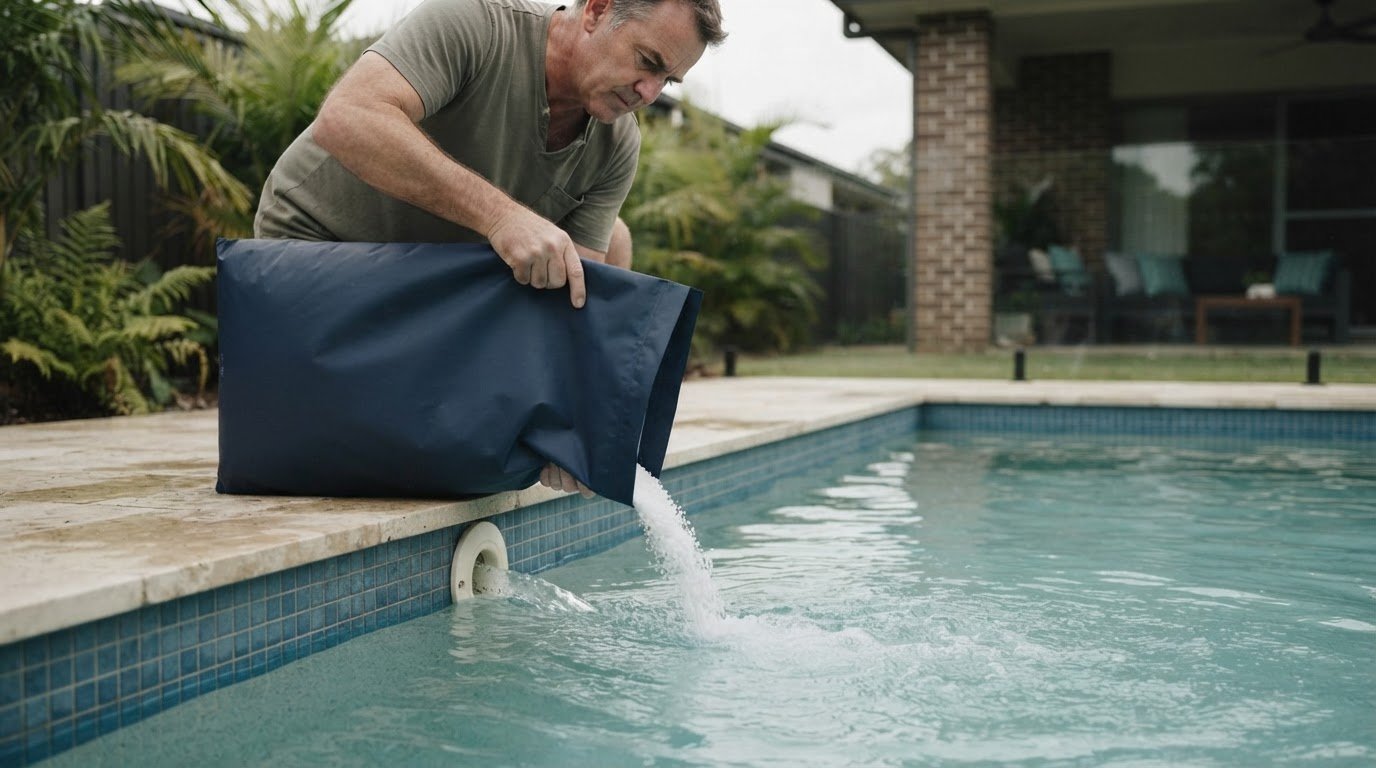
After adding minerals, run the pool system for at least 24 hours to circulate them through the water. Follow the product’s dosing directions and add the calculated quantity for the pool’s volume. Don’t rely on the water’s appearance to judge the dose. Allow circulation, then test the water before making another adjustment.
Test mineral pool water regularly for pH, alkalinity, calcium hardness and cyanuric acid. These readings show different aspects of water balance, so record each result instead of relying on a general impression. If one reading changes, address it with the appropriate treatment. Adding magnesium will not correct an unrelated pH or alkalinity issue.
The chlorinator remains part of the maintenance routine because minerals do not replace sanitation. Check and clean the mineral pool chlorinator cell every month. Mineral deposits or debris can interfere with its operation. Follow the equipment instructions for cleaning, and check that the cell is correctly fitted before restarting the system.
- After a mineral addition: Run the system for at least 24 hours, then test the water.
- Each week: Record pH, alkalinity, calcium hardness and cyanuric acid.
- Each month: Check and clean the chlorinator cell.
A magnesium system can change how pool water feels, but the result depends on the mineral product and water balance. Swimmers may notice a difference compared with water containing a different mineral composition. Treat comfort as a personal preference, not a substitute for testing. If the water feels different after a top-up, check the readings and review the amount added.
Seasonal use also affects maintenance planning. Before reopening a backyard pool after a period of low use, inspect the water, check the chlorinator and test the chemistry before swimming. After rain or substantial water replacement, test again before adding minerals. This helps you avoid dosing based on an earlier reading that no longer reflects the pool.
Keep mineral products dry in their original packaging and follow the label’s storage instructions. For a saltwater conversion, gradually drain the pool until the water level is reduced by two-thirds, topping up with fresh water during the process. Then follow the mineral product and equipment instructions for the conversion.
Pool and spa products
Choose pool chemicals based on test results. An alkalinity reading, for example, calls for a different adjustment than low calcium hardness. Keep the product label with your water-test record, then select the chemical that addresses the measured issue. A premium label does not replace checking the product’s purpose or following its directions.
Common pool products include specific treatments for water balance, sanitation and unwanted chlorine. The pack sizes below help pool owners plan storage and dosing, but the amount to use depends on the pool’s readings and product directions.
- Sodium bicarbonate: alkalinity increaser and buffer, supplied in a 25 kg pack.
- ISO cyanuric acid: sunscreen and stabiliser, supplied in a 25 kg pack.
- Soda ash: dense pH increaser, supplied in a 25 kg pack.
- Dry acid: sodium bisulphate, supplied in a 25 kg pack.
- Calcium chloride flake: hardness increaser, supplied in a 25 kg pack.
- Citric acid: supplied in a 25 kg pack.
- Sodium thiosulphate penta: chlorine remover, supplied in a 25 kg pack.
- Calcium hypochlorite: pool chlorine at 70% strength, supplied in a 40 kg pack.
These products are not interchangeable. Sodium bicarbonate addresses alkalinity, while soda ash raises pH. Calcium chloride targets hardness, and sodium thiosulphate removes chlorine. Check the relevant reading first, then follow the product label for dosing and handling.
A saltwater-to-mineral conversion also requires a measured process. During gradual draining, lower the saltwater pool level by two-thirds and top it up with fresh water. Check and clean the mineral pool chlorinator cell every month. These steps support a managed conversion and routine equipment care, but do not replace water testing.
Spa water needs its own maintenance plan. Pool Pro advises changing spa water every three to four months, depending on usage. Pool Pro also suggests removing and replacing one-third of the water as an alternative approach. Follow the spa’s product and equipment directions when treating replacement water, since a spa’s water volume differs from a swimming pool’s.
Before buying a chemical, write down the test result it is intended to correct. This helps prevent duplicate treatments, such as adding pH increaser when the measured issue is alkalinity. Store each product in its original packaging and follow its label instructions.
If your pool plan includes a mineral conversion, review pool mineral options alongside the chemicals needed to manage water balance.
For a spa owner considering that option, the 1/3rd replacement is an alternative maintenance approach, not a reason to skip product directions. Keep the water-treatment plan and replacement-water instructions together, and consult them when managing the spa after removing water. The chemical choice still depends on the water condition being addressed, so a partial water change should not take the place of checking the relevant reading.
Record the treatment you use to make later maintenance decisions more consistent. Before treating the water, confirm that the selected product is intended for the issue identified and follow its label. If the water condition is unclear, test it before adding a treatment.
Magnexa: magnesium pool salt
Magnexa supplies magnesium pool salt for pool owners choosing a mineral system or replenishing an existing one. Its magnesium salts are intended to soften pool water and support skin wellness. Mineral options include Pool minerals 10kg, Pool minerals 25kg and Healthy pool salts.
Choose a bag quantity after calculating the pool’s volume and checking the product directions. Magnesium minerals still require regular testing and a compatible sanitation system, so they suit owners prepared to maintain water balance and chlorinator operation. They are not a replacement for testing or sanitation.
For bulk pool minerals in Logan, Magnexa’s options give you a starting point for matching mineral supply to your pool’s needs. Contact Magnexa or visit magnexa.com.au to explore the available magnesium pool salt.
Set up your next pool-care step
Before your next mineral purchase, note the pool’s volume, current water readings and the system it uses. That gives you a practical basis for deciding what to order and how it fits your maintenance routine. If you’re comparing bulk pool minerals in Logan, focus on the product type and quantity your pool needs, rather than buying more than your dosing plan calls for.
Magnexa offers magnesium pool salt, Pool minerals 10kg and Pool minerals 25kg. These options give pool owners a clear starting point for a mineral top-up or conversion plan. Match the bag size to your calculated requirement and keep the product directions alongside your water-test record.
When you’re ready to consider the mineral supply for your pool, contact Magnexa about pool minerals. A measured next step helps you organise your pool care with confidence.
Frequently Asked Questions
What types of pool minerals are available in bulk, such as magnesium and mineral salt?
Bulk options include magnesium pool salt and mineral salts intended for pool water. For Logan pool owners, Magnexa offers magnesium pool salt, Healthy pool salts and Pool minerals 10kg and Pool minerals 25kg. Choose by the mineral system you plan to use, then match the quantity to the pool’s volume and the product’s dosing directions. A mineral product doesn’t replace the pool’s sanitation system.
How do you add pool minerals to a swimming pool safely?
Start with the pool’s measured volume and the product’s dosing directions, then calculate the required quantity before opening a bag. Use Magnexa’s Dosing Calculator to help determine mineral quantities for your water. Add the measured amount as directed on the product label, rather than estimating by eye or tipping in extra. Run the mineral pool system for at least 24 hours after adding minerals to circulate them.
Frequently Asked Questions
More articles