Magnesium Pool Water Cost and Converting from Saltwater
3 November 2026 · 11 min read
The cost of converting to magnesium pool water depends chiefly on pool volume, the mineral dose required and the water’s starting balance. An existing pool can often be converted by testing and balancing the water, then adding minerals, rather than replacing the pool. Start by identifying the pool volume and checking the minerals already in the water.
It makes sense to compare the initial mineral dose with ongoing pool care, not just the feel of the water. This guide explains how magnesium systems sanitise water, how much mineral to add, what affects conversion costs in Australia and how to change an existing saltwater pool. It also compares the practical differences, including chlorine use and regular water balancing, so you can judge whether a conversion suits your pool and budget.
Key Takeaways
- Regular testing and water balancing can be part of pool care.
- Base the mineral dose on your pool’s water volume and existing mineral levels before adding a blend.
- Compare the upfront conversion dose with ongoing chemical and balancing needs when weighing the cost in Australia.
- Converting an existing saltwater pool typically involves testing the water, balancing its chemistry and adding minerals.
How magnesium pools use minerals and chlorine for sanitation
Magnesium pool water uses minerals alongside a reduced chlorine level. It is not a chlorine-free system, and upkeep still includes testing, balancing and maintaining the chlorinator.
Mineral Pool Composition
Magnesium pools use minerals made primarily from magnesium chloride. A saltwater pool uses salt as the chlorinator input, while a conventional chlorine pool is often sanitised with chlorine added directly. Minerals change the water’s composition, but chlorine remains the active sanitiser. The mineral choice and sanitising method are separate parts of the system.
A mineral chlorinator passes dissolved minerals through a cell and generates active chlorine. That chlorine kills bacteria and helps prevent algae. The stated chlorinator output is 0.5-1.0 ppm; outdoor pools in Australia are also described with a 1-3 ppm chlorine range. Treat these as operating figures, not a claim about a legal standard.
Maintenance and Mineral Top-Ups
Test and balance pool water regularly, whether the system uses minerals, salt or manually added chlorine. Magnesium pool owners should test salinity monthly and typically top up minerals a few times a year. The amount needed depends on the pool’s water volume and mineral loss. Additions replace lost minerals; they do not replace chlorine sanitation or water testing.
Scale, corrosion and staining depend on water balance, mineral content and pool surfaces. If marks appear, check the water balance and mineral levels before adding more product. Mineral purity matters because unwanted material can affect water appearance and contribute to deposits. Backwashing and draining also remove dissolved minerals and chlorine, so consider the receiving environment when managing discharge. A softer feel or claims about eczema and other health benefits do not indicate sanitiser performance.
For pool owners, sanitation depends on using an appropriate sanitiser and regularly testing and balancing the water. These operating considerations do not identify a separate magnesium-specific Australian standard or local rule.
| System | Sanitiser method | Mineral or chemical input | Ongoing focus |
|---|---|---|---|
| Magnesium mineral | Chlorinator generates chlorine | Magnesium chloride blend | Test water and salinity |
| Saltwater | Salt chlorinator generates chlorine | Salt | Test and balance water |
| Chlorine pool | Chlorine added directly | Chlorine tablets or liquid | Test and balance water |
Choose by the mineral feel you want and the routine you can maintain; all three systems need water testing.
How much magnesium mineral should you add?
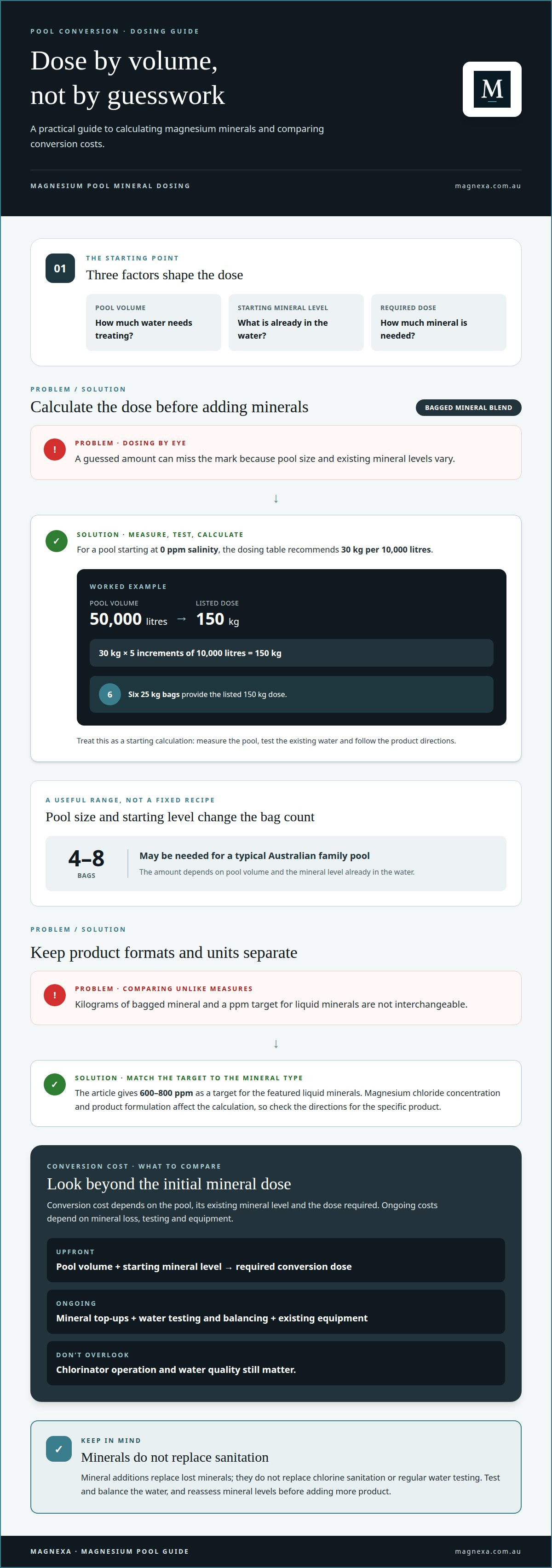
Work from pool volume and the mineral level already in the water. For a pool starting at 0 ppm salinity, the dosing table recommends 30 kg per 10,000 litres. That scales to 150 kg for a 50,000-litre pool, or six 25 kg bags. A typical Australian family pool may need 4-8 bags, depending on its volume and starting mineral level.
Use this as a starting calculation, not a reason to add minerals by eye. Measure the pool volume, test the existing water, then calculate the dose against the product’s directions. A 50,000-litre example helps show the scale: six 25 kg bags provide the listed 150 kg dose. Add the mineral as directed and allow it to circulate before reassessing water quality.
Some liquid mineral products use a different target: 600-800 ppm is given for the featured liquid minerals. That figure is not interchangeable with a bagged-salt dose. Magnesium chloride concentration and product formulation affect the calculation, so match the target to the mineral type rather than comparing kilograms and ppm directly.
Treat wellness claims with care. Magnesium pools may be described as supporting skin hydration or soothing sore muscles, but swimming is not a treatment for eczema, allergies, asthma or other skin conditions. A mineral system still uses chlorine and other pool chemicals. Sensitive eyes, dry hair or irritation can relate to water balance and sanitiser levels, not simply the mineral choice. Correct testing matters for comfort as well as sanitation.
For relaxation and a softer-feeling swim, focus first on a correctly dosed pool and balanced water. If you’re calculating a conversion dose, magnesium pool salts are one format to compare with the pool’s volume and mineral requirements.
What does a magnesium pool cost in Australia?
Conversion cost depends on pool volume, the starting mineral level and the dose required. Ongoing costs also reflect mineral loss, water testing and existing equipment. Compare these factors with a traditional chlorine or saltwater pool before deciding. A smaller initial dose does not necessarily mean lower upkeep if water balance or mineral levels need frequent correction.
Include more than the mineral purchase in your comparison. The conversion dose depends on the pool’s volume and the minerals already in the water. Regular water balancing and replacement minerals also affect ongoing costs. Chlorinator operation and water quality matter too. Base your estimate on the pool volume, current system and maintenance routine.
Health claims need a separate assessment from the budget. Magnesium supports functions in the body, but a pool is not a medical treatment. Claims about sensitive skin, eczema or psoriasis should not be treated as established outcomes for every swimmer. The amount absorbed during swimming is also different from soaking in magnesium-rich bathwater. One estimate says bathing would need to approach 24 hours a day to reach comparable exposure. That does not establish a health benefit from pool use.
Some mineral-pool claims also focus on evaporation, with reductions of 15-20% compared with saltwater pools. Treat that as a claim to assess separately from conversion costs. Pool cover use, weather and water care also affect water loss. Backwashing or draining sends dissolved minerals and sanitiser out with the water. Account for where that discharge goes, rather than assuming mineral water has no environmental effect.
For a practical comparison, list the initial mineral dose, expected top-ups, routine water-care requirements and any equipment changes. Then compare these with the corresponding costs for your current chlorine or saltwater pool. Keep wellness claims separate from the calculation: sensitive skin, relaxation and psoriasis outcomes do not determine operating costs.
Converting an existing pool to magnesium
A saltwater pool can often be converted without replacing its shell, pump or filter. The conversion changes the water’s mineral content, while the chlorinator continues producing chlorine for sanitation. Most standard saltwater chlorinators work with magnesium blends, so equipment replacement is not automatically part of the process. In Australia, a market estimate puts the share of pools that can be converted at 95%.
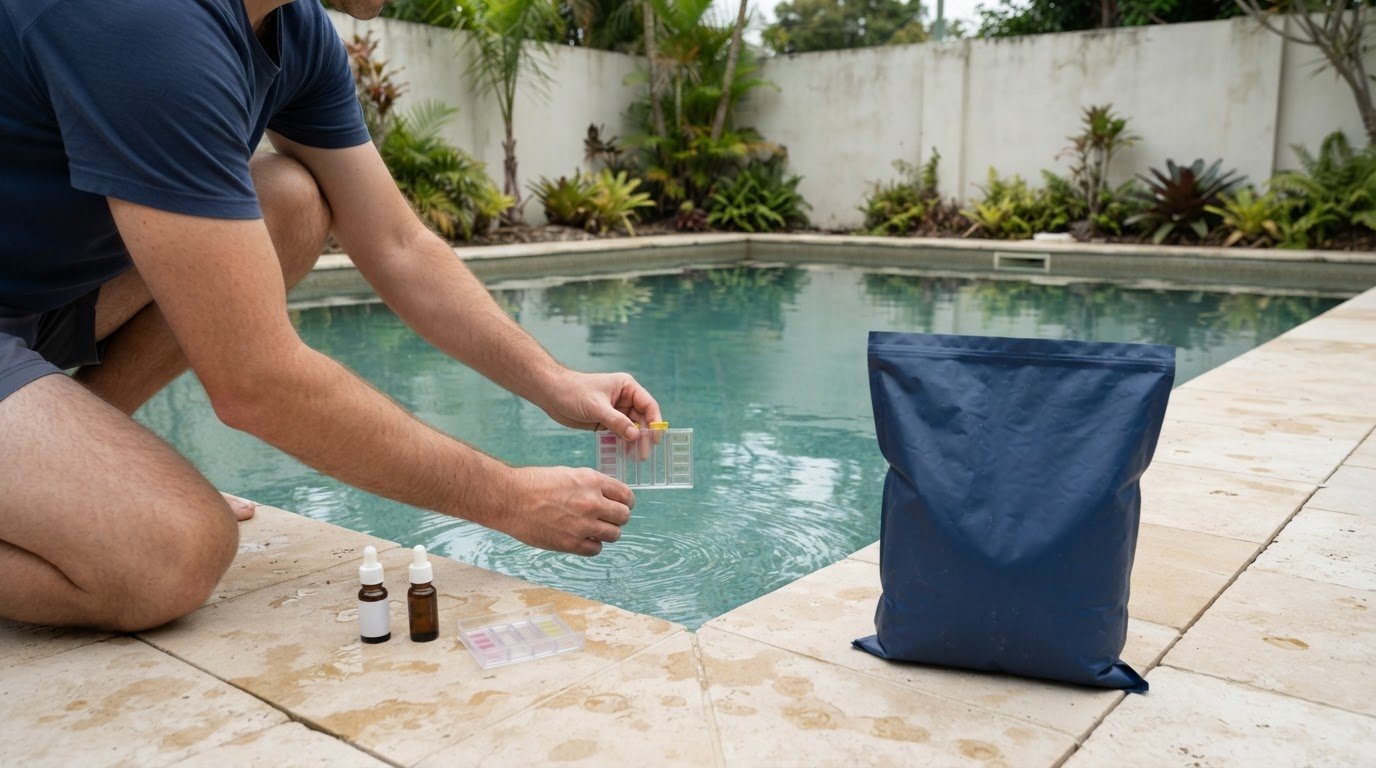
Start by identifying the pool volume and testing the water. Existing salt and mineral levels affect how much magnesium mineral to add. Then balance the water and calculate the dose using the pool volume and product directions. Don’t estimate by bag count alone: pools of different volumes need different quantities.
- Record the pool volume and test the water, including its existing mineral level.
- Balance the water chemistry before adding the magnesium blend.
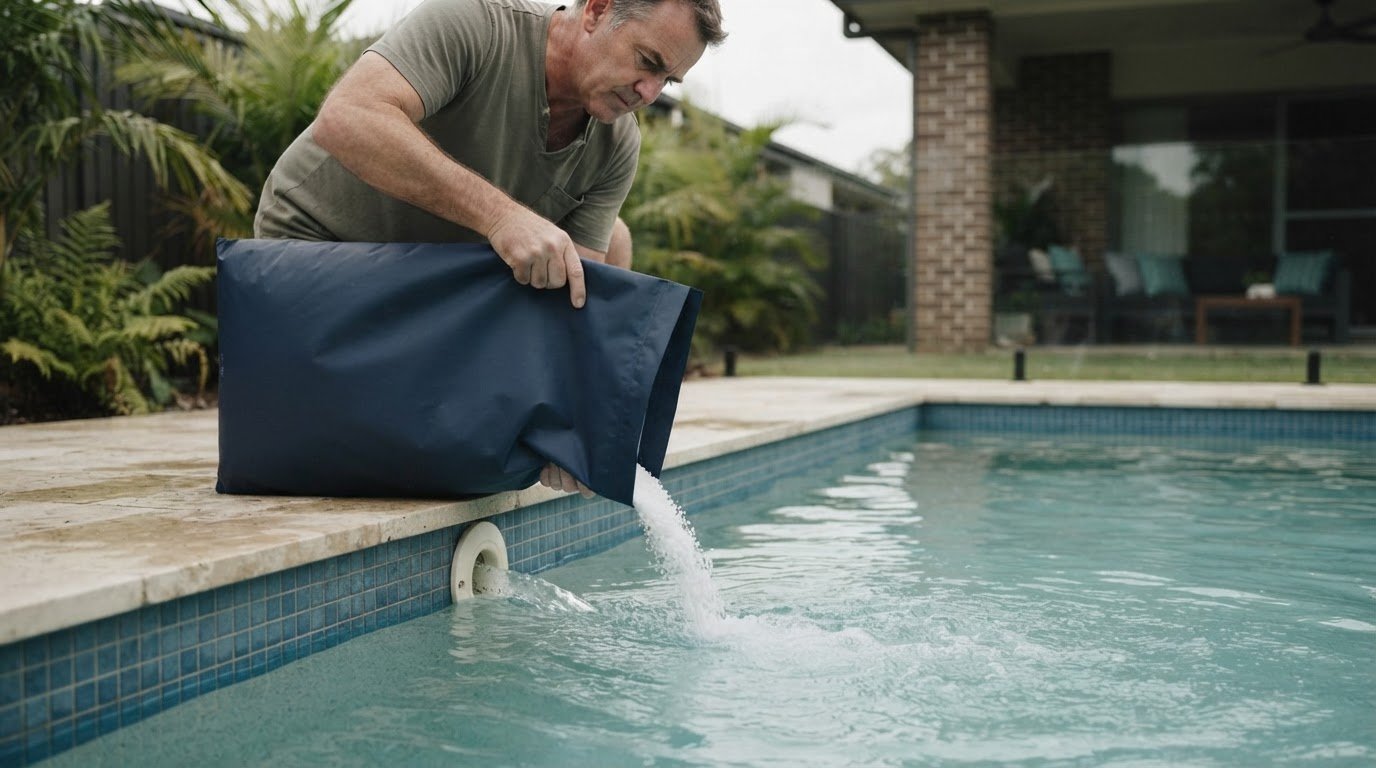
- Calculate the mineral dose for the measured volume and follow the product directions.
- Run the circulation system, then retest the water before swimming.
This sequence separates conversion from equipment installation. A suitable chlorinator handles sanitation; minerals alter the water composition. If a chlorinator is incompatible or not operating correctly, adding minerals won’t fix the equipment issue. Include the unit’s operating instructions in your conversion plan.
DIY conversion is most practical when you can measure pool volume, test the water and dose accurately. Record the starting readings and the amount added. This gives you a clear reference if the water needs further balancing. A mineral system may feel gentler to some swimmers, but conversion does not guarantee a particular effect on skin or muscle comfort.
For a saltwater-pool conversion, prepare the dose before adding anything. Choose magnesium pool salt for the mineral-addition step, using your pool volume and test results to guide the quantity.
Magnexa: magnesium pool salt
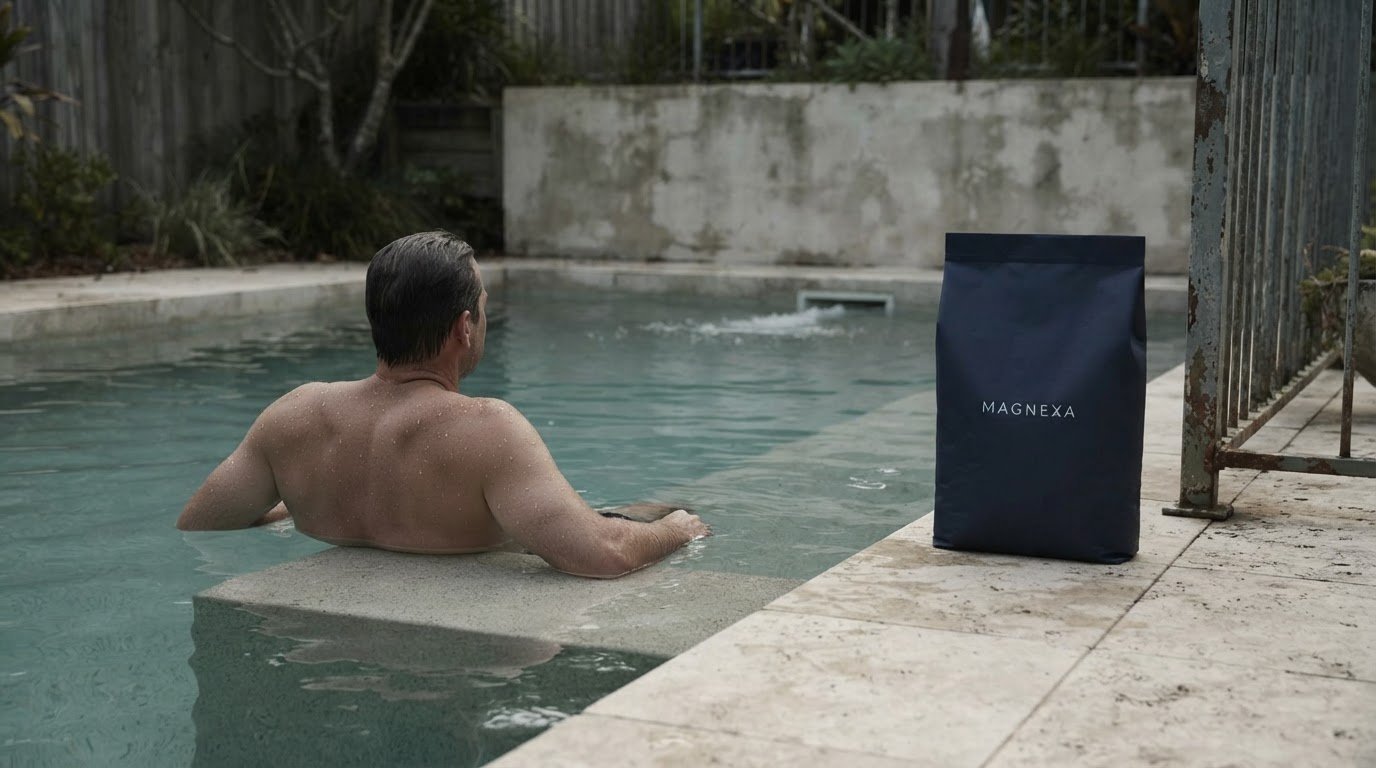
Magnexa supplies magnesium pool salt for pool owners moving to a mineral system or maintaining one already in use. The available formats include Pool minerals 10kg and Pool minerals 25kg, so you can match the bag size to your calculated dose and handling needs. Choose based on the pool’s volume and the amount required, rather than treating bag size as a dosing guide.
Healthy pool salts are another option within its mineral pool range. The product choice matters because mineral blends and doses must suit the pool’s existing water and conversion plan. Use your pool volume and test results to work out the quantity before adding minerals. The products support the mineral-addition step; regular water testing and balancing remain part of pool care.
To choose a suitable format for your pool, contact Magnexa or visit its website.
Make your next pool decision with clear priorities
Before changing systems, decide what matters most in day-to-day use: water feel, care routine or cost over time. This gives you a practical basis for weighing magnesium pool water against your current setup, rather than relying on wellness claims or a single upfront figure.
Write down the features you want from your pool and the routine you’re prepared to maintain. Use that list to focus the decision on how the pool will work for your household. A considered choice starts with your priorities, not a promise about how the water will feel.
For a next step, contact Magnexa about your pool and discuss the mineral options that fit your plans. Take the time to choose a system you can manage comfortably, then move ahead with a clear purpose.
Frequently Asked Questions
Is a freshwater pool better than a magnesium swimming pool?
Neither system is automatically better; the right choice depends on the water feel and care routine you want. A magnesium pool uses minerals and still needs chlorine for sanitation. A freshwater system is different, so compare its water treatment method and equipment needs with your current pool. For example, decide whether you want to retain a salt chlorinator or change systems before choosing.
Magnesium Pool vs Saltwater Pool: Which Feels Better?
There’s no single water feel that suits every swimmer. Magnesium pools use magnesium-based minerals, while saltwater pools use salt as the chlorinator input. Both systems generate chlorine through a chlorinator. Swimmers who prefer softer-feeling water may favour a mineral system, but water balance and chlorine levels also affect comfort. Compare how each system feels in practice, not just its name.
What Makes Magnesium Pools so Good for You?
Magnesium pools are valued for their water feel, but they are not a health treatment. Claims about skin hydration or soothing sore muscles do not establish that swimming will treat eczema, psoriasis or another condition. Buoyancy in pool water can reduce pressure on joints, which may make movement feel easier. Treat relaxation as a personal experience, not a promised medical outcome.
What are the benefits and drawbacks of magnesium pools?
A magnesium system adds minerals to pool water and may provide a softer feel for some swimmers. It still relies on chlorine, so it doesn’t remove the need to sanitise and balance the water. Mineral levels also need monitoring and replacement as they fall. Weigh those routine tasks against the water feel you prefer and the equipment already in your pool.
How much magnesium should be in a magnesium pool in Australia?
The target depends on the mineral product and pool volume. For the featured liquid minerals, the stated stable magnesium level is 600-800 ppm. That target should not be applied automatically to every bagged mineral blend. Use the product’s dose guidance alongside your pool’s measured volume and existing mineral level. This helps avoid treating different formulations as though their concentrations were interchangeable.
How do you test and balance magnesium pool water?
Test the water with a pool test kit that measures sanitiser and balance, then adjust one reading at a time. The stated targets for magnesium pool water include pH of 7.4-7.6 and total alkalinity of 100-150 ppm. Retest after adjustments and allow circulation before adding another chemical. Keep a record of readings and additions so changes in water quality are easier to track.
Frequently Asked Questions
More articles