Gentle Pool Water for Skin Conditions in Queensland
2 November 2026 · 11 min read
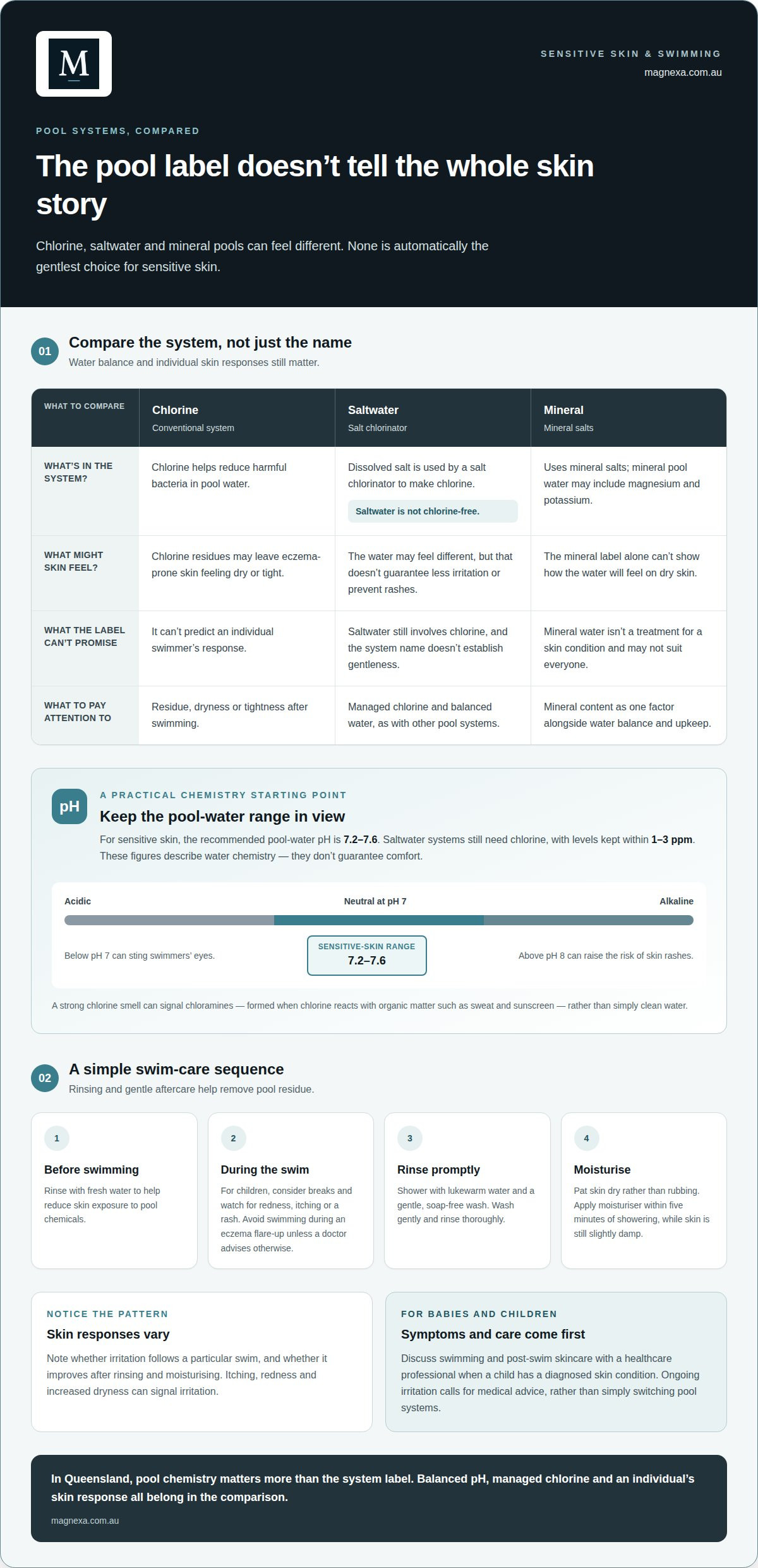
No pool system is automatically the gentlest choice for skin conditions. Saltwater pools still use chlorine: a salt chlorinator makes chlorine from dissolved salt. For sensitive skin, pool water should have a pH between 7.2 and 7.6, and rinsing with fresh water after swimming helps remove pool residues. Chlorine helps reduce harmful bacteria in pool water, but residue can leave eczema-prone skin feeling dry or tight.
Chlorine, saltwater and mineral pools can feel different, but the label alone won’t tell you how a swimmer’s skin will respond. If you’re weighing up gentle pool water for skin conditions in QLD, this guide explains how pool systems compare and why water balance and after-swim care matter. It also covers magnesium and potassium in mineral pool water, what parents should consider for babies with sensitive skin, and when ongoing irritation calls for medical advice. People with eczema don’t all react to swimming in the same way.
Key Takeaways
- Saltwater pools still rely on chlorine, so the system label alone won’t tell you how your skin may respond.
- For babies and children with skin conditions, consider symptoms, swimming breaks and post-swim care, and seek medical advice for ongoing irritation.
- Mineral pools add magnesium and potassium to the comparison, but pool water isn’t a treatment for a skin condition.
- If you’re considering a mineral pool conversion, compare the pool’s needs with the available magnesium pool salt and mineral options.
Chlorine Vs Saltwater Pools: Which Is Gentler?
No pool type is automatically gentler for sensitive skin. Water balance, chlorine exposure and individual skin responses all matter.
Skin Irritation from Chlorine and Chloramines
Chloramines form when chlorine reacts with organic matter, including sweat and sunscreen. These compounds and chlorine residues can irritate skin, while pool water may also leave it feeling dry or tight. A strong chlorine smell can signal chloramines, not simply clean water. For families, rinsing with lukewarm fresh water soon after swimming helps remove residue. A gentle, soap-free cleanser can wash away chlorine without adding avoidable irritation.
Chlorine and Eczema-Prone Skin
Chlorine helps reduce harmful bacteria in swimming pools, but residues may contribute to dryness and tightness on eczema-prone skin. Saltwater pools aren’t chlorine-free: a salt chlorinator uses dissolved salt to produce chlorine. The water may feel different, but that doesn’t guarantee less irritation or prevent rashes. After swimming, rinse promptly and use a gentle cleanser formulated to remove chlorine residues. If a swim coincides with worsening symptoms, avoid treating the pool type alone as the cause.
Pool Chemistry for Skin Conditions
For eczema, psoriasis or dermatitis, no single pool system is established as the gentlest for everyone. A practical starting point is balanced water: pool water for sensitive skin should have a pH between 7.2 and 7.6. Saltwater systems still need chlorine, with levels kept within 1-3 ppm. These figures describe water chemistry, not a guarantee of comfort. Individual responses vary, so notice whether irritation follows a particular swim and whether rinsing and cleansing afterwards help.
Queensland Pools for Sensitive Skin
In Queensland, including Brisbane, the Gold Coast and the Sunshine Coast, a pool’s chemistry matters more than its label. No single pool type can be recommended for everyone with sensitive skin. Balanced pH and managed chlorine are relevant criteria for public, private and saltwater pools. Clinical hydrotherapy pools are designed for supervised therapeutic use, but that alone doesn’t establish that their water suits a skin condition. For persistent irritation, seek a medical assessment.
What is the best pool system for a baby with sensitive skin?
No pool system is best for every baby with sensitive skin. Eczema, psoriasis and rosacea can involve different symptoms, and people with eczema don’t all react to swimming in the same way. A mineral pool may not suit everyone with a diagnosed skin condition. If your baby has eczema or another diagnosed condition, discuss swimming and post-swim skincare with a healthcare professional. They can consider the child’s symptoms, current skincare and whether swimming is suitable.
Timing matters if eczema is active. Children should avoid swimming during an eczema flare-up unless a doctor advises otherwise. If the child’s skin is settled and swimming is appropriate, consider taking breaks during the session. Watch for redness, itching or a rash during and after swimming. Ongoing symptoms are a reason for parents to seek medical advice, rather than simply switching pool systems.
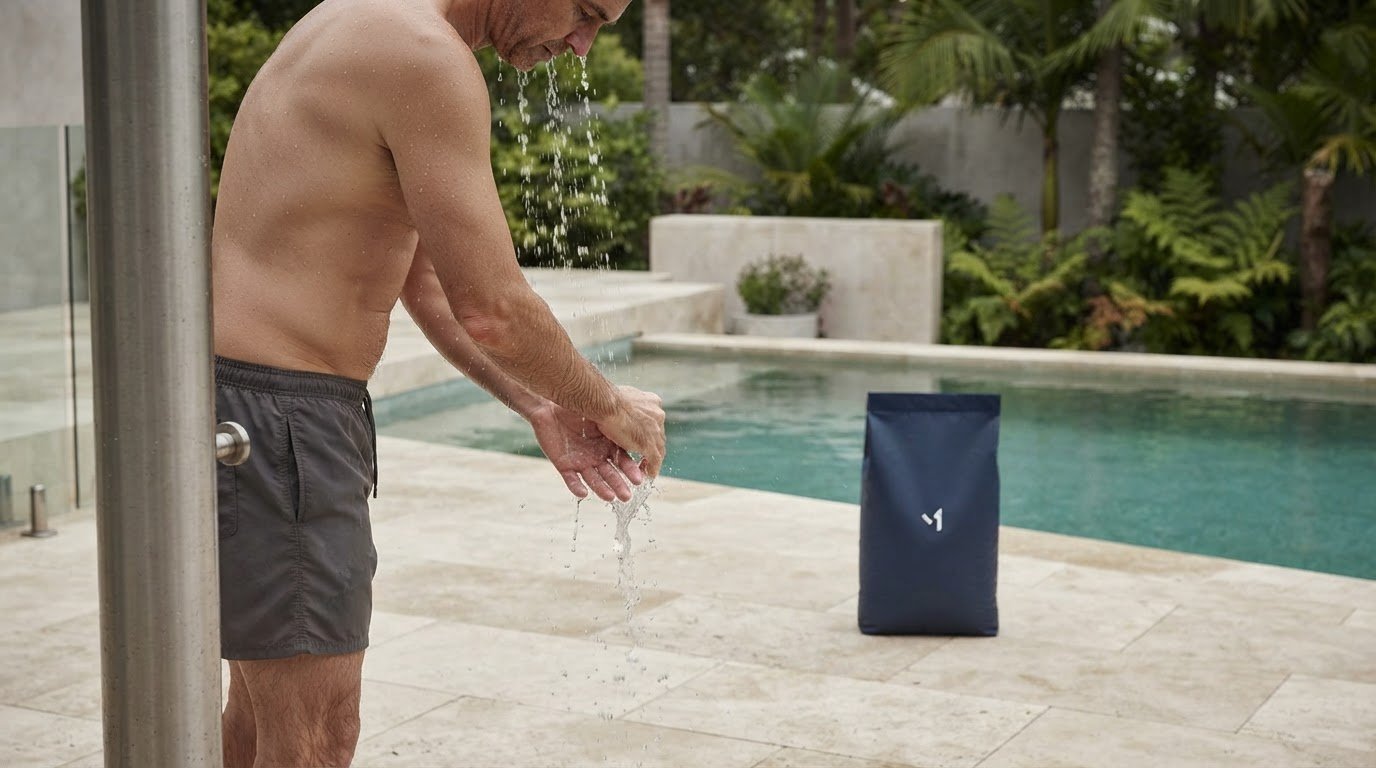
Before swimming, rinse with fresh water to help reduce skin exposure to pool chemicals. Afterward, shower the child with lukewarm water and a gentle, soap-free wash. Choose fragrance-free products and keep moisturising part of the routine. These steps remove pool residue and support skincare without assuming that chlorine, saltwater or mineral water will suit every child. Avoid scrubbing irritated areas; wash gently and rinse thoroughly.
For babies, keep the routine simple and observe how their skin responds after each swim. Note whether redness, itching or rashes appear, and whether symptoms continue after bathing and moisturising. This pattern gives a healthcare professional useful detail when discussing swimming. A pool’s mineral label alone can’t establish whether its water is suitable for a baby with eczema, psoriasis or rosacea. The practical choice depends on the child’s condition, symptoms and care plan, not just the pool system.
How does a mineral pool benefit your skin?
Mineral pools use mineral salts, but the label alone can’t show how the water will feel on dry skin. In Queensland, pools may use magnesium, mineral, saltwater or conventional chlorine systems; water balance and upkeep still matter. For families in QLD considering gentler pool water for skin conditions, mineral content is only one factor.
Care for Dry or Irritated Areas
Dry or irritated skin needs gentle care after swimming, especially when children have rough or itchy patches. Rinse after leaving the water, then shower with lukewarm water and a gentle, soap-free wash. Pat skin dry rather than rubbing it. Apply moisturiser within five minutes of showering, while skin is still slightly damp. Fragrance-free products with glycerin, ceramides or hyaluronic acid can help skin retain moisture.
Pool Water pH and Skin Irritation
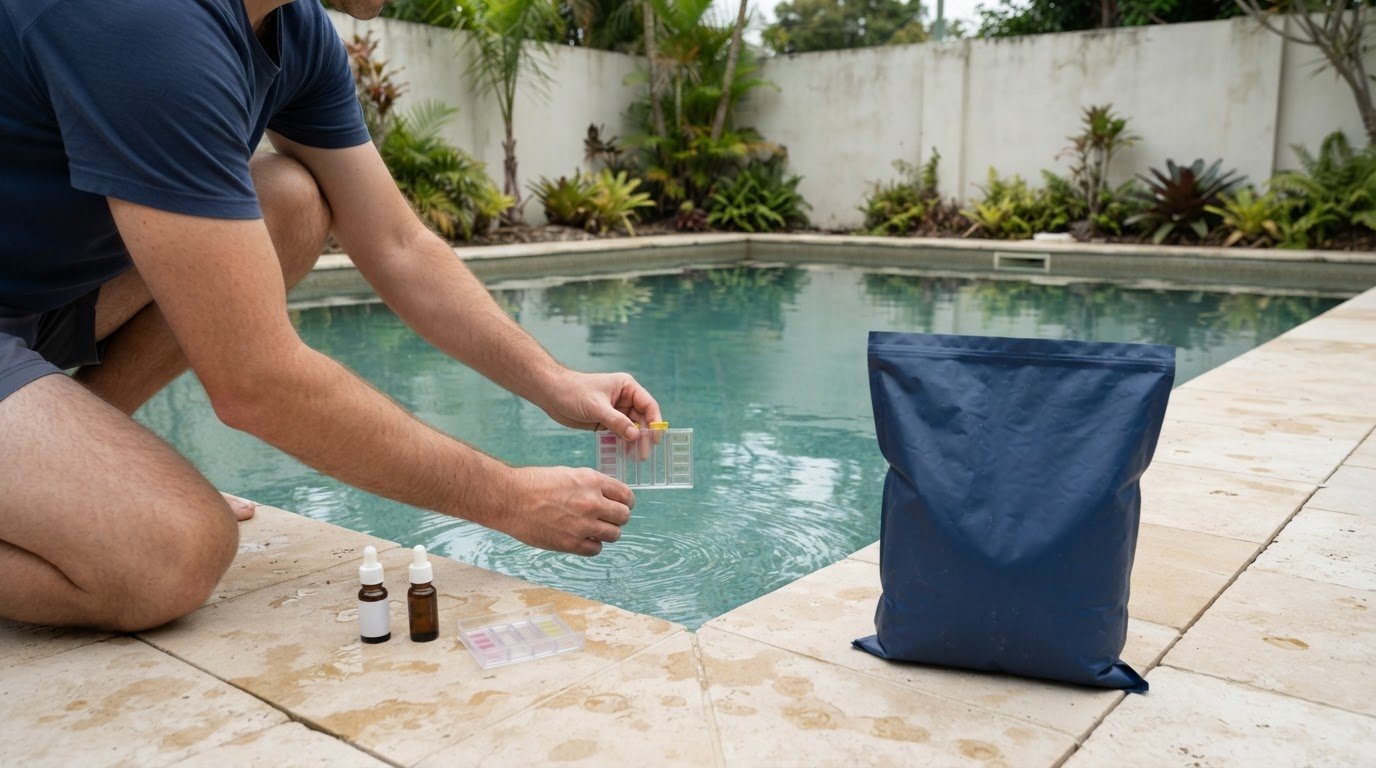
Pool pH describes whether water is acidic, neutral or alkaline, and imbalanced water can affect comfort. A pH of 7 is neutral; above 7 is alkaline, while below 7 is acidic. Water below pH 7 can sting swimmers’ eyes, and water above pH 8 can raise the risk of skin rashes. For sensitive skin, the recommended pool-water range is pH 7.2 to 7.6.
Itching, redness and increased dryness after swimming can signal irritation. Chlorine, other pool chemicals and unbalanced water may all be relevant, so note when symptoms appear and whether they remain after rinsing and moisturising. If irritation persists, seek a medical assessment. A mineral label alone can’t show whether a particular pool’s chemistry suits an individual swimmer.
Queensland pools can use magnesium, mineral, saltwater or chlorine systems, but the system name doesn’t establish that the water is gentler. Pool pH and chlorine levels should be checked daily, preferably before the first swim. For QLD swimmers seeking gentler pool water for skin conditions, combine balanced water with gentle skincare and observe how skin responds after swimming.
Magnesium and potassium in pool water
Magnesium and potassium add a mineral angle to the pool-water discussion, but their presence doesn’t make pool water a skin treatment. A mineral pool still needs suitable water balance and sanitation. For swimmers with dry or reactive skin, the useful question is whether the water and post-swim routine leave skin comfortable, not simply which minerals appear on a label.
Magnesium is involved in more than 300 biochemical processes in the human body. That fact doesn’t show that swimming in magnesium-treated water delivers a health benefit or repairs the skin barrier. Nor does a mineral bath study establish that a swimming pool will produce the same result. Pool water and bathing treatments are different exposures, so don’t treat magnesium as a substitute for skincare or medical care.
Potassium may be part of a mineral-water formulation, but its presence alone doesn’t show that it will reduce dryness, itching or irritation. Mineral content, chlorine and other pool chemicals are separate considerations. If skin feels tight after a swim, shower with fresh water to remove surface residue. Use a gentle wash, then apply moisturiser while the skin is slightly damp to help retain moisture.
Keep the routine simple and consistent. Note whether dryness or irritation follows swimming, where it appears, and whether it settles after showering and moisturising. This gives you a clearer basis for discussing symptoms with a health professional. A mineral system may suit someone’s pool preferences, but it can’t promise a particular skin response. People with a diagnosed skin condition should continue following their existing care plan.
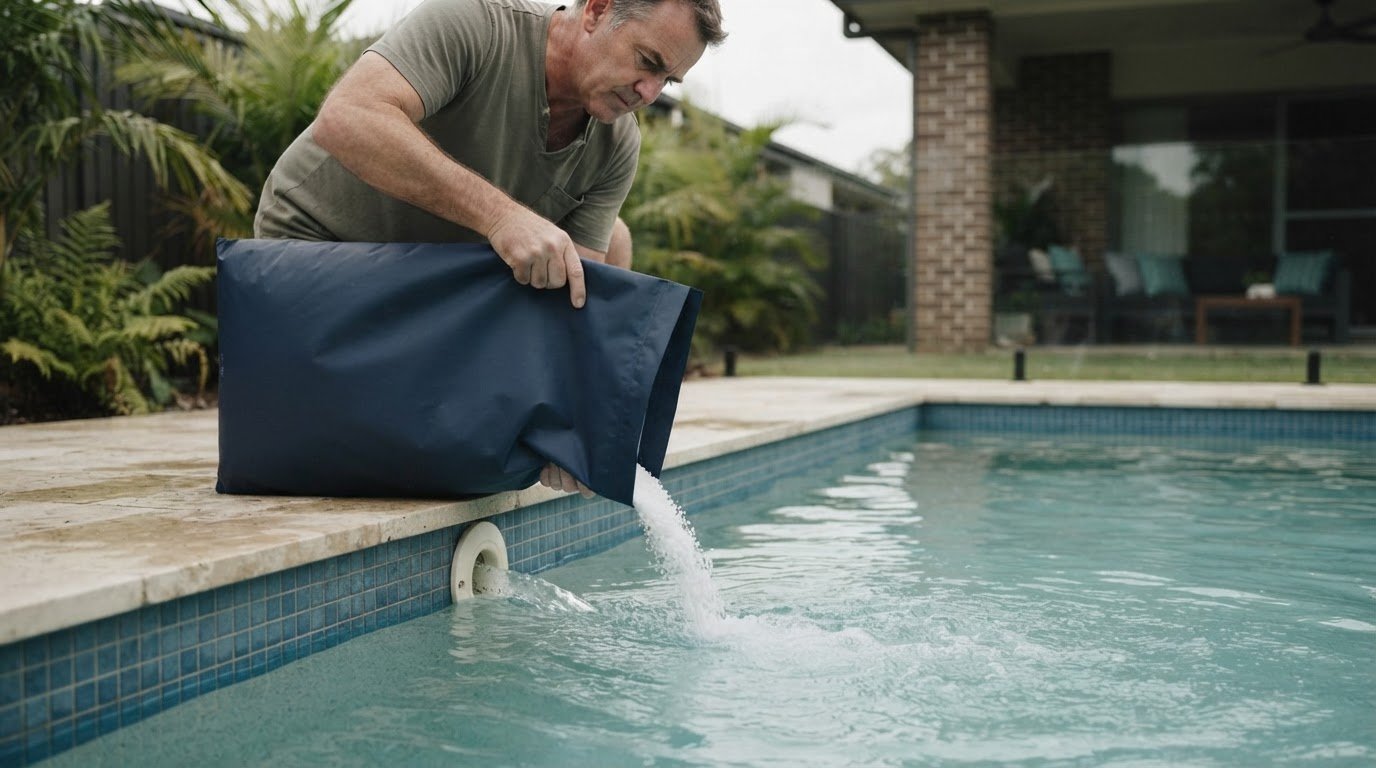
If you’re considering magnesium as part of a mineral pool setup, explore magnesium pool salt as a pool-water option. Judge the choice by the pool’s needs and your skin’s response, rather than assuming magnesium or potassium will prevent irritation.
Magnexa: magnesium pool salt
Magnexa supplies magnesium pool minerals for pool owners considering a mineral-water setup. This is an option to explore when comparing pool systems, not a treatment for eczema, psoriasis or other skin conditions. A mineral pool still needs balanced water and appropriate pool care.
Magnexa’s options include Pool minerals 10kg, Pool minerals 25kg and Healthy pool salts. Choose based on your pool’s requirements and the type of mineral setup you’re considering. Skin comfort still depends on water chemistry and personal response, so keep the post-swim skincare routine in place.
For details about magnesium pool salt and the available options, visit Magnexa’s website.
Make your next pool decision deliberately
Choosing gentle pool water for skin conditions in QLD is a practical decision, not a promise attached to a pool label. Consider what you want to change: the pool system, the water-care approach, or simply how swimming fits into your family’s routine. If you’re weighing a mineral conversion, start with your pool’s requirements and the water setup you want to maintain. Keep skin comfort and pool operation separate; a mineral option doesn’t replace care for a diagnosed condition.
For babies or anyone with recurring symptoms, keep their health professional involved in decisions about swimming and skincare. That helps you make a pool choice alongside their care, rather than relying on the system name alone. If magnesium pool salt is part of the setup you’re considering, Magnexa can help with the next step. Contact Magnexa about pool water and explore your options at a pace that suits your pool and household.
Frequently Asked Questions
Is pool water safe for kids with eczema?
Some children with eczema can swim, but whether it suits a particular child depends on their symptoms and care plan. During an active flare-up, children should avoid swimming unless a doctor advises otherwise. If a child develops ongoing redness, itching or a rash after swimming, parents should seek medical advice. Keep track of symptoms and when they appear to help describe the pattern.
Is a magnesium pool better than chlorine for eczema?
Not necessarily. A magnesium mineral pool isn’t automatically chlorine-free or a proven eczema treatment. Saltwater systems can use dissolved salt to produce chlorine, and a mineral setup still needs appropriate water care. When comparing systems, consider the pool’s sanitising method as well as its minerals. Changing pool type alone can’t establish whether someone’s eczema will improve or worsen.
Why can swimming affect eczema-prone skin?
Pool exposure can leave residue on skin, and chlorine may contribute to dryness or tightness for people prone to eczema. Chloramines can form when chlorine reacts with organic matter, such as sweat or sunscreen. For example, a swimmer who feels tight or itchy after a session can note when it happens and any other symptoms. That record may help identify a pattern over repeated swims.
Can swimming in chlorinated pools worsen eczema, and what are the risks?
It can irritate some eczema-prone skin, with dryness, tightness, itching or rashes among the possible concerns. Pool chemistry matters too: water with a pH higher than 8 can put swimmers at risk of skin rashes. Reactions differ between people, so notice whether symptoms follow swimming and persist afterwards. Ongoing irritation or a child’s recurring rash needs medical assessment.
What should people with skin conditions do before and after swimming?
Before swimming, rinse with fresh water to reduce skin exposure to pool chemicals. Afterward, shower with lukewarm water and use a gentle, soap-free wash to remove residue. Choose fragrance-free skincare, then moisturise while skin is slightly damp. For example, follow the same post-swim routine after each session so you can spot changes in dryness, itching or redness and discuss persistent symptoms with a health professional.
Frequently Asked Questions
More articles