Mineral Pool Water: How Testing and Chemistry Shape Its Feel
5 November 2026 · 12 min read
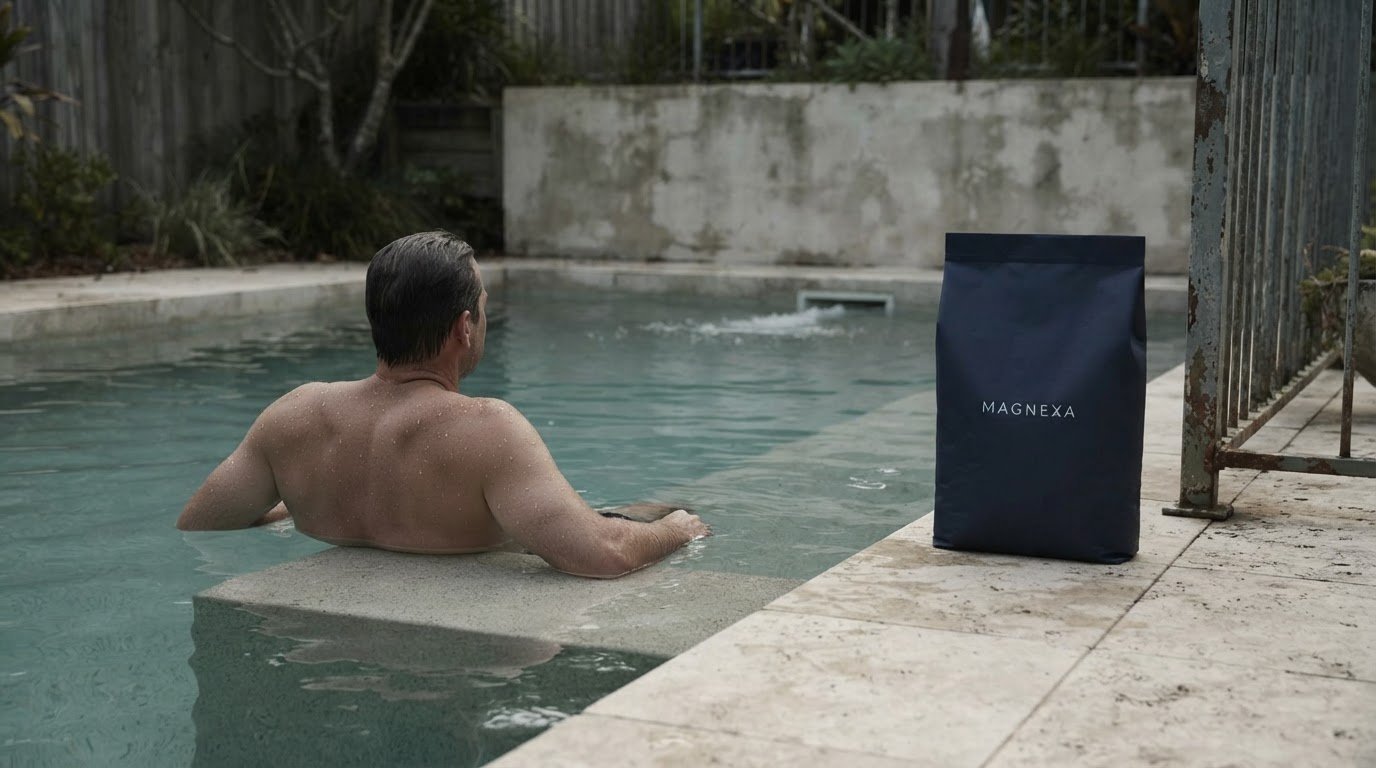
Dissolved minerals, including magnesium chloride, can give pool water a soft, silky feel. Silky smooth pool water minerals contribute to that texture, but they do not replace sanitiser: mineral pools still need a low level of sanitiser to keep the water safe. Mineral content and water treatment serve different purposes.
A change in how pool water feels can reflect its chemistry as well as its mineral content. A mineral pool is not simply a conventional pool without chlorine: it still needs regular testing and balanced treatment.
This guide compares mineral, saltwater and freshwater pools, explains which chemistry readings to monitor and when to test, and outlines what helps maintain water feel. It also covers how mineral products can support a pool conversion.
Key Takeaways
- Test mineral pool water at least weekly and keep pH between 7.2 and 7.6.
- Minerals can change the water’s feel, but a low level of sanitiser is still needed to keep it safe.
- Understand how mineral, saltwater and freshwater systems differ before choosing a pool treatment.
- Magnesium chloride is one mineral associated with the soft, silky feel of mineral pool water.
How often should I test my mineral pool water?
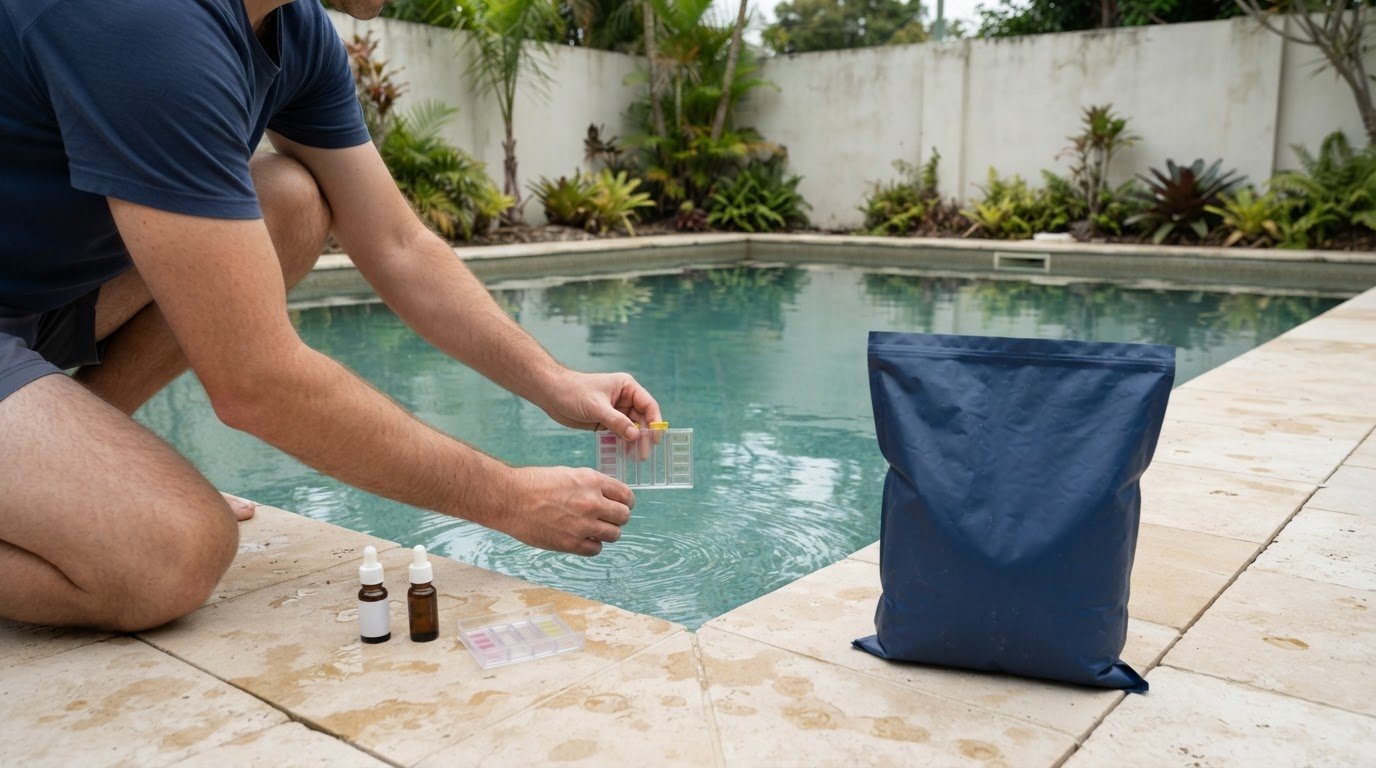
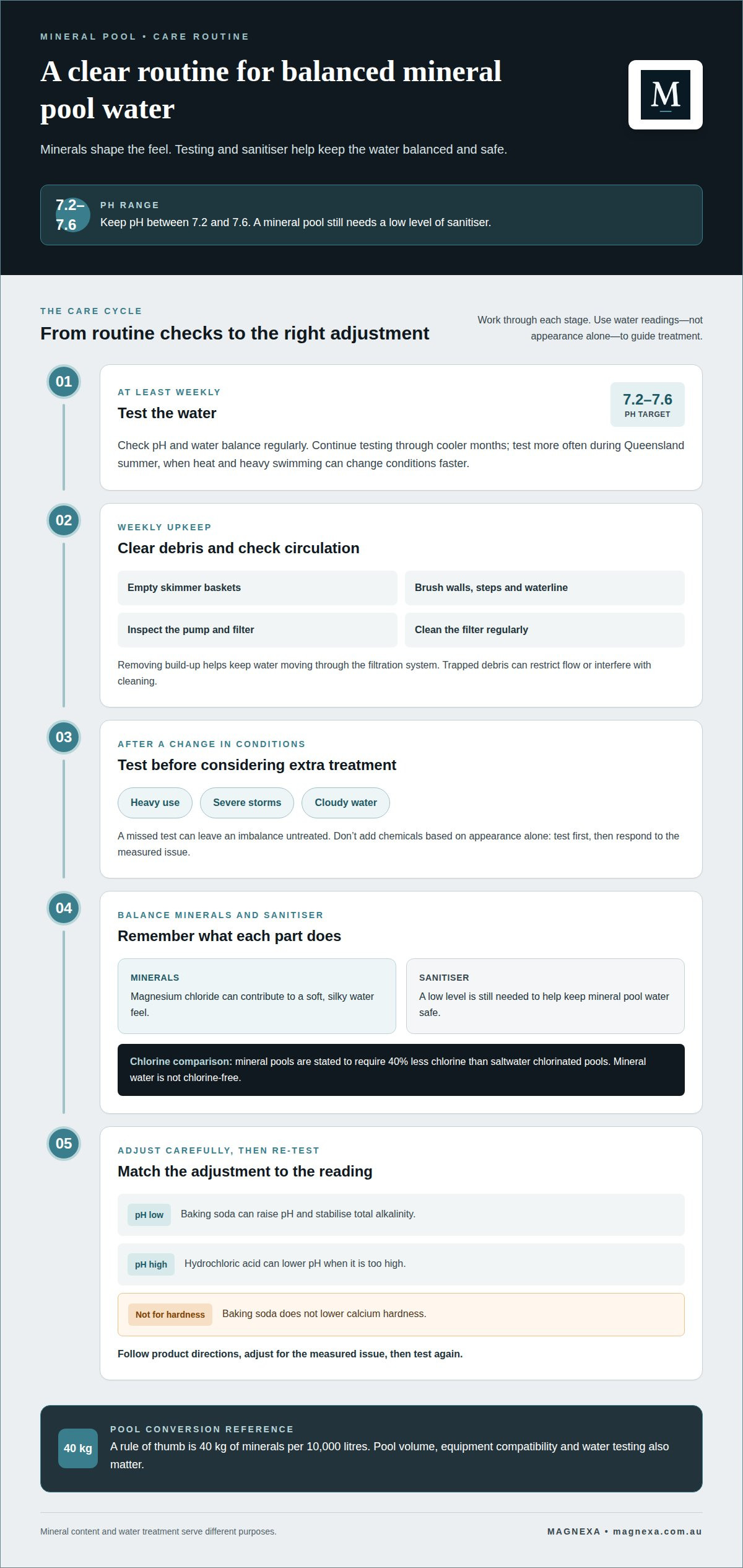
Test mineral pool water at least once a week. Keep pH between 7.2 and 7.6, and test more often during Queensland summer, when heat and heavy swimming can change water conditions faster. Continue testing through cooler months. After heavy use, severe storms or cloudy water, test before deciding whether the pool needs extra treatment.
A mineral pool still needs sanitiser. Minerals such as magnesium chloride contribute to the water’s feel and chemistry, while a low level of sanitiser helps keep it safe. A conventional chlorine pool relies on chlorine treatment. A saltwater pool uses a salt chlorine generator to produce chlorine from dissolved salt, so saltwater is not chlorine-free. In every system, testing helps show whether the water is balanced and adequately treated.
Natural swimming pools work differently again. Plants and biological filters clean the water, avoiding the need for chemicals. Their water treatment depends on the biological filtration system, rather than the sanitiser and mineral balance used in a mineral pool. These systems shouldn’t be treated as interchangeable: a fibreglass pool’s surface material, for example, doesn’t determine whether its water uses minerals, salt chlorination or biological filtration.
Mineral water is often described as less irritating than water in traditional chlorine pools, but it still contains sanitiser. That distinction matters if you experience skin or eye irritation. Eczema is a skin condition, and mineral water should not be treated as a cure or a guarantee against irritation. Check the pool chemistry and note whether symptoms occur after swimming. Poor balance can affect comfort, even in a mineral pool.
For an Australian mineral pool, local rules determine any restrictions on filling and topping up. Mineral chemistry does not remove local limits on water use.
There is no single cost for a mineral pool system in Australia. The total depends on pool volume, existing equipment and the quantity of minerals needed for conversion.
Ongoing costs depend on sanitiser, replacement minerals, testing and water top-ups. Mineral pools may need fewer chemical adjustments and less water for maintenance, but they still require routine testing and treatment. Equipment and consumables vary between mineral, chlorine and salt systems, shaping their ongoing costs.
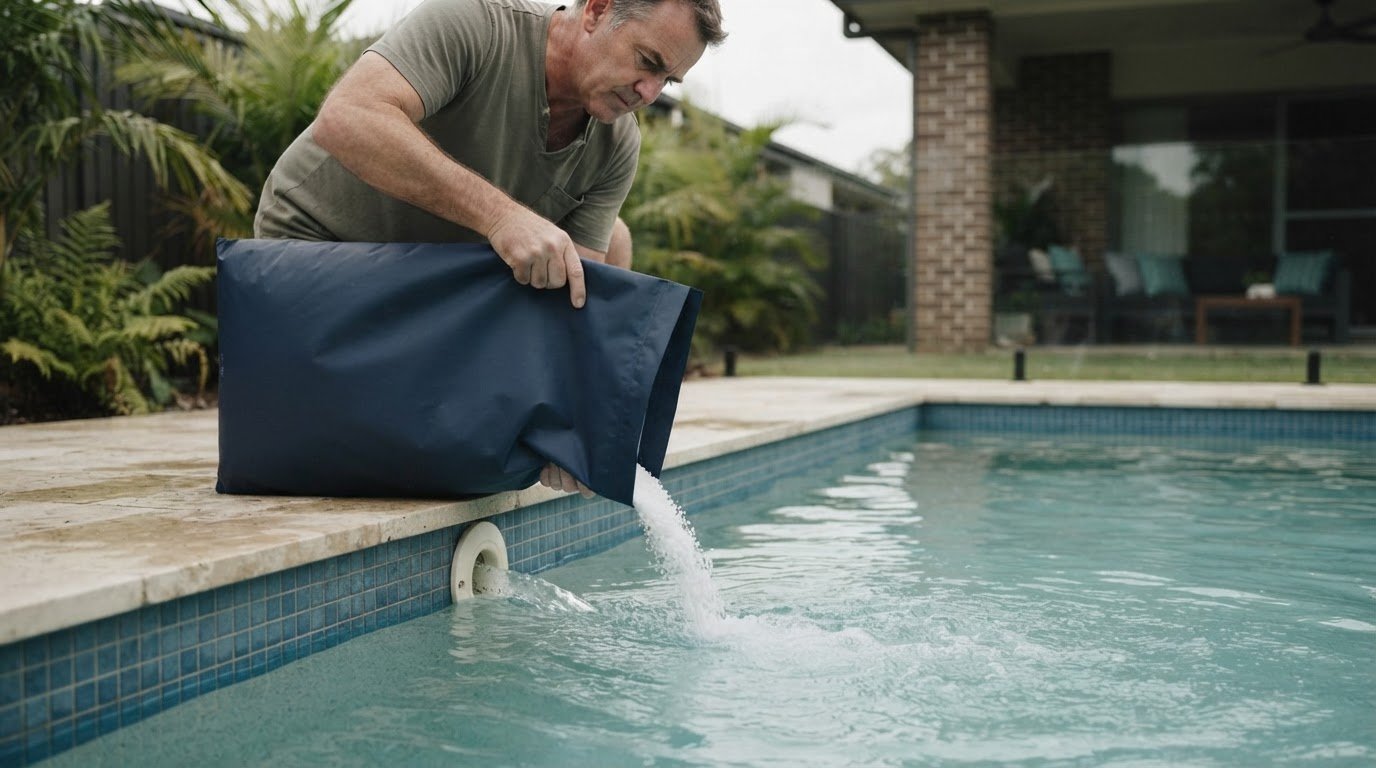
An existing Australian pool can be converted by adjusting its treatment to a mineral system. Pool volume and the required mineral dose guide the quantity; a rule of thumb is 40 kg of minerals per 10,000 litres. Equipment compatibility and water testing also matter, including for an existing fibreglass pool.
Mineral pool water chemistry and maintenance
Maintaining a mineral pool means balancing minerals and sanitiser, alongside regular cleaning. The routine is straightforward, but missed tests or maintenance can leave water cloudy or uncomfortable.
Weekly and Monthly Maintenance Routines
Weekly care removes debris and checks that water is circulating through the filtration system. Empty skimmer baskets, brush walls, steps and the waterline, and inspect the pump and filter. These tasks catch visible build-up before it affects circulation. Clean the filter regularly to help prevent trapped debris from restricting water flow or interfering with cleaning.
Testing and Maintaining Pool Water
Testing shows whether the water needs a chemical adjustment; don’t add treatments based on appearance alone. Mineral systems still use chlorine, alongside minerals such as magnesium chloride, potassium chloride, sodium chloride or borates. They use a smaller chlorine concentration, and mineral pools are stated to require 40% less chlorine than saltwater chlorinated pools. Saltwater pools also need regular water testing; a softer-feeling system still needs balanced chemistry.
For mineral pool chemistry guidance, review the mineral treatment options alongside your pool’s water readings.
Common Mineral Pool Maintenance Mistakes
Skipping a test after heavy use or when the water turns cloudy can leave an imbalance untreated. Another common mistake is using the wrong adjustment for the problem: baking soda can raise pH and stabilise total alkalinity, but it does not lower calcium hardness. Hydrochloric acid can lower pH when it is too high. Follow product directions, adjust for the measured issue, then test again. Claimed health benefits do not replace safe sanitiser levels.
Effects on Equipment, Surfaces and Landscaping
Mineral pools are not immune to damage: water balance and prolonged exposure still matter for equipment, surfaces and nearby plants. They are described as having a lower chance than saltwater pools of damaging poolside furniture or plants after prolonged exposure. To troubleshoot, check water balance, circulation and filtration before changing treatments. If fine debris is the problem, flocculants bind particles into clumps that settle for vacuuming.
What Is The Difference Between Saltwater, Mineral and Freshwater Pools?
A pool’s water system determines how it is sanitised and which dissolved minerals it contains. Magnesium contributes to the distinct feel associated with mineral water.
Magnesium and Pool Water Feel
Magnesium chloride can give mineral pool water a soft, silky feel. The difference comes from dissolved minerals, not the pool surface or the water’s appearance. A saltwater system uses a chlorinator to make chlorine from salt; a mineral system combines minerals with sanitiser. “Freshwater” describes a different water treatment approach, not a guarantee that the water contains no minerals.
Some swimmers associate magnesium with muscle relaxation. That impression may matter when comparing systems, but it is not evidence that pool water has a therapeutic effect or treats a health condition. Chlorine balance still matters: an imbalance can irritate eyes and skin in a mineral or traditional pool.
Calcium, Magnesium and Water Hardness
Water hardness reflects dissolved minerals, including calcium and magnesium. The recommended calcium hardness range for swimming pools is generally 200-400 ppm. Above 400 ppm, scale can begin to form; below 150 ppm, pool surfaces can face corrosion or etching. These readings describe calcium hardness, not the magnesium dose used in a mineral blend.
Adding magnesium does not automatically fix hard water. If calcium is high, water replacement or treating the source water can reduce hardness. Pool volume and source water both affect the result, so assess calcium separately from the mineral system’s intended dose.
Recommended Mineral Levels
A mineral pool rule of thumb is 40 kg of minerals per 10,000 litres of water. Treat this as a starting dose, not a universal target for every water system. Pool volume determines the amount needed, while the blend determines which minerals that amount adds.
Mineral blends may contain magnesium, sodium and potassium in varying proportions. Read the product’s dosing directions and measure your pool volume before adding minerals. Then test the water chemistry, including calcium hardness, rather than assuming the mineral dose sets every reading. This helps distinguish mineral concentration from overall water balance.
Mineral pool water’s silky-smooth feel
The soft feel of mineral pool water is associated with dissolved minerals, including magnesium chloride. “Silky smooth pool water minerals” is a phrase people use for mineral treatments linked with that tactile quality. It describes a sensation, not a separate measure of water quality. Two mineral pools can feel different because their blends, water balance and treatment systems differ. Assess the feel alongside tested chemistry.
Magnesium chloride is associated with softer-feeling water, while potassium and sodium may also feature in pool blends. The feel depends on the water as a whole, including its balance and calcium hardness. If water feels rough or irritating, do not assume the mineral level alone is responsible. Check the readings and consider the broader chemistry.
Mineral water is sometimes described as more buoyant than traditional pool water. That may affect how swimming feels, but it does not measure mineral concentration or prove a health benefit. Magnesium is also associated with muscle relaxation, yet feeling relaxed in a pool does not show that the water treats stress or muscle problems. Keep sensory impressions separate from therapeutic claims.
Regular testing helps you make sense of changes in how the water feels. After heavy swimming, a storm or cloudy water, test before adjusting treatment. If readings are balanced but the water feels different, consider whether top-ups or a change in mineral blend could have altered its composition. A fibreglass surface does not determine mineral content or explain water texture.
For owners comparing silky smooth pool water minerals, match the mineral blend quantity to pool volume and follow its dosing directions. Choose pool minerals for the treatment you’re considering, then maintain sanitiser and water balance through regular testing.
Magnexa
Magnexa supplies magnesium pool salt and pool minerals for Australian pool owners considering a mineral system or maintaining one. The range includes Pool minerals 10kg and Pool minerals 25kg, giving you options for adding minerals according to your pool’s needs.
Mineral products support the water’s mineral content, but they do not replace testing, balanced chemistry or sanitiser. Keep testing after adding minerals and follow the product’s dosing directions for your pool. If you are considering a mineral treatment or conversion, the right quantity depends on pool volume and the chosen system.
Contact Magnexa to discuss which mineral option suits your pool.
Choose the feel that suits your pool
How pool water feels is personal. One swimmer may notice softness first; another may focus on how the water feels on their skin after swimming. Treat preference as one factor and use chemistry readings to assess how the pool is operating. If you want silky smooth pool water minerals, consider both the feel you prefer and your pool’s treatment setup.
If you are considering a mineral system, match your preference to your pool volume and treatment setup. This gives you a clearer basis for choosing silky smooth pool water minerals and dosing the water appropriately. Base the decision on the pool you have, rather than assuming a particular sensation means the chemistry is right.
For a straightforward discussion about mineral pool options, contact Magnexa about mineral pools. A considered choice can help you move towards the water feel you want, with a clear plan for looking after it.
Frequently Asked Questions
What Distinguishes A Mineral Pool From A Normal One?
A mineral pool uses dissolved minerals as part of its water treatment, while a conventional pool relies on its chosen sanitising system. The distinction is not simply whether chlorine is present: mineral systems still need sanitiser. Two pools with identical surfaces, for example, can use different water systems. Compare how each system treats the water, then follow its specific testing requirements.
What Minerals Go Into The System?
Mineral pool blends can include magnesium chloride, potassium chloride, sodium chloride and borates. The mix varies by system, so read the ingredient list when calculating a dose. These substances add minerals to pool water; they are not interchangeable with sanitiser. Follow the specific product’s label rather than assuming every mineral system uses the same ingredients or proportions.
What is Hard Water?
Hard water contains elevated levels of dissolved minerals, especially calcium and magnesium. In a pool, excess calcium can contribute to scale on surfaces or equipment, while low calcium hardness can contribute to corrosion or etching. Calcium-rich source water can affect the pool as you top it up. Test calcium hardness separately from the mineral treatment, since a magnesium dose does not reveal the calcium level.
What minerals make pool water feel silky smooth?
Magnesium chloride is associated with the soft, silky feel reported in mineral pools. The sensation depends on the water system and its overall chemistry, not just one ingredient. A mineral reading does not prove that pool water is balanced. If the texture changes, compare how it feels with current chemistry readings rather than adding minerals by guesswork.
How do mineral pool systems work?
A mineral system adds a measured mineral blend to pool water, while sanitiser continues to manage water hygiene. The filtration system circulates water through the pool and filter, helping distribute treatment. Pool volume, for example, determines how much mineral blend a dose requires. Testing then shows whether the water remains balanced, rather than relying on clarity or feel alone.
Do mineral pools contain salt or chlorine?
Mineral pools can contain both salt compounds and chlorine. Some mineral blends include sodium chloride, and mineral water systems still use sanitiser, often at a reduced chlorine level. The exact composition depends on the system and product. Do not assume “mineral” means salt-free or chlorine-free; follow the relevant dosing and testing guidance to maintain suitable water quality.
Frequently Asked Questions
More articles