Eco-friendly pool salts in Brisbane: costs and upkeep
29 October 2026 · 11 min read
A gentler-feeling pool still needs a proper sanitising routine. Eco-friendly pool salts in Brisbane often refers to magnesium-based mineral systems, which use magnesium chloride alongside a reduced chlorine level. Regular water testing, filter cleaning and pump checks remain essential.
Compare more than the feel of the water. Converting a traditional pool to a magnesium system can involve upfront costs, while ongoing chemical and maintenance costs may change. Mineral levels also need replenishing over time.
This guide compares magnesium and chlorine pool systems, explains the upkeep each requires and outlines what affects ongoing costs, without relying on unsupported price estimates. It also covers mineral top-ups and factors that may affect skin and eye comfort, so you can weigh the practical trade-offs before choosing.
Key Takeaways
- Compare the mineral blend and sanitising method with your current pool system before deciding whether to convert.
- Keep testing and balancing the water, cleaning filters and checking the pump; magnesium pools still need regular upkeep.
- Factor in upfront conversion costs and periodic mineral top-ups when weighing long-term running costs.
- Consider how the water feels on your skin and eyes, but keep comfort separate from the pool’s sanitation requirements.
How do magnesium and traditional chlorine pools compare?
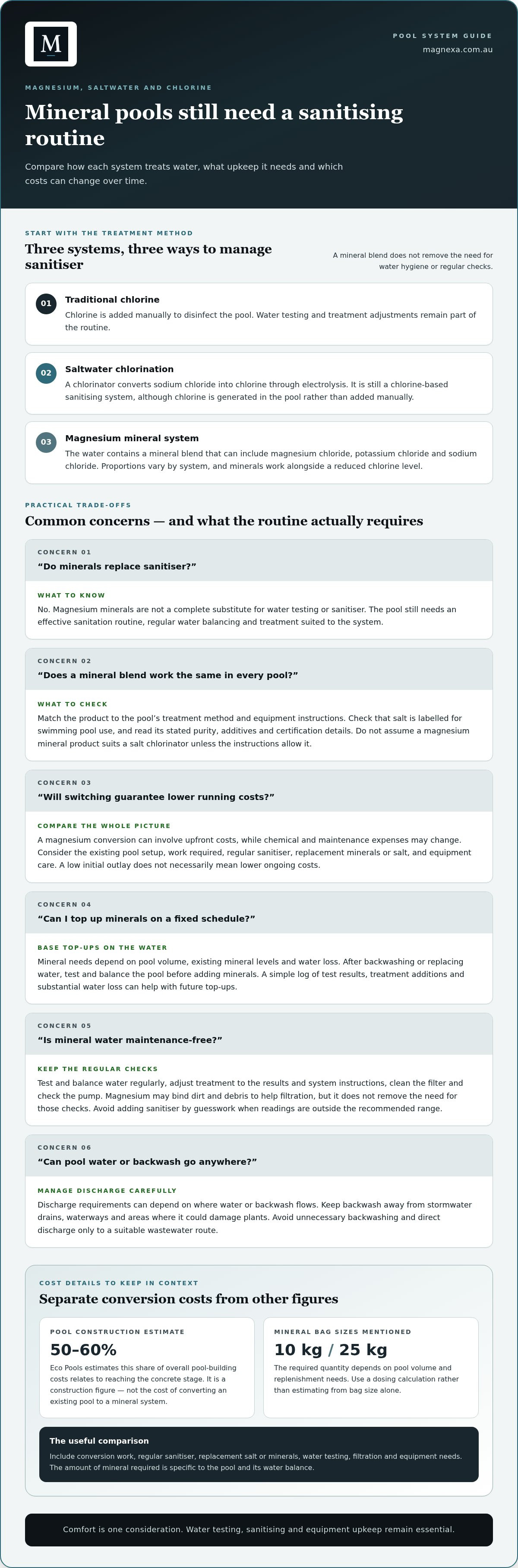
Magnesium pools use a mineral blend that can include magnesium chloride, potassium chloride and sodium chloride. The exact proportions vary between systems. Traditional chlorine pools are disinfected with manually added chlorine. A magnesium pool is not simply a chlorine pool with a different name: its water contains minerals, while low levels of sanitiser still support water hygiene.
Saltwater pools also use chlorine, but a salt chlorinator generates it in the pool by converting sodium chloride through electrolysis. This differs from manually adding chlorine, but it remains a chlorine-based sanitising system. The practical distinction is whether chlorine is added directly, generated from salt or used alongside a mineral treatment.
Magnesium chloride is described as the primary mineral in magnesium systems and may help with filtration by binding dirt and debris. However, pool minerals should not be treated as a complete substitute for water testing or sanitiser. The pool still needs an effective sanitation routine. A mineral blend’s composition and the system’s operation determine how it fits into that routine.
Salt chlorinators use pool salt based on sodium chloride, which the unit converts into chlorine. Use only salt that suits the chlorinator and pool equipment. Do not assume a magnesium mineral product is compatible unless the system instructions allow it.
Across Brisbane, Moreton Bay, the Sunshine Coast, Ipswich, Logan and Redlands, and the Gold Coast, pool owners can compare manually sanitised chlorine pools, saltwater chlorination and magnesium mineral systems. Magnexa’s magnesium pool minerals work alongside a reduced chlorine level. Before choosing eco-friendly pool salts in Brisbane, compare the sanitising method, mineral product and equipment requirements. “Eco-friendly” alone does not explain how a system sanitises water or what upkeep it needs.
Pool maintenance and chemical adjustments
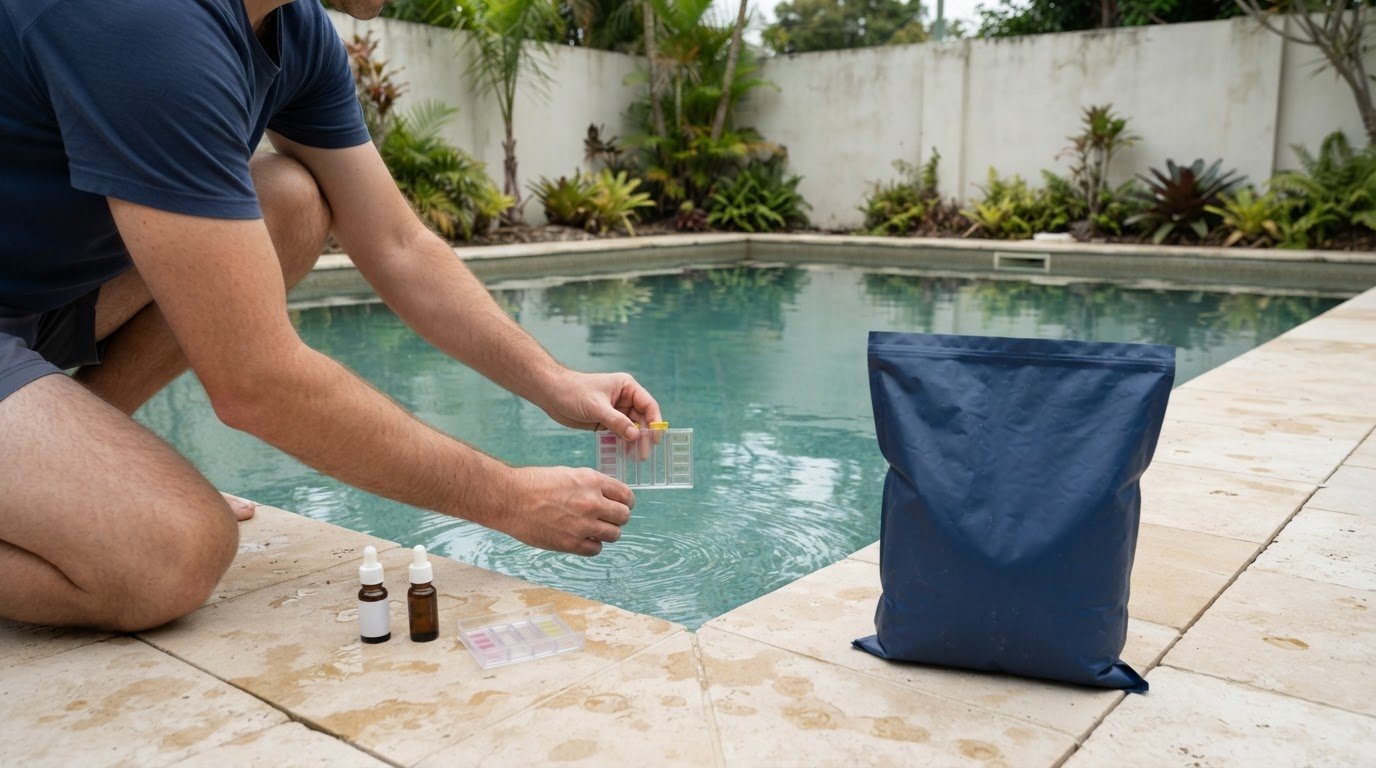
Magnesium and saltwater systems both need testing, filtration and sanitiser management. The routine depends on the system, pool water and equipment.
Purity, additives and certification
Choose pool salt labelled for swimming pool use and compatible with the system. Read the product information for its stated purity, additives and any certification details. These help you understand what you’re adding and whether it suits a salt chlorinator or mineral setup. Don’t assume that all salt or mineral blends are interchangeable. Match the product to the equipment instructions and the pool’s treatment method.
Chemical use and environmental impact
Magnesium systems use minerals alongside sanitiser, so they still need sanitising chemicals and balanced water. Traditional chlorine pools use manually added chlorine, while saltwater chlorinators generate it from salt. Each approach involves treatment inputs and ongoing maintenance. Treat “eco-friendly” as a claim to assess, not proof that a pool uses no chemicals or has no environmental impact. Consider water testing, chemical handling and discharge as well as the salt itself.
For any swimming pool, test and balance the water regularly, then adjust treatment according to the results and system instructions. Clean the filter and check the pump as part of routine upkeep. If readings are outside the recommended range, address the underlying imbalance rather than adding sanitiser by guesswork.
Discharge requirements in Brisbane and Queensland can depend on where pool water or backwash flows. Manage backwash carefully: keep it away from stormwater drains, waterways and areas where it could damage plants. Avoid unnecessary backwashing and direct discharge only to a suitable wastewater route.
Store pool salt in its original, labelled packaging, sealed and dry. Keep it separate from other pool chemicals, and avoid breathing dust or getting granules in your eyes. For a mineral-based option, explore healthy pool salts.
For magnesium pools, maintenance also includes monitoring water levels, cleaning filters and checking that the pump functions correctly. Magnesium can bind with dirt and debris, making it easier for a pool filtration system to remove impurities. Regular testing and balancing of pool water remains important in magnesium pools.
Running costs and mineral replenishment
Compare conversion costs with ongoing expenses, not just the price of salt. A magnesium conversion may involve upfront costs, while maintenance and chemical expenses may change over time. The balance depends on your existing pool setup, the work required and how much treatment the water needs.
For a concrete pool, construction costs are a separate part of the decision. Eco Pools estimates that reaching the concrete stage accounts for approximately 50-60% of overall pool-building costs. That figure concerns construction, not the cost of converting an existing pool to a mineral system. Keep those budgets separate when assessing a new build or renovation.
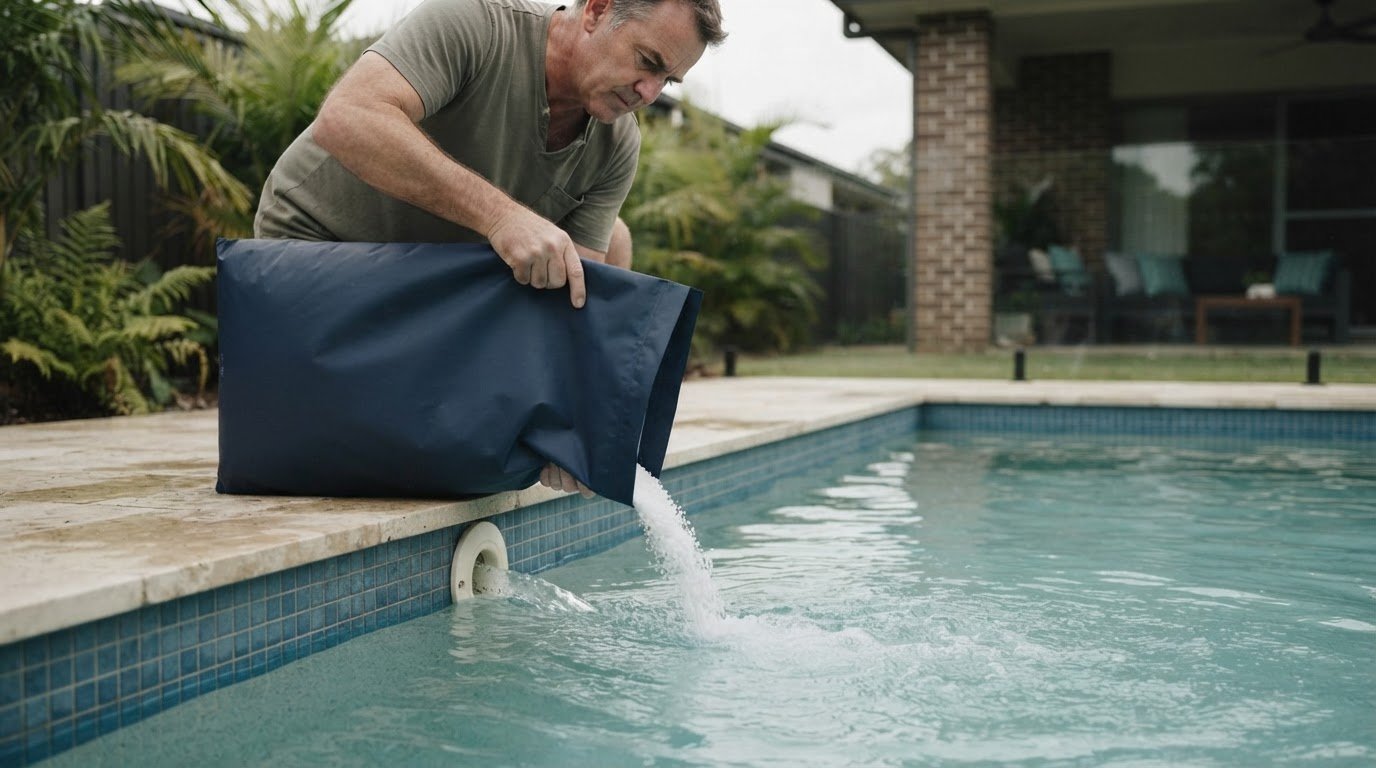
Ongoing costs depend on how the pool operates. A saltwater system needs salt replacement and chlorinator maintenance. A magnesium system needs mineral replenishment, water testing, filtration and equipment care. The amount of mineral needed depends on pool volume, existing mineral levels and water loss. Base top-ups on the system’s required balance, not a fixed schedule.
Keep a simple pool log of treatment additions, water test results and substantial water loss. This helps you plan future mineral top-ups. After backwashing or replacing water, test and balance the pool before adding minerals, so you are not relying on readings from before the water change.
When comparing systems, include conversion work, regular sanitiser, replacement salt or minerals, and routine equipment needs. A low initial outlay may not mean lower ongoing costs, and reduced chemical use does not remove testing or upkeep. For a mineral pool, bag size is another practical consideration: Pool minerals are available in 10 kg and 25 kg bags. The right quantity depends on the pool’s volume and the replenishment required, so use a dosing calculation rather than estimating from bag size alone.
Eco Pools states mineral pool systems use minerals such as magnesium, salt and potassium in varying blends and percentages, a factor to consider when budgeting replenishment.
Skin and eye comfort
Water feel matters during a long swim, but a mineral product cannot guarantee comfortable skin or eyes. Magnexa’s magnesium pool minerals are intended to support a softer-feeling pool alongside a reduced chlorine level. Treat comfort as a personal consideration, not a substitute for balanced water. A pool still needs suitable sanitiser and regular testing.
Eye comfort depends on the water, not just the type of salt. If swimming causes stinging, test the water and review its balance and sanitiser level before adding chemicals. Do not guess based on smell or appearance. Clear water can still need adjustment, and a mineral system still uses sanitiser.
Judge the experience rather than relying on labels such as “soft” or “gentle”. Note whether swimmers experience dry-feeling skin or eye irritation, when it happens and what the recent water readings show. If discomfort begins after a water adjustment, review the test results and treatment added. This gives you a practical basis for addressing the water.
For a Brisbane household choosing between traditional chlorine and magnesium, weigh comfort alongside the sanitising routine. A mineral option may suit someone seeking a different water feel, but it does not remove the need for correct treatment. Keep the water balanced, follow the system instructions and rinse skin after swimming if that feels more comfortable. Do not add extra minerals to address eye irritation: test the water first and adjust treatment based on the result.
To explore a mineral-based approach for your pool, compare magnesium pool options alongside your comfort and upkeep priorities.
Magnexa: magnesium pool salt
Magnexa supplies magnesium pool salt and healthy pool salts for pool owners considering a mineral system or replenishing minerals. Pool minerals are available in 10 kg and 25 kg bags, giving you options for different top-up needs.
Before adding minerals, use your pool’s water volume and current readings to work out the required amount. Follow the product directions and your pool system’s requirements. Magnesium minerals support a mineral treatment approach, but do not replace water testing, sanitiser or routine upkeep.
If you’re comparing mineral options or planning a top-up, contact Magnexa to discuss magnesium pool salt for your pool.
Choose a pool treatment that fits your routine
Set your next step around the pool you have, not an idealised system. Before choosing eco-friendly pool salts in Brisbane, note your current sanitising method, pool volume, equipment requirements and priorities. You might want a different water feel, a revised chemical-handling routine or a clearer plan for mineral replenishment. Those details help you assess whether to keep your current approach or consider a mineral treatment.
Use your pool system’s instructions and current water readings to guide dosing. If you are considering a conversion, factor equipment compatibility and ongoing care into your plans. Choose a treatment that suits your pool’s actual setup and the routine you can maintain.
Magnexa’s Dosing Calculator can help work out mineral quantities for your pool. For help with your next step, contact Magnexa about pool salts. Start with your pool’s needs, then choose a care plan that works for your household. A considered decision gives you a practical way forward.
Frequently Asked Questions
Is a magnesium pool safe for my family?
A magnesium pool is not chlorine-free, so family use still depends on maintaining properly treated water. Magnexa’s magnesium minerals work alongside a reduced chlorine level. Follow your pool system’s instructions for sanitiser and water balance, and store treatment products securely away from children. Mineral treatment does not replace supervision or other standard pool safety measures.
What are the environmental impacts of different pool salt types?
Environmental impact depends on more than salt type. A salt chlorinator converts sodium chloride into chlorine, while magnesium systems use minerals alongside sanitiser. Water use and how pool water is managed also matter. Brisbane, Moreton Bay, Sunshine Coast, Ipswich, Logan and Redlands, and Gold Coast pool owners comparing options should consider treatment inputs, avoid unnecessary water loss and plan backwashing and discharge as part of the pool’s overall impact.
How much does pool salt cost in Brisbane, including delivery?
Magnexa lists magnesium pool minerals at A$49.00 per 10 kg bag, including delivery. Delivery covers Brisbane, Moreton Bay, Sunshine Coast, Ipswich, Logan and Redlands, and the Gold Coast. The displayed price is the final amount payable, with no separate shipping line; orders of four bags or more travel free. You can reserve bags by postcode without paying at reservation.
How much salt does a typical Brisbane swimming pool need, and how often should it be topped up?
There is no single top-up quantity for every pool in Brisbane, Moreton Bay, the Sunshine Coast, Ipswich, Logan and Redlands, or the Gold Coast. Base the amount on measured pool volume, the system’s mineral target and current water readings. Factor in water lost through splash-out, backwashing or partial draining, then retest after changes. Follow the system instructions rather than copying another pool’s dose. Magnexa’s Dosing Calculator helps you determine the mineral quantity for your pool.
Frequently Asked Questions
More articles