How to Budget for a Magnesium Pool Conversion in Brisbane
27 October 2026 · 11 min read
A saltwater pool can be converted to magnesium, but adding minerals is only part of the change. The magnesium pool conversion cost in Brisbane depends on pool size and whether the existing chlorinator, filtration system or plumbing needs modification.
If you’re weighing up the change, the key question is not just how many minerals the pool needs. The equipment and water chemistry matter too. This guide explains which existing pools can be converted, how to approach a saltwater conversion, and where maintenance or equipment savings may arise.
Before setting a budget, identify your pool’s volume, current equipment and any modifications it may need. This makes it easier to plan a conversion around the pool you already have.
Key Takeaways
- Build your budget around pool size and the condition of your existing chlorinator, filtration system and plumbing.
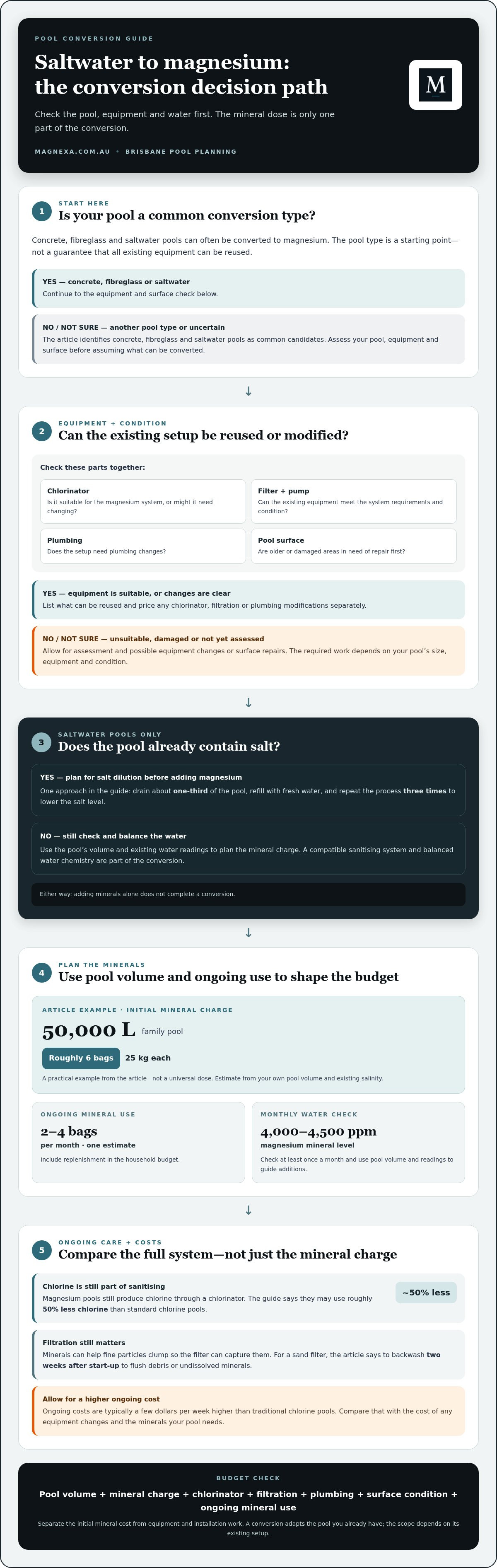
- Concrete, fibreglass and saltwater pools can often be converted, provided the existing equipment is suitable or can be modified.
- For a saltwater conversion, plan for salt dilution, balanced water chemistry and a compatible sanitising system, not just an initial mineral dose.
- Magnesium pools use roughly 50% less chlorine than standard chlorine pools; compare potential running-cost changes with the cost of any equipment upgrades.
Did you know you can convert your pool into a Magnesium pool?
Many existing pools can be converted, but the equipment and water chemistry determine the work involved. Estimate the magnesium pool conversion cost in Brisbane based on pool size, the current system and any required modifications.
Compared with saltwater and conventional chlorine pools, mineral pools still produce chlorine through a chlorinator, but may use roughly 50% less. Minerals can help fine particles clump for filtration, while ongoing costs are typically a few dollars per week higher than traditional chlorine pools.
An equipment conversion is different from building a new pool, so don’t assume it needs a new-pool approval. If the work changes the pool structure or safety barrier, assess those parts separately against applicable Brisbane and Queensland requirements.
-
Compare magnesium and salt pool costs
Separate the mineral charge from equipment and installation when comparing a salt pool with a mineral pool. A saltwater system may need compatible sanitising equipment or filtration changes, so compare the equipment scope, not just the treatment method. Adding minerals alone does not complete a conversion.
-
Estimate mineral and ongoing running costs
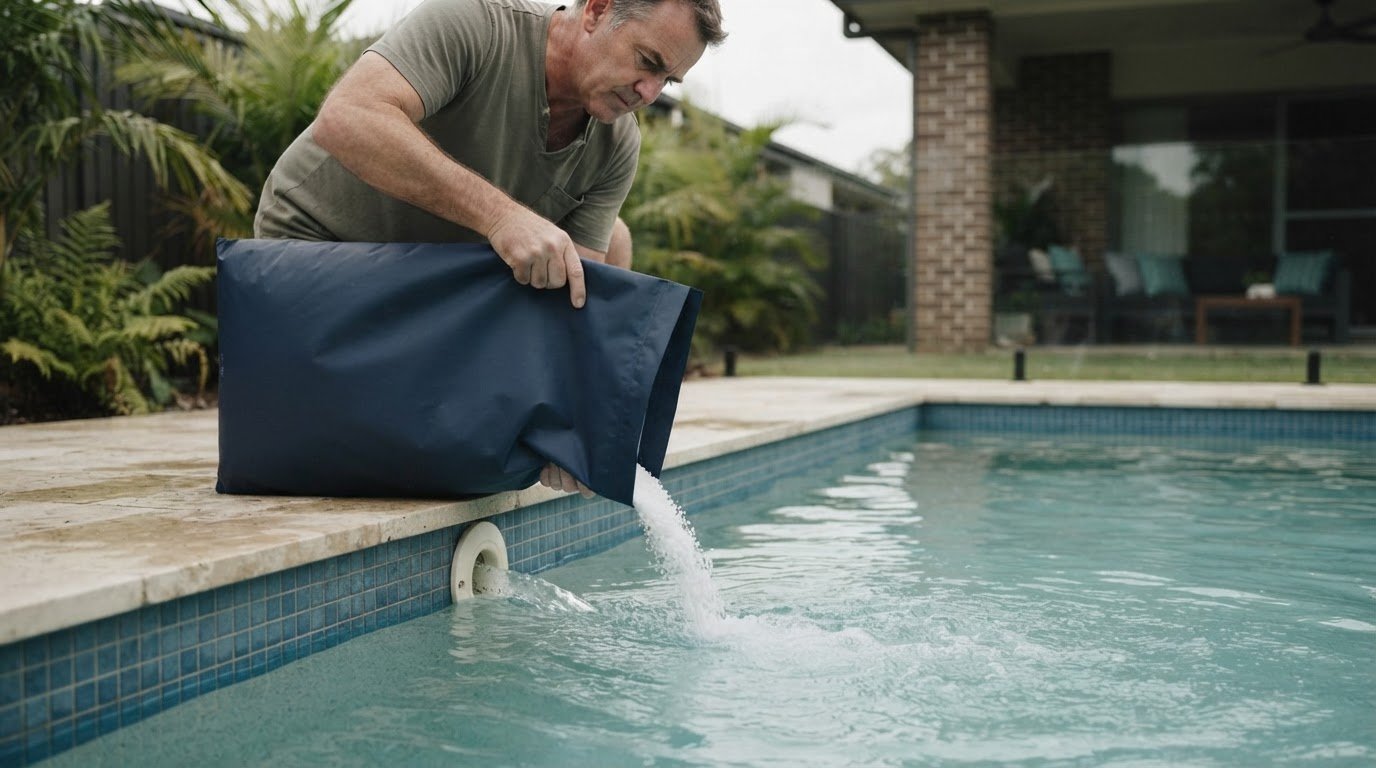
Estimate the initial mineral quantity from your pool’s water volume and existing salinity. As a practical example, a 50,000-litre family pool needs roughly six 25 kg bags to establish a magnesium pool. Ongoing use matters too: one estimate is 2-4 bags of magnesium minerals per month. Include that replenishment alongside the typical few dollars per week higher running costs when planning your household budget.
-
Review cost factors and pool trade-offs
Before comparing costs, note your pool’s volume, chlorinator, filter, plumbing and surface condition. Pool size, equipment compatibility and system requirements shape the work; older or damaged surfaces may need attention first. Some swimmers prefer the feel of mineral-treated water, and minerals can help particles clump for filtration. Balance these considerations against ongoing mineral use and any equipment changes your setup requires.
Whether existing concrete, fibreglass and saltwater pools can be converted
Concrete, fibreglass and saltwater pools can often be converted to magnesium. Start by assessing the existing equipment, plumbing and pool surface.
-
Confirm the pool type can be converted
Check whether your concrete or fibreglass pool’s equipment is suitable for a magnesium setup. A saltwater pool can also be converted, but its existing salt level affects preparation. The chlorinator, filtration system and plumbing may need modification. Include the pool surface in your assessment, as older or damaged areas may need repairs first. This helps identify what can be reused and what needs changing.
-
Estimate the existing pool conversion cost
Break the estimate into the initial mineral charge, chlorinator changes and any filtration or plumbing work. Pool size and existing equipment determine the scope of each part. A conversion adapts a pool that is already in place, rather than pricing it like a new build. Compare the equipment and preparation required instead of assuming every pool needs the same work.
- For a saltwater conversion, plan to dilute the existing salt before adding magnesium minerals. One approach is to drain about one-third of the pool, refill it with fresh water, and repeat the process three times. This lowers the salt level before establishing the new mineral system. Adding minerals alone does not complete a conversion: the sanitising system and balanced water chemistry matter too.
- Include the existing pump and filter in your equipment assessment to determine whether they can be reused. Their suitability depends on system requirements and condition, while the chlorinator may need replacing. Compare conversion work and a new build as separate budgets: a conversion adapts existing infrastructure, while a new pool includes construction and installation. This keeps the comparison relevant to your project.
Potential maintenance and equipment savings
Compare maintenance tasks and equipment needs, not just the initial mineral charge. A magnesium system may still need compatible sanitising equipment, filtration and ongoing water-chemistry care.
- Track chlorine use separately from other pool chemicals after conversion. Mineral water still produces chlorine as it passes through the chlorinator cell, so magnesium does not remove the need for sanitisation. Record purchases and dosing over time to understand how your pool’s ongoing chemical use changes. Don’t assume chlorine or water testing becomes unnecessary.
- Check magnesium mineral levels at least once a month and maintain around 4000-4500 ppm. Keeping a record of each result helps you identify changes before adjusting the mineral dose. Use pool volume and current readings to guide additions, rather than adding minerals by guesswork. This regular check is part of ongoing care, not a one-off conversion task.
- Your filter remains part of the water-care system. Minerals can help small particles clump together so filtration can capture them. If your pool has a sand filter, backwash it two weeks after start-up to flush out debris or undissolved minerals. Continue to follow the filter’s normal operating requirements; mineral treatment does not replace routine filtration.
- Include the existing chlorinator and filtration in your equipment budget. A magnesium pool still needs compatible sanitising equipment, so conversion does not automatically remove equipment costs. Any savings depend on which components remain suitable and how ongoing chemical use changes. Compare costs with the equipment your pool actually requires, rather than assuming a magnesium system needs no equipment.
- Separate comfort preferences from health claims. Magnexa offers premium magnesium pool salts to soften pool water and support skin wellness. People with eczema should seek advice from a healthcare professional before relying on magnesium water for skin benefits. This distinction helps you assess the swimming experience without assuming a medical outcome.
Converting a saltwater pool to magnesium
A saltwater pool conversion involves managing existing salt, equipment and water chemistry, not simply adding minerals. Preparation includes dilution, testing and a compatible sanitising system. The time required depends on these steps and any equipment changes.
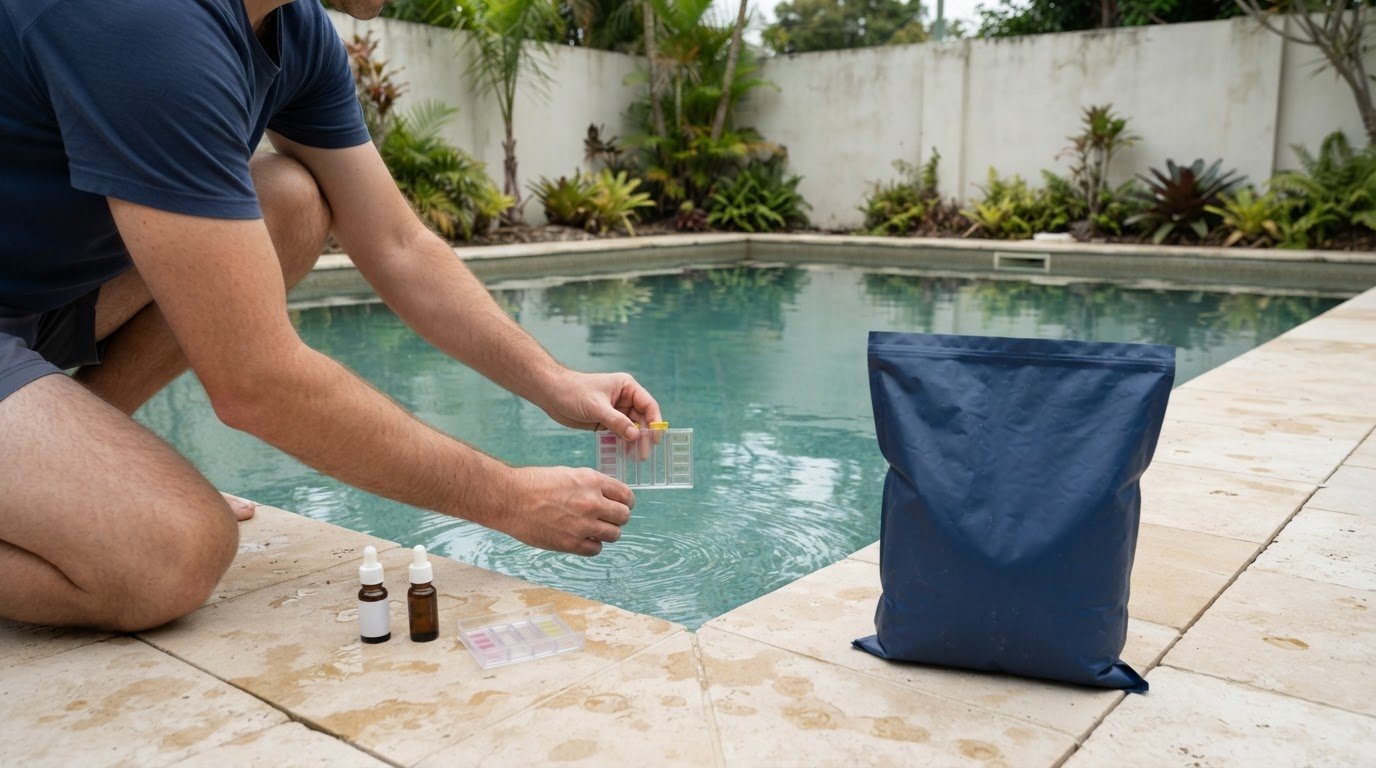
- Measure the pool water before changing the treatment system. Salt levels affect how much dilution is needed, while chlorine, pH, alkalinity, calcium hardness and cyanuric acid guide the chemistry adjustments. Before adding minerals, bring chlorine to 0.5 ppm or lower. If the pool uses bromine, reduce it to 1 ppm or lower.
- Dilute the saltwater before adding magnesium minerals. One conversion method is to drain about one-third of the pool, refill it with fresh water, then repeat the drain-and-refill process three times. This lowers the existing salt level instead of adding minerals to water that is already saline. Follow the dilution sequence before establishing the mineral level.
- Check the pre-dose water balance: pH should be 7.2 to 7.6, total alkalinity 80 to 120, calcium hardness 200 to 400, and cyanuric acid 30 to 50. Test and adjust each measure before adding minerals. This gives the conversion a controlled starting point and helps avoid correcting several imbalances at once.
- Run the pool system while the minerals dissolve and you adjust the water chemistry. There is no single fixed conversion duration: dilution, equipment changes, dissolving minerals and balancing the water determine the sequence. Check that the chlorinator and filtration system suit the mineral setup. Adding minerals alone does not create a complete magnesium system.
- Assess the investment against the swimming experience you want. Mineral water may feel gentler, but it still requires chlorine sanitisation and ongoing care. If you have eczema, seek advice from a healthcare professional before relying on magnesium water for skin benefits. To plan the mineral step, work out your pool’s magnesium conversion needs.
Magnexa: magnesium pool salt
Magnexa supplies magnesium pool salt for pool owners preparing a mineral conversion or replenishing minerals in an established pool. Pool minerals are available in 10 kg and 25 kg bags, giving you options to suit your pool’s requirements. Choose the mineral quantity based on pool volume and current water chemistry, rather than treating bag size as a dosing guide.
Magnexa supplies magnesium pool minerals for owners planning a pool conversion. The product is only one part of the change: your pool still needs compatible sanitising equipment and balanced water chemistry. Plan equipment work and water preparation separately from the mineral addition.
For magnesium pool salt and pool minerals, visit Magnexa online.
Plan the next step with clear priorities
Before committing, turn your equipment assessment into a written conversion plan. List the water preparation, compatible equipment, mineral quantity and follow-up water checks. This keeps the magnesium pool conversion cost in Brisbane tied to the work your pool actually needs.
Magnexa supplies magnesium pool salt, including Pool minerals 10kg and Pool minerals 25kg. Choose the mineral format only after calculating pool volume and required dose. Keep product quantities separate from any equipment changes in your budget.
A saltwater conversion also needs careful sequencing. Prepare the water and compatible sanitising setup before treating mineral supply as the final step. Settle the pool system plan first, then organise the right minerals for it.
If you’re ready to plan that supply step, contact Magnexa about magnesium pool supplies. A clear conversion plan gives you a practical way forward.
Frequently Asked Questions
What does a magnesium pool cost in Australia?
These figures relate to new pools, not converting an existing pool.
How much does it cost to convert a chlorine pool to a magnesium pool in Brisbane?
Treat this as the installation component, not an all-in conversion total. The final budget also needs to account for the initial mineral charge and any chlorinator or filtration changes. For a chlorine pool, the existing equipment and system requirements shape the work involved.
What is the average magnesium pool conversion cost in Australia?
This range describes installation, not a single national total for minerals and equipment combined. To budget usefully, separate installation work, mineral quantity and any required equipment modifications. Pool volume and the condition of existing components determine those additional parts of the conversion.
How much do magnesium pool mineral systems and replacement minerals cost in Brisbane?
Magnexa’s magnesium pool minerals cost A$49.00 per 10 kg bag, including GST. The checkout price is the total payable, and customers can reserve bags without paying upfront. Magnexa’s South East Queensland delivery area includes Brisbane, Moreton Bay, Sunshine Coast, Ipswich, Logan and Redlands, and the Gold Coast. Equipment-system costs depend on the components required.
How much does it cost to convert a saltwater pool to a magnesium pool?
A saltwater conversion also involves preparing the existing pool water and establishing a compatible sanitising system. The budget therefore includes installation, minerals and equipment work where required. The scope depends on the pool’s existing chlorinator, filtration system and plumbing, not just the fact that it is a saltwater pool.
What factors affect magnesium pool conversion cost, including pool size and existing equipment?
Pool volume affects the quantity of minerals needed, while the chlorinator, filter and plumbing determine possible equipment work. Surface condition matters too, as older or damaged areas may need attention before conversion. For example, a large pool with incompatible equipment has different requirements from a smaller pool whose existing system suits mineral treatment.
Frequently Asked Questions
More articles