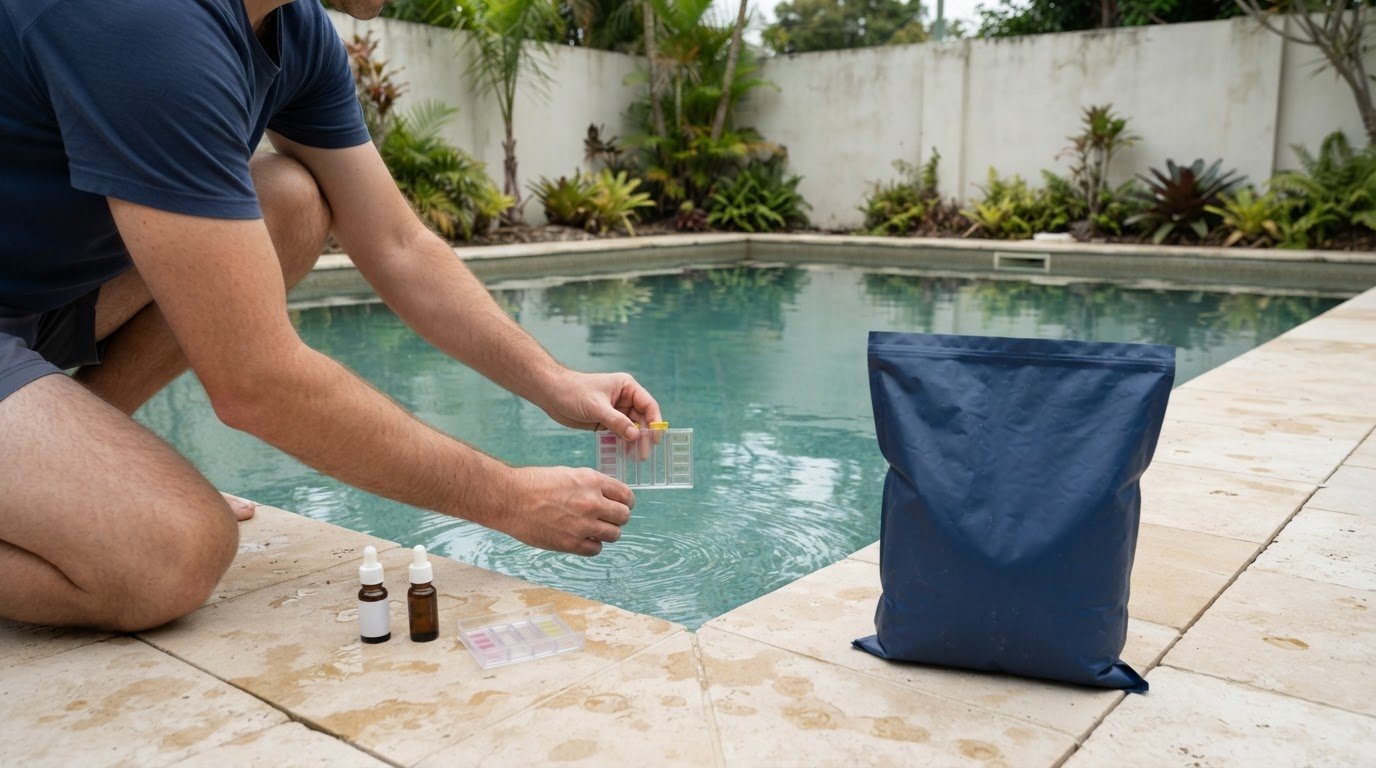
How to Use Magnesium Salt with a Salt Chlorinator
22 October 2026 · 16 min read
A magnesium mineral pool usually works with a standard salt chlorinator, so replacing or upgrading the unit isn’t generally necessary. When using magnesium salt in a salt chlorinator, the electrolytic cell converts dissolved minerals into chlorine to sanitise the water. The key difference is the pool water: a magnesium mineral system uses a blend of minerals rather than the sodium chloride used in a conventional salt pool.
It’s reasonable to ask whether a different mineral mix requires different equipment. The key is to understand how the chlorinator and cell work, what changes when you use magnesium minerals, and which water readings to monitor during a conversion. This also helps distinguish a magnesium mineral pool from a conventional sodium chloride salt pool.
Key Takeaways
- A standard salt chlorinator can generally operate with a magnesium mineral pool, so specialised equipment is usually unnecessary.
- Magnesium mineral pools use a blend of minerals, while conventional salt pools rely on sodium chloride. That difference affects the water chemistry, not the basic purpose of the chlorinator.
- The electrolytic cell converts chloride in the water into chlorine. Its output still needs to suit the pool and its operating conditions.
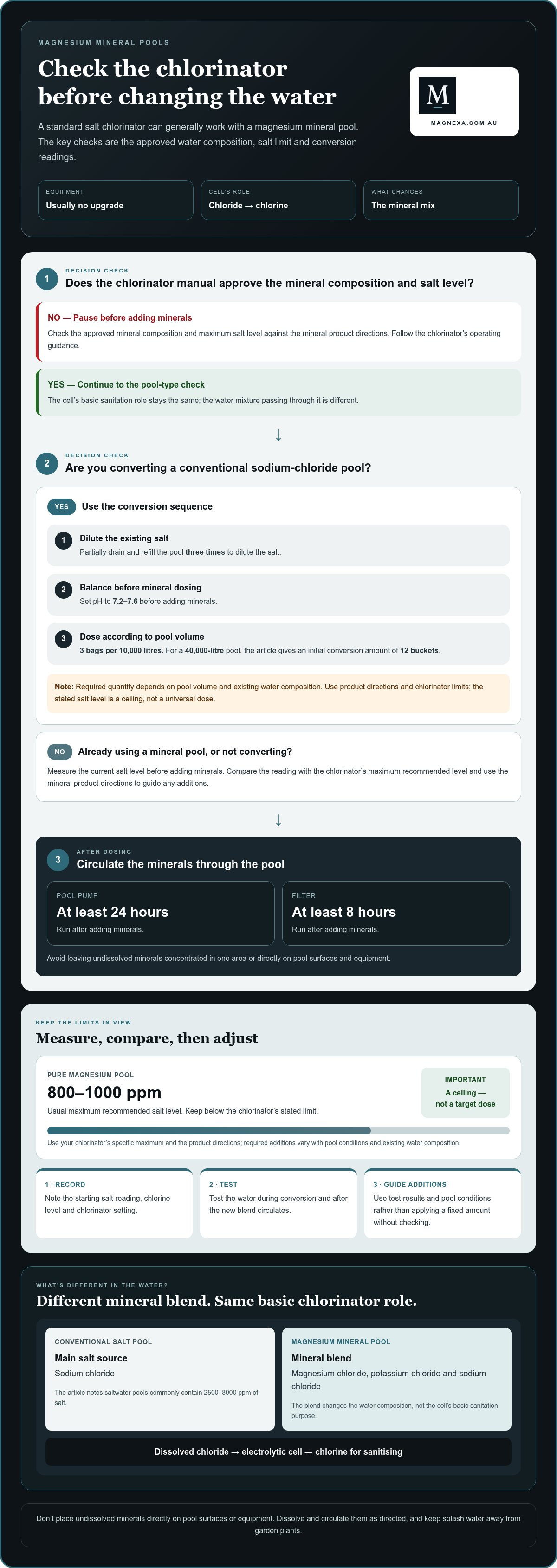
- Keep salt below the chlorinator’s maximum recommended level. For a pure magnesium pool, that level is usually 800-1000 ppm.
- Test and balance the water during conversion, and follow the chlorinator’s operating guidance for the pool’s mineral composition.
Salt and mineral chlorinator compatibility
A standard salt chlorinator can generally operate with a magnesium mineral pool, without replacing or upgrading the unit. If you’re using magnesium salt in a salt chlorinator, focus on the water mix and the equipment’s operating limits.
-
Check chlorinator compatibility
Read the chlorinator manual before changing the pool water. Check its approved mineral composition and maximum salt level, then compare these with the product directions. A magnesium mineral pool uses magnesium and potassium minerals rather than the sodium chloride used in a conventional salt pool. The cell still produces chlorine from dissolved chloride.
-
Confirm the required magnesium salt concentration
Measure the current salt level before adding minerals, then compare it with the chlorinator’s maximum recommended level. For a pure magnesium pool, keep salt below that limit, usually 800-1000 ppm. That figure is a ceiling, not a universal dose. The quantity required depends on the pool volume and existing water composition.
- Convert a salt pool in sequence. Partially drain and refill it three times to dilute the salt, balance the water, then add three bags of minerals per 10,000 litres. For a 40,000-litre pool, the initial conversion amount is 12 buckets. Set the pH to 7.2-7.6 before adding minerals.
- Circulate the water after dosing. Run the pool pump for at least 24 hours after adding minerals, and run the filter for at least 8 hours. These steps disperse minerals through the pool water and filtration system. Avoid leaving undissolved material concentrated in one area of the pool.
- Plan for ongoing additions and testing. The amount of magnesium minerals needed for ongoing maintenance can vary with pool conditions and mineral levels. The amount used depends on pool conditions and mineral levels. Test the water regularly and use the results to guide additions, rather than applying a fixed amount without checking the pool.
-
Review benefits, drawbacks and potential damage
A magnesium mineral blend changes the pool water composition, while the chlorinator continues producing chlorine. Mineral levels still need monitoring and replenishment. Don’t place undissolved minerals directly on pool surfaces or equipment. Dissolve and circulate them as directed, and keep splash water away from garden plants.
Using magnesium salt in a salt chlorinator does not change the cell’s basic role, but the water mix and dosing plan matter. Let test readings and the chlorinator’s limits guide each adjustment.
Differences between magnesium and sodium-chloride salt pools
Before changing your pool system, compare the mineral mix, chloride source and water readings. Both pool types use a salt chlorinator to produce chlorine, but the dissolved minerals differ.
- Identify the pool’s main salt source. A conventional saltwater pool uses sodium chloride, while a magnesium mineral pool uses a blend containing magnesium chloride, potassium chloride and sodium chloride. The labels “salt pool” and “mineral pool” describe different water compositions, not different sanitation methods. Check the product label and your existing pool records before adjusting the water.
- Compare the concentration readings carefully. Saltwater pools commonly contain 2500-8000 ppm of salt, while the ocean contains about 35,000 ppm. Those figures describe different environments, not a target for a magnesium mineral pool. Use the chlorinator’s limits and the mineral product’s directions to guide adjustments; don’t use an ocean comparison to set pool levels.
- Keep chlorine in the comparison. A salt chlorinator produces chlorine from chloride in the pool water, whether the source is sodium chloride or a mineral blend. Changing the salt composition does not make the pool chlorine-free. Test chlorine levels after changing the water, then adjust the chlorinator output to suit the pool’s measured demand.
- Separate the water mix from the equipment. In both a sodium chloride saltwater pool and a magnesium mineral pool, the chlorinator cell has the same basic sanitation role. The difference is the mixture passing through it. Before adding minerals, compare the chlorinator’s operating limits with the intended pool-water composition, then adjust settings only as the manufacturer instructs.
- Assess the water using test results, not the pool’s name. A mineral blend may change how the water feels, but that alone does not show whether chemical levels are balanced. Test the pool water and use the readings to guide treatment. Australian pool owners should also distinguish private-pool guidance from rules for public aquatic facilities.
- Record the starting point before making a change. Note the existing salt reading, chlorine level and chlorinator setting, then compare them with readings after the new blend circulates. This gives you a practical way to identify what changed. If you have the water tested, provide these details so the results can be interpreted in light of the pool’s setup.
Electrolytic cells and sodium chloride
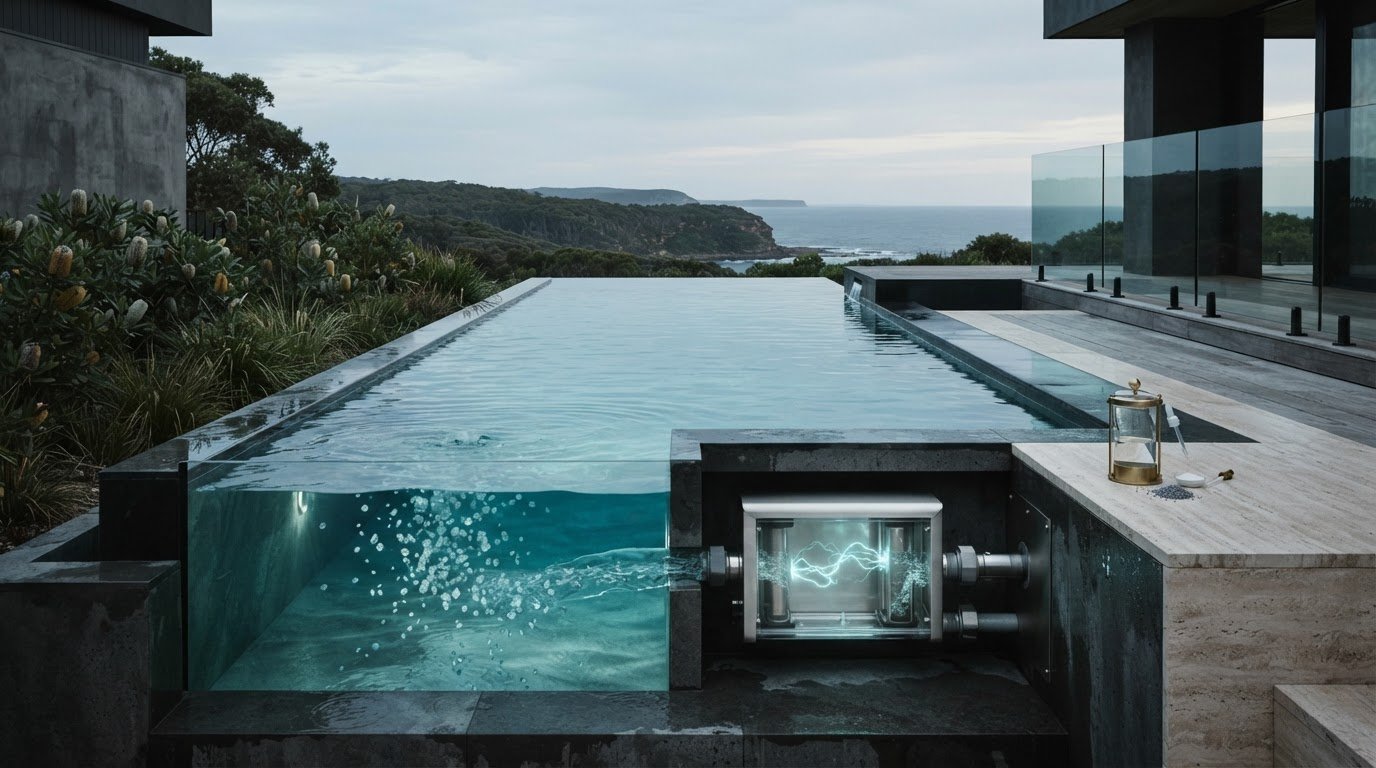
Follow the chloride through the system to understand what changes in a magnesium pool. The chlorinator cell uses electricity to convert dissolved chloride into chlorine, which sanitises the pool water.
- Identify the chloride source before adjusting the system. In a conventional chlorine pool, sodium chloride dissolves into sodium and chloride ions. The cell acts on chloride, not sodium. In a mineral pool, the dissolved blend can also include magnesium chloride and potassium chloride, which supply chloride to the water.
- Trace the water through the equipment. The filter removes suspended material before circulating water passes through the electrolytic cell. An electrical current drives the conversion of chloride into chlorine. The chlorine returns to the pool and sanitises the water. That’s why a salt chlorinator remains relevant when the mineral mix changes.
- Separate chlorine production from salt choice. Sodium chloride is the familiar salt in standard systems, but the sanitation task is producing chlorine from chloride in the water. Magnesium minerals do not replace chlorine as the sanitiser. The cell still needs suitable water chemistry and adequate circulation to produce chlorine during normal operation.
- Check the chlorinator’s operating instructions before converting a pool. The controller’s salt reading or output setting may be designed for a sodium chloride pool. A mineral blend changes the water’s composition, so don’t assume the old reading represents the correct mineral level. Use the equipment limits and measured water balance to guide adjustments.
- Keep filtration and chlorination working together after adding minerals. Circulation carries dissolved chloride through the cell, while filtration helps remove suspended material. Run the pump and filter according to the conversion instructions. If the instructions call for backwashing a sand filter after conversion, follow the stated timing and procedure. Backwashing is separate from chlorine production.
- Check low chlorine readings in order. First, test the pool water and compare the result with the chlorinator’s output setting. Then check that water is circulating through the cell and that the filter is operating. If chlorine remains low, review the pool’s chemical balance and system settings before adding more salt or minerals.
The practical distinction is simple: sodium chloride is one source of chloride, while a magnesium blend supplies chloride through different minerals. In either system, the electrolytic cell produces chlorine. The pool’s measured balance and the chlorinator’s limits guide operation.
How saltwater chlorinators generate chlorine
A saltwater chlorinator uses an electrolytic cell to turn dissolved chloride into chlorine. Following the water’s path through the equipment helps explain how the process sanitises a swimming pool, including a magnesium pool.
- Start with dissolved chloride in the pool water. Sodium chloride dissolves into sodium and chloride ions, while magnesium and potassium minerals can also supply chloride in a mineral pool. The cell acts on chloride, not sodium or magnesium. That’s why saltwater and magnesium pools can use the same basic chlorine-generating process.
- Trace the water through the filtration system. The pool pump moves water through the filter and then the electrolytic cell, where metal plates carry an electrical current. Chloride passing through the cell is converted into chlorine. The chlorinated water then returns to the pool and mixes with the rest of the water.
- Understand what sanitises the pool. In water, chlorine forms active sanitising compounds, including hypochlorous acid. These compounds help control contaminants as people use the pool. Chlorine is consumed during sanitation and other reactions, while the chlorinator continues producing it from chloride as water passes through the cell.
- Use the controller to manage chlorine production. The control board adjusts how long or strongly the cell operates, changing its output to suit the pool. If a test reading is low, first check circulation and the controller setting. Then assess the water’s chlorine demand, including swimmer use and sunlight, before adjusting the system.
- Maintain steady water flow during chlorination. The cell needs circulating water to carry dissolved chloride across its plates and distribute the resulting chlorine. A stopped pump interrupts that movement, while a restricted filter can reduce flow. Check the filter pressure and pump operation if the chlorinator reports a flow problem or chlorine readings fall.
- Read the result as a pool-water measurement, not a salt-type label. Australian guidance gives a free chlorine range of 1 to 3 ppm for private pools. Test the water and compare the reading with the chlorinator’s output. A magnesium pool still needs effective chlorine sanitation; the mineral blend doesn’t replace chlorine.
- Inspect the cell as part of routine operation. Mineral deposits or debris on the plates can affect performance, so follow the chlorinator manufacturer’s cleaning and inspection instructions. Don’t scrape the plates or use an unapproved chemical. In a magnesium pool, keep the water balanced and monitor chlorine readings after system changes.
In short, the cell uses electricity and dissolved chloride to generate chlorine. The pool type changes the mineral source, not the chlorinator’s central sanitation task.
What magnesium salt concentration do salt chlorinators require?
Set the mineral level for the pool, then keep it within the chlorinator’s operating limit. For a pure magnesium pool, the recommended salt level is usually 800-1000 ppm below the chlorinator’s maximum recommended level. That is a ceiling, not a target to exceed or a universal setting for every mineral blend.
- Read the chlorinator’s maximum salt recommendation first. The control unit may show a salt reading, but that value doesn’t automatically tell you the correct magnesium concentration. For a pure magnesium pool, keep salt below the unit’s maximum recommended level, usually 800-1000 ppm. Use the model’s operating guidance to interpret its reading.
- Establish the pool’s starting water levels before adding minerals. Record the current salt reading and chlorinator setting, then test the pool water. This provides a baseline for assessing the change. A standard sodium chloride reading and a magnesium mineral target describe different water compositions, so don’t substitute one for the other.
- Work out the mineral dose using the pool volume and product directions. A mineral concentration is not the same as a chlorinator’s maximum salt level. The amount needed depends on the pool’s water volume and existing mineral content. Add measured quantities, circulate the water, then test again before making another adjustment.
- Use the chlorinator’s limit as a control, not as a dosing instruction. The cell needs dissolved chloride to generate chlorine, but adding extra minerals does not automatically increase useful chlorine output. Production also depends on the chlorinator settings, water flow and chlorine demand. Adjust the output based on pool-water readings, not by exceeding the stated salt limit.
- Recheck levels after the minerals have circulated. Compare the new reading with the starting result and the chlorinator’s maximum recommendation. If readings are above the limit, stop adding minerals and follow the equipment instructions for correcting the water. If chlorine output is low, assess circulation and the control setting rather than assuming more magnesium salt is needed.
- Keep a record as part of ongoing maintenance. Note each mineral addition, test result and chlorinator adjustment. These entries help show whether the pool’s concentration is stable or changing between tests. Regular testing matters because water loss, top-ups and pool use can alter the balance, while the cell’s chlorine production responds to operating conditions.
For mineral dosing, compare magnesium pool salt options with your pool volume and the chlorinator’s stated limit before adding minerals.
Magnexa: magnesium pool salt
Magnexa supplies magnesium pool salt for pool owners planning a mineral conversion or maintaining a magnesium pool. Pool minerals are available in 10 kg and 25 kg bags, giving you options for dosing based on pool volume and the mineral level required. The range also includes healthy pool salts for owners choosing a magnesium-based water blend.
Before adding minerals, compare your pool’s current readings with your chlorinator’s operating limits and the product directions. This helps you select the right quantity without treating a standard sodium-chloride salt level as the target for a mineral pool. For magnesium pool salt options, visit Magnexa online.
Plan your mineral pool’s next step
Using magnesium salt in a salt chlorinator calls for a dosing plan based on your pool’s readings and the equipment’s operating limits. Before making a change, note your current readings and identify the chlorinator model. This gives you a practical starting point for working out the next steps for your pool.
Magnexa offers magnesium pool salt, Pool minerals 10kg and Pool minerals 25kg. If you’re planning a conversion or topping up an existing mineral pool, choose the format that suits your dosing requirements. For guidance on your pool’s next step, contact Magnexa for pool advice.
A measured approach helps you make the change with a clear view of your water and equipment. Start with your pool’s test results and equipment details, then plan the change around them.
Frequently Asked Questions
Does having a Magnesium Mineral Pool need Specialised Equipment?
No. A magnesium mineral pool can generally use a standard salt chlorinator, without replacing or upgrading the unit. The chlorinator still produces chlorine from dissolved chloride. Before changing the water, compare the mineral blend and salt reading with the equipment’s operating limits. The chlorinator can perform its usual sanitation function without a separate mineral system.
What should the water test at in a magnesium pool?
Use balanced readings, not the pool’s mineral label, to guide treatment. Before adding minerals, the recommended pH is 7.2-7.6, total alkalinity is 80-120 ppm, calcium hardness is 200-400 ppm, and cyanuric acid is 30-50 ppm. For private pools, the published summary of Australian Standard AS 3633 gives a free chlorine range of 1-3 ppm. Test again after adjustments.
Why has the pool gone green after adding magnesium salt?
Green water usually indicates algae growth, which can occur when chlorine sanitation is inadequate or circulation is poor. Adding magnesium minerals does not replace the need for chlorine. Test free chlorine and pH, check that the pump and filter are circulating water, and inspect the chlorinator’s output setting. Don’t add more minerals to treat green water; correct sanitation and water balance first.
Can magnesium chloride be used in a saltwater pool chlorinator?
Yes. Magnesium chloride dissolves in pool water and supplies chloride for the electrolytic cell to convert into chlorine. Use it as part of a suitable mineral pool blend, rather than assuming pure magnesium chloride can replace every other pool chemical. Check the chlorinator’s maximum salt recommendation and the mineral product’s dosing directions before adding it to an existing saltwater pool.
How much magnesium pool salt should I add per 10,000 litres?
At start-up, the recommended amount is three bags of minerals per 10,000 litres of pool water. For example, a 20,000-litre pool would use six bags at that starting rate. Treat this as a conversion dose, not an ongoing top-up amount. Account for existing mineral levels and follow the product directions, then test the water after circulation before adding more.
Does magnesium salt affect chlorine production or chlorinator cell life?
Magnesium minerals don’t remove the cell’s role: it converts dissolved chloride into chlorine. Chlorine output depends on the chlorinator setting, pool size and bather demand, so use water tests to guide adjustments. Inspect a magnesium-pool cell monthly. A salt chlorinator cell has an approximate lifespan of 3-5 years, depending on use; the mineral type alone doesn’t determine its service life.
What are the Australian pool water chemistry and maintenance requirements for magnesium salt?
For a private pool, use the published free chlorine range of 1-3 ppm from the summary of Australian Standard AS 3633. Test pool water weekly with a 4-in-1 minerals test kit, and check magnesium levels at least once a month. Inspect the chlorinator cell monthly. Public aquatic facilities have separate Queensland Health requirements, so don’t apply private-pool readings to a public facility.
Which salt chlorinator models are compatible with magnesium pool salts in Australia?
A standard salt chlorinator can generally be used with magnesium pool salts in Australia. Check its manual for approved mineral compositions and maximum salt level.
Frequently Asked Questions
More articles