Magnesium Pool for Eczema Relief: Skin Benefits and Care
31 October 2026 · 11 min read
A magnesium pool for eczema relief may make swimming more comfortable for some people, but it isn’t an established eczema treatment. Some people with eczema report less itching, reduced redness and improved skin comfort after swimming in mineral pools. These experiences don’t show that magnesium itself causes the difference: water balance and chloramine levels also matter.
It’s reasonable to look closely at pool water when swimming leaves sensitive skin dry or irritated. This guide explains what magnesium pools contain, how they may affect skin, and why reports of relief aren’t proof of a treatment effect. It also covers practical care before and after swimming, including rinsing and moisturising, and what families should consider when choosing a pool. You’ll learn how mineral water fits alongside ordinary eczema care and why balanced pool water still matters.
Key Takeaways
- Some swimmers report less itching and dryness in mineral pools, but these experiences don’t establish magnesium as an eczema treatment.
- Water balance and chloramine levels matter when assessing skin irritation after swimming.
- Rinse with fresh water after swimming and moisturise after drying off to support sensitive skin.
- Families should consider pool supervision and safety requirements alongside water care when choosing a swimming environment.
How Does Magnesium Benefit Sensitive Skin?
Some swimmers with eczema report less itching, redness and dryness in mineral pools. Any difference may relate to water balance and chloramines, rather than magnesium alone.
Magnesium and chlorinated pool comparison
A magnesium pool uses magnesium chloride, while a conventional pool may use salt or another chlorine-producing system. Both rely on chlorine for sanitation, so a mineral pool isn’t chlorine-free. Chlorine can strip natural oils and leave skin dry, which may contribute to eczema flare-ups.
Chloramines form when chlorine reacts with organic matter and can irritate skin and lungs. Reports of less irritation in mineral pools are more plausibly linked to chloramine levels and balanced water than to magnesium itself. Skin irritation after swimming, for example, may relate to pool pH or chloramine readings. These factors are more useful to compare than the pool label alone.
Swimming and eczema symptoms
A magnesium pool may feel more comfortable for some people with eczema, but it isn’t an established treatment. Some swimmers report less itching, redness and irritation. These personal experiences don’t prove that magnesium relieves eczema or heals a flare-up. Large-scale scientific research on magnesium therapy for skin conditions is still needed.
Claims that magnesium supports skin or is absorbed through it should be treated cautiously. However, these proposed effects don’t establish that pool exposure improves eczema. If swimming leaves your skin dry or irritated, shower before and after, rinse with fresh water, then moisturise after drying off. A doctor should manage eczema. For pool-related irritation, pH and chloramine levels are relevant factors to assess.
Eczema flare-up healing
A magnesium pool won’t heal an eczema flare-up or replace eczema care. Avoid swimming if pool water increases discomfort, and consult a doctor about managing eczema symptoms.
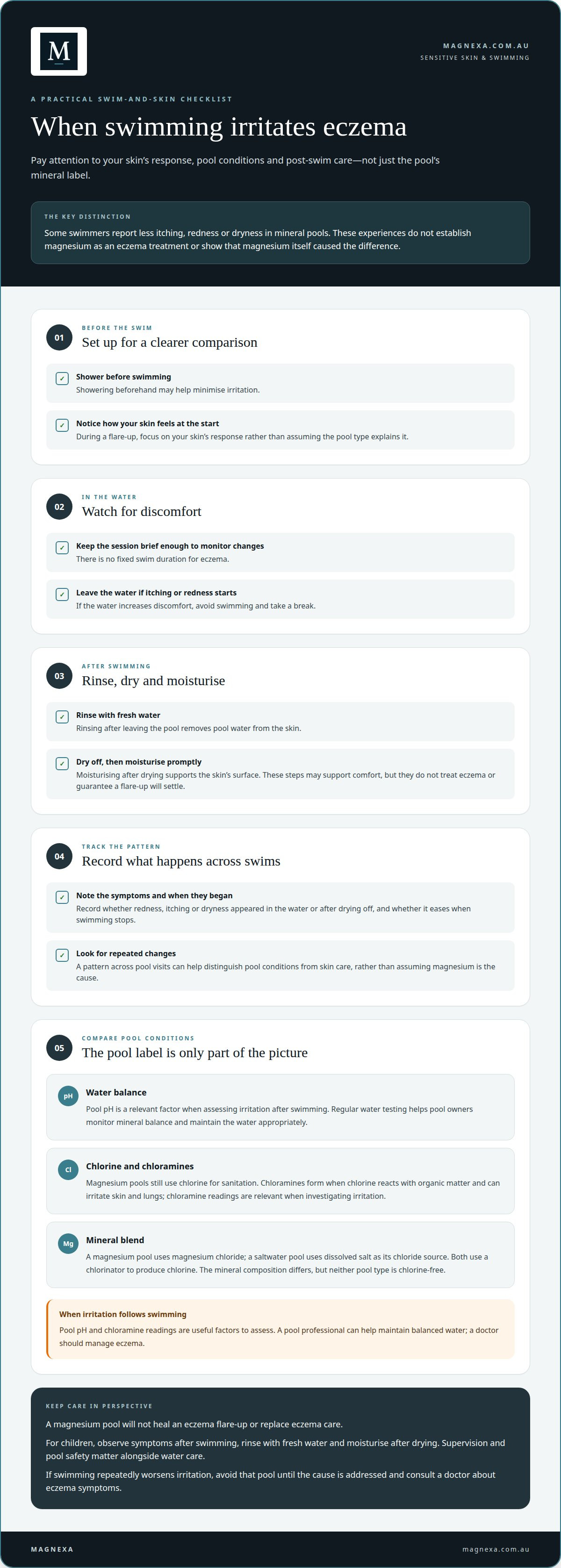
During a flare-up, pay attention to your skin’s response rather than the pool label. Pool conditions can affect skin irritation. If swimming leaves your skin drier or more irritated, take a break and note what happened. Record, for example, whether discomfort began in the water or after drying off. This detail can help a doctor understand the pattern.
Keep post-swim care simple: rinse with fresh water after leaving the pool, then dry off and moisturise promptly. Rinsing removes pool water from the skin, while moisturising supports the skin’s surface after drying. Showering before swimming may also help minimise irritation. These steps can support comfort, but they don’t treat eczema or guarantee a flare-up will settle.
Look for repeated changes across swims. Note whether redness, itching or dryness follows a particular pool visit and whether it eases when swimming stops. If irritation follows swimming, pool pH and chloramine readings are relevant. A pool professional can help maintain balanced water, while a doctor should manage eczema. This helps distinguish pool conditions from skin care instead of assuming magnesium is the cause.
Families can make the same observations for children. Track symptoms after swimming, rinse the child’s skin with fresh water, and moisturise after drying. If swimming repeatedly worsens irritation, avoid that pool until the cause is addressed. A doctor should guide treatment or ongoing eczema management. A magnesium pool is one swimming environment, not a substitute for care.
Magnesium pool composition
Magnesium pools contain dissolved minerals and use a chlorinator to sanitise the water. The mineral mix changes the water’s composition, but doesn’t remove chlorine from the system.
What magnesium pools contain
A magnesium pool uses magnesium chloride, which dissolves in the water and supplies chloride for sanitation. A mineral chlorinator produces chlorine on site from that dissolved chloride. The water also contains minerals that contribute to measured hardness, including magnesium and calcium.
These components matter because “magnesium pool” describes the mineral blend, not a chlorine-free pool. Chlorine still sanitises the water. Magnesium also contributes to measured water hardness, so it forms part of the pool’s water balance. The blend and chlorinator work together; magnesium itself isn’t the sanitiser.
Magnesium and saltwater pool differences
A magnesium pool uses a magnesium chloride blend, while a saltwater pool uses dissolved salt as its chloride source. Both use a chlorinator to produce chlorine. The difference is the mineral composition, not the presence of chlorine.
Some magnesium pool systems are described as using lower chlorine levels than saltwater or conventional pools, but this doesn’t establish that magnesium treats eczema. When considering irritation, water balance and chloramine readings remain relevant. The pool type alone can’t explain every factor affecting skin comfort.
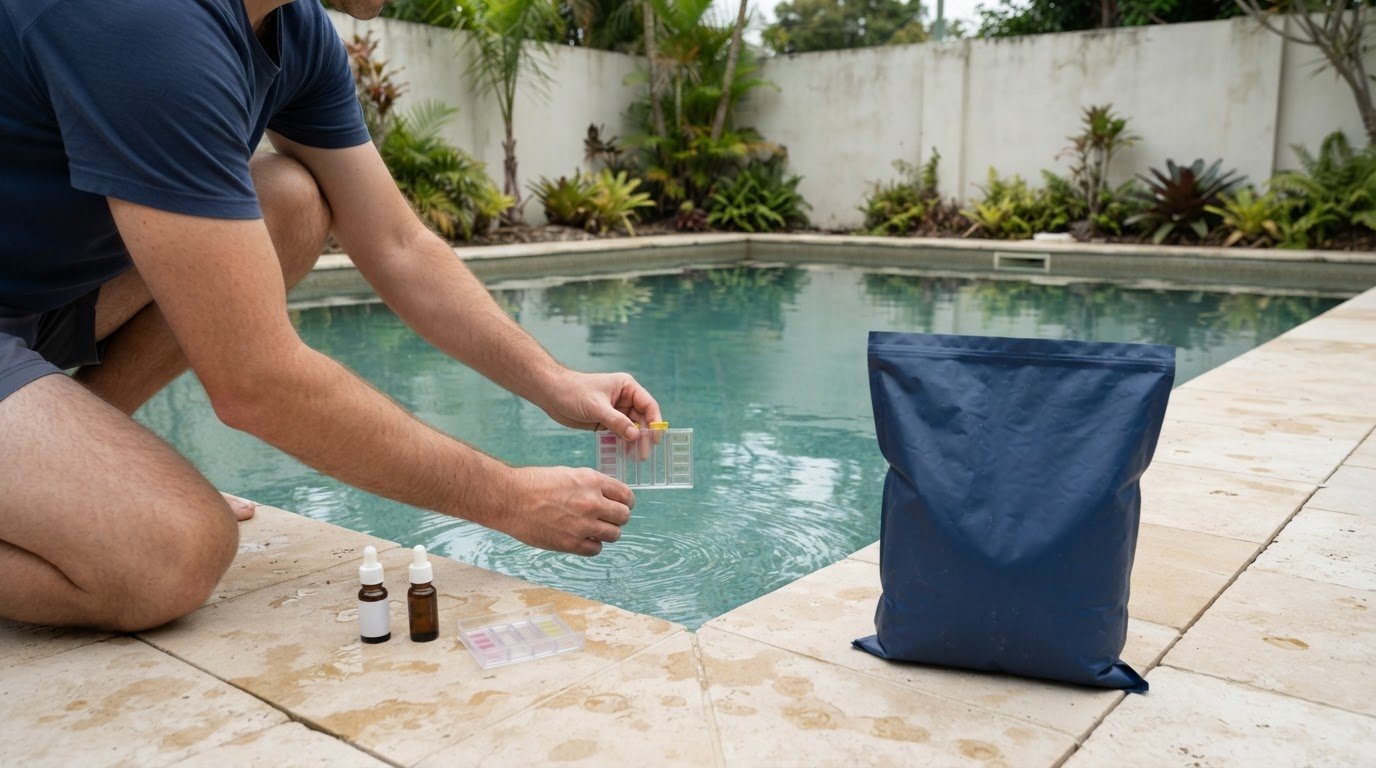
Magnesium and calcium both contribute to measured water hardness, making mineral composition relevant beyond the pool’s name. Regular water testing helps pool owners monitor mineral balance and maintain the water appropriately. Testing can show whether mineral levels remain balanced as water conditions change.
Yes. Rinse with fresh water after swimming in a magnesium pool, then dry off and moisturise. These steps remove pool water from the skin and support its surface after swimming. Showering before swimming may also help minimise irritation. Because magnesium pools use chlorine for sanitation, rinsing is a practical part of post-swim care for people with eczema.
Magnesium pool use for families and children
For families, a magnesium pool is a swimming option, not an eczema treatment. A child’s skin response, supervision and pool safety matter alongside the water type.
There’s no fixed swim duration for eczema. Keep the session brief enough to watch for changes, and leave the water if itching or redness starts. If a child develops irritation during a swim, for example, end the session and rinse their skin with fresh water. Note when symptoms appeared to help identify a pattern across later swims.
Before swimming, check the child’s skin and consider whether an existing flare is already causing discomfort. During the swim, watch for increased redness or persistent scratching. After leaving the pool, rinse with fresh water and moisturise after drying off. If a particular pool visit repeatedly precedes irritation, pause swimming there while the water balance is assessed.
Pool conditions are part of the picture. Irritation after swimming may be associated with pH and chloramine readings, so a mineral label alone can’t explain a child’s reaction. Regular testing helps monitor mineral balance, and balanced water remains relevant to comfort. Avoid adding extra chemical products unless they’re part of the pool’s planned water care.
Safety rules still apply to mineral pools. In Queensland, pool barrier rules and pool safety certificate requirements apply to mineral pools as well as chlorine pools. Include barrier and supervision arrangements in your decision rather than treating the mineral blend as a safety feature.
For a family considering a mineral conversion, review magnesium pool options alongside the child’s skin response and the pool’s water care. A doctor should manage eczema, while a pool professional can help maintain balanced water. Keep those roles distinct: swimming can be part of family recreation, but it doesn’t replace eczema care.
Magnexa: magnesium pool salt
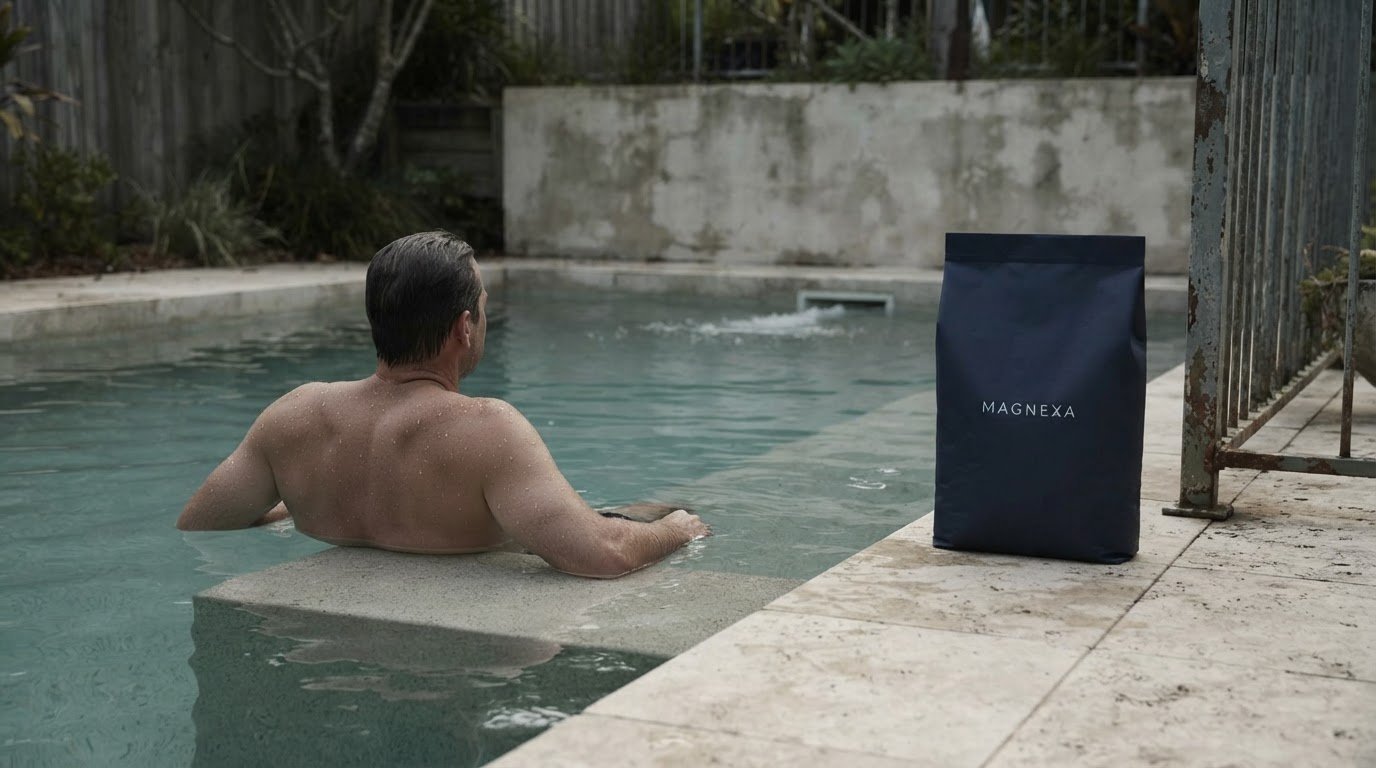
Magnexa supplies magnesium pool salt for pool owners considering a mineral pool or conversion. The mineral blend changes the pool’s composition, but doesn’t make the water chlorine-free or treat eczema.
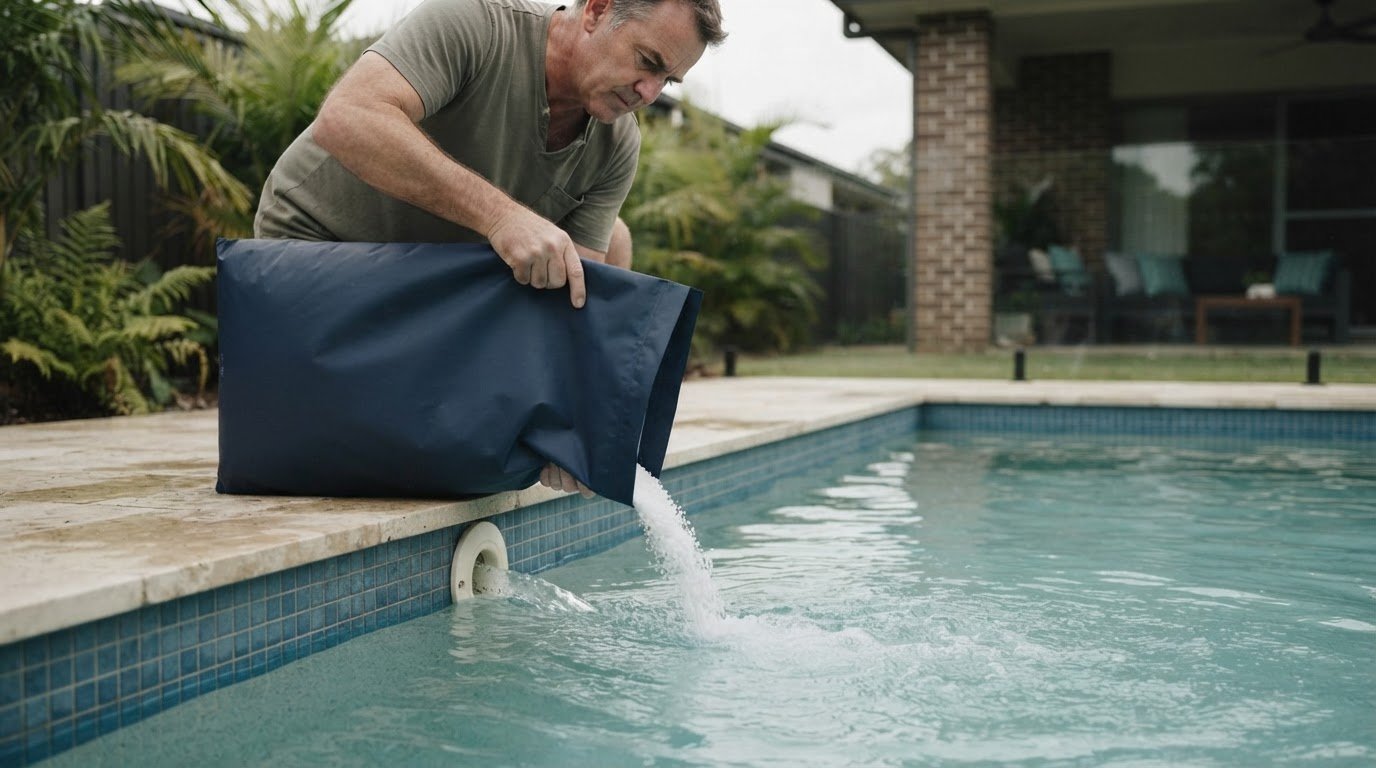
Its magnesium pool salt is available as Pool minerals 10kg and Pool minerals 25kg, alongside Healthy pool salts. The right quantity depends on the pool’s water volume and the mineral balance needed. Maintaining suitable water conditions remains part of pool care, especially when sensitive skin is a concern.
Choose magnesium pool salt for the pool itself, not as a substitute for eczema care. If swimming irritates your skin, focus on the water balance and discuss eczema management with your doctor. For product information, contact Magnexa or visit magnexa.com.au.
Choose your next step with clear expectations
Decide whether you want to change the pool’s mineral composition or seek treatment for eczema. A magnesium pool for eczema relief isn’t a medical plan. Keep pool decisions focused on water care, and discuss eczema management with your doctor. If you or your child notices a pattern after swimming, use that observation to guide a conversation about skin care and pool conditions.
If you’re considering a mineral pool, work out your pool’s water volume and the mineral quantities required before making a change. That gives you a practical basis for planning, rather than relying on the pool label to predict how skin will respond. Magnexa supplies magnesium pool salt and pool minerals in 10 kg and 25 kg bags. Contact Magnexa with your questions about the products and your pool plans. A measured approach helps you make a decision that fits your pool and your family.
Frequently Asked Questions
What Are Magnesium Pools?
Magnesium pools use a magnesium-containing mineral blend as part of their water treatment system. The term describes the pool’s mineral composition, not a separate type of eczema therapy. A pool’s label alone doesn’t explain its full water chemistry, so owners should also consider the sanitising system and water balance when assessing the swimming environment.
What is a Magnesium Pool?
A magnesium pool is a mineral pool where dissolved magnesium chloride contributes minerals and chloride to the water. The pool still needs sanitation, and equipment and water care remain essential to its operation. Changing a pool’s mineral blend, for example, doesn’t turn it into a bath treatment or remove the need to manage the water properly.
What does research say about magnesium baths and eczema?
Research hasn’t established a magnesium pool for eczema relief as an eczema treatment, and large-scale scientific research on magnesium therapy for skin conditions is still needed. Some people report less itching or redness after using mineral water, but personal experiences don’t prove magnesium caused the change. Baths and pools also differ in water conditions and exposure, so reports about one shouldn’t be treated as evidence for the other.
Can magnesium pool water irritate eczema or damage the skin barrier?
Yes, pool water can irritate eczema-prone skin, and a magnesium blend doesn’t rule that out. Anyone considering a magnesium pool for eczema relief should know it isn’t a proven treatment. Changes in redness or dryness after swimming may relate to water pH, chloramine readings or the swimmer’s skin response. If irritation follows a swim, rinse with fresh water and observe whether the pattern recurs.
Is magnesium pool water safe for children with eczema?
A mineral blend alone can’t establish whether swimming suits a particular child’s eczema. Consider the child’s skin response and leave eczema management to their doctor. In Queensland, pool barrier rules and pool safety certificate requirements apply to mineral pools as well as chlorine pools. Account for these requirements and supervision when deciding whether a pool is suitable for children.
What magnesium concentration and pH do Australian magnesium pools typically have?
There isn’t one typical magnesium concentration or pH that describes every Australian magnesium pool. Mineral concentration depends on the product used and the pool’s water volume, while pH is a separate measure of water balance. A pool’s magnesium level, for instance, can’t be used to infer its pH. Regular testing helps owners assess both measures for their pool.
Frequently Asked Questions
More articles