Natural Pool Water Treatment: Myths, Methods and What Actually Works
19 October 2026 · 16 min read
Natural pool water treatment can mean different things, so the first question is what system the term describes. It may refer to a biological swimming pool, where plants and microorganisms help filter the water, or to a mineral pool that uses dissolved minerals as part of its treatment. These are different systems, and “natural” doesn’t automatically mean chemical-free or maintenance-free.
It’s reasonable to want clear water without guessing what’s keeping it suitable for swimming. Confusion often starts when mineral water is presented as though it works like a planted regeneration zone. Magnesium minerals don’t replace filtration, sanitation or testing. A biological system has its own operating needs, too.
This guide explains what natural pool water treatment can involve, how biological filtration differs from mineral treatment, and what each approach can and can’t do. You’ll also find practical questions to help assess a pool’s filtration and sanitation setup, and learn why ongoing testing still matters. If you’re considering a magnesium mineral pool, a dosing calculator can help you work out the mineral quantity for your pool, without confusing minerals with sanitation.
Key Takeaways
- Natural pool water treatment can describe different systems, so identify the method before deciding what it means for your pool.
- Compare biological filtration and mineral treatment by how each works, what the pool setup involves and what upkeep to expect.
- Start assessing a change by recording your pool’s volume, existing equipment, available space and current water-care routine.
- For a magnesium mineral pool, use the pool volume and intended mineral level to work out the quantity needed.
- Understand the water-quality checks and operating requirements before choosing a treatment approach.
What does natural pool water treatment actually mean?
Natural pool water treatment isn’t one standard method. The phrase can describe a biological swimming pool, where a designed filtration area supports water treatment, or a conventional pool using minerals to change the water’s composition. Those are different approaches. The word “natural” alone doesn’t tell you how a pool is filtered, sanitised or monitored.
A biological pool is defined by its system, not simply by the water’s appearance or what has been added to it. In this approach, water moves through biological filtration, often involving a dedicated regeneration zone with plants and filter media, before returning to the swimming area. The layout and components vary between designs. For a broader overview of the concept, see What is a Natural Swimming Pool?
Biological pool treatment uses a designed filter zone and water circulation to support biological processes that help treat pool water. This doesn’t establish that every sanitation step can be removed. The requirements depend on the specific system and its operating guidance.
Biological filtration: plants, media and water movement
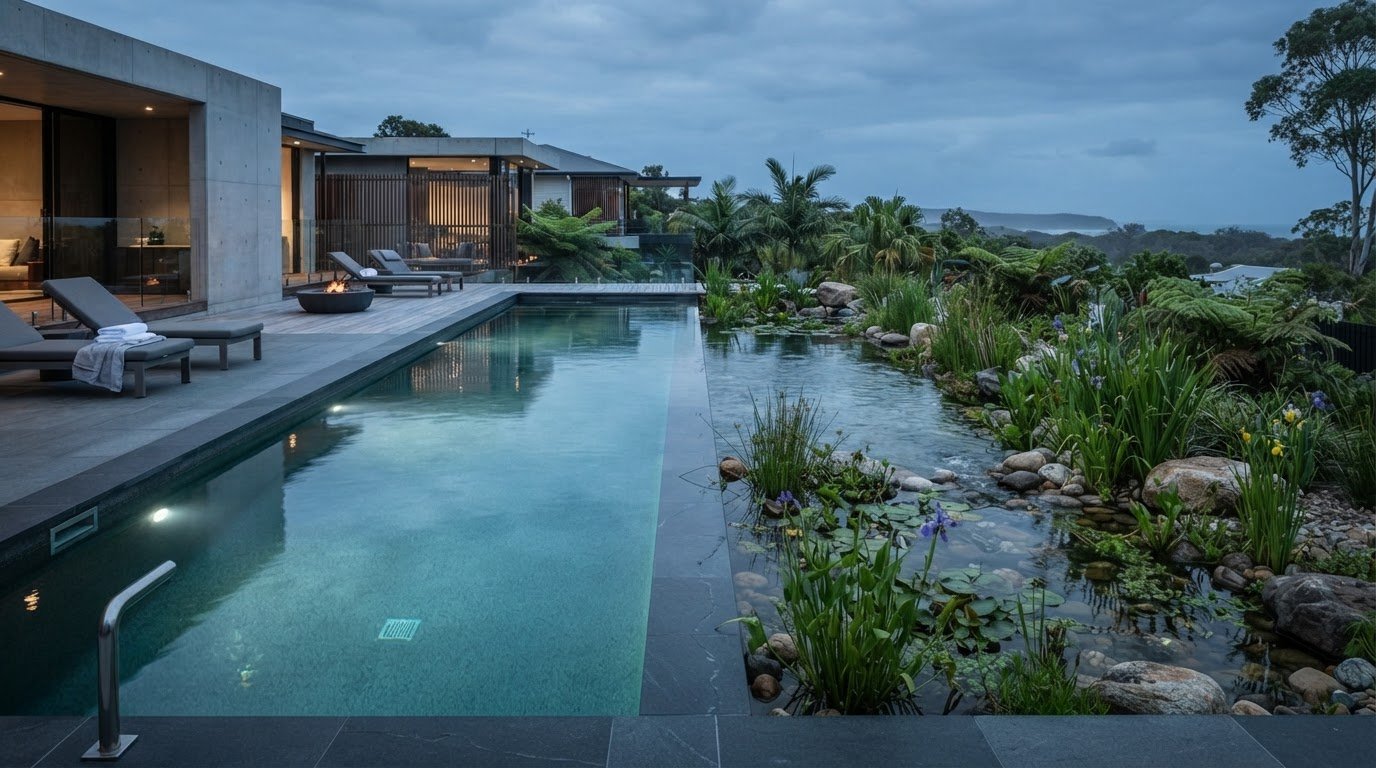
In some designs, a biofilter and regeneration zone work together. Aquatic plants may grow in the zone, while filter media provides a surface for biological activity. A pump or other circulation setup moves water from the swimming area through this treatment zone and back again. It’s an integrated pool design, not a bag of material added to an existing pool.
Plants, media, zone size and water movement aren’t identical in every installation. Assess the system as a whole, including how it operates and what water care it requires. A planted area on its own doesn’t explain how the pool is filtered or whether additional sanitation is required.
Mineral pools: what magnesium minerals do and do not mean
A mineral pool uses dissolved minerals to change the water composition. Adding magnesium minerals doesn’t create a regeneration zone, grow aquatic plants or establish a biological filter. The pool still relies on its filtration equipment and sanitation process, and water quality still needs to be monitored.
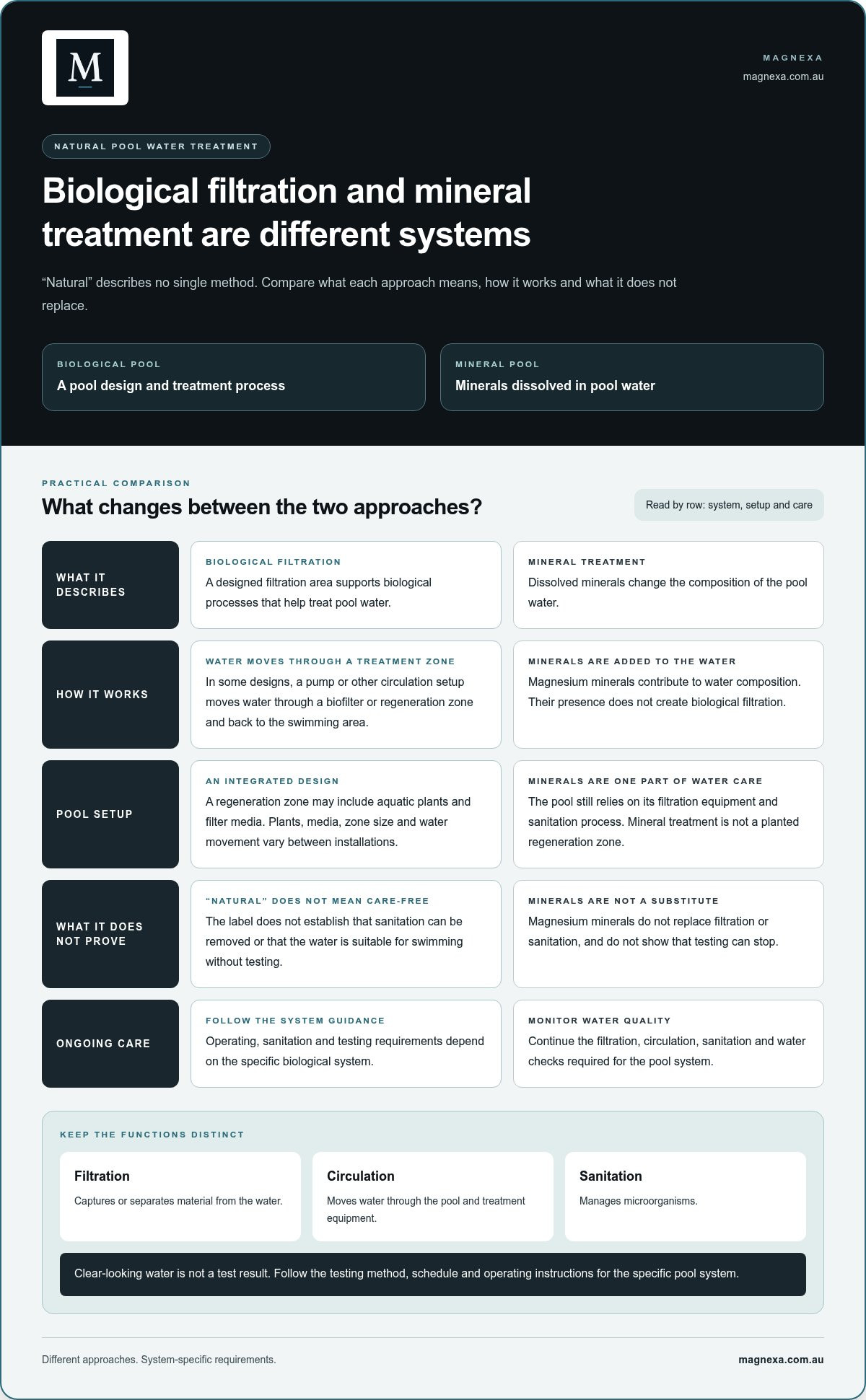
That distinction matters when comparing systems. Biological filtration describes a pool design and a way water is treated as it circulates. Mineral treatment describes what’s dissolved in the pool water. Minerals aren’t a replacement for filtration or sanitation, and their presence doesn’t prove that the water is suitable for swimming without testing.
For a closer look at the mineral option, read this guide to magnesium pool salt. It explains the subject separately from biological filtration, so you can assess what a mineral pool involves without treating the two approaches as interchangeable.
Does natural pool water treatment mean no chemicals or testing?
No. A pool’s “natural” label doesn’t prove that its water needs no sanitation, chemicals or testing. The treatment method describes how the system manages water; it doesn’t establish that the water is suitable for swimming or remove the owner’s responsibility to monitor it.
A pool’s treatment approach describes how its water is managed; ongoing water-quality checks are a separate responsibility. That applies whether a pool uses biological filtration or mineral treatment. Follow the operating instructions for the specific system, including its testing and sanitation requirements. Don’t assume there’s one universal routine based on the word “natural”.
What keeps a pool suitable for swimming?
Filtration, circulation and sanitation perform different jobs. Filtration captures or separates material from the water. Circulation moves water through the pool and its treatment equipment. Sanitation manages microorganisms. A system may combine different methods, so don’t assume that one function automatically covers the others.
Clear water is not a reliable test result. It can look clean while its water quality still needs attention. Use the testing method and schedule specified for your pool system, then respond to the results according to its guidance. For Australian requirements, consult current advice from the relevant state or territory health authority and the instructions for your system. The International Organization for Natural Bathing Waters offers context on natural bathing systems, but local guidance and system-specific instructions remain important.
What mineral treatment does not replace
Magnesium minerals change the composition of pool water. They don’t, by themselves, provide filtration or establish that sanitation is no longer needed. A mineral pool still needs its filtration and circulation processes, regular water-quality checks and the sanitation approach required for that system. Don’t treat mineral content as proof that testing can stop.
When comparing treatment approaches, look at the complete setup: what each component does, how the components work together and what routine the system requires. If you’re comparing treatment approaches, this guide to magnesium versus chlorine pool treatment explores the distinction without treating mineral content as a substitute for water care.
For readers considering magnesium minerals, Magnexa’s pool mineral options include a dosing calculator to help estimate quantities for a pool. The calculator supports dosing decisions; it doesn’t replace testing, sanitation or the care instructions for the pool’s treatment system.
Biological natural pools and mineral pools: what is the practical difference?
Both approaches change how owners think about pool water, but they do different jobs. Biological filtration is a system-level design that directs water through a dedicated treatment area. Mineral treatment adds minerals to the water in a pool. Compare them by looking beyond the label at the pool layout, existing equipment and routine each approach requires.
Treatment mechanism: A biological pool uses a designed filtration or regeneration area to support biological treatment. A mineral pool contains dissolved minerals, which don’t create that filter.
Pool design: Biological filtration may need a separate zone and circulation path. Mineral treatment changes the water composition; it doesn’t, by itself, require a planted zone.
Upkeep: Each system has its own operating requirements. Neither label tells you the exact testing, sanitation or care routine.
Owner considerations: A biological design affects how the pool area is laid out. A mineral approach depends on the existing pool system being suitable for it.
How the two approaches differ in design and operation
A biological pool’s filter and regeneration area form part of the pool design. Water circulates through that area as part of the treatment process. Its footprint and arrangement can affect how much space is available for swimming, so the design needs to account for both zones.
Mineral treatment is a different consideration for an existing pool. Minerals are added to the water, but they don’t supply filtration or sanitation. Whether this approach fits depends on the pool equipment and the system’s requirements, not simply on the fact that minerals can be added.
How to assess the trade-offs for your pool
Start with what you have. Note the pool’s filtration and circulation equipment, the space available around it and the water-care routine you’re prepared to follow. If you’re planning a new pool, consider how a separate biological zone could affect the layout and swimming area. Don’t assume either option has the same installation or upkeep demands in every situation.
A magnesium mineral approach may suit an owner who wants mineral-treated water, provided it’s compatible with the pool system. The minerals don’t replace filtration, sanitation or testing. Consider claims about softer-feeling water carefully, too. See this guide to soft pool water minerals for what mineral content does and doesn’t establish.
For general context on water-treatment practice, the UK-based Pool Water Treatment Advisory Group Standards provide a separate reference point. They don’t decide which approach suits an Australian home pool. The practical choice in natural pool water treatment depends on the complete system, its space and its ongoing care requirements, not a promise that one method is universally better.
How to assess natural pool water treatment for your home
Before changing a pool’s treatment, write down what’s installed and what you want to change. A biological redesign and adding minerals to an existing pool are different decisions. This assessment helps you collect the details needed to compare them without assuming one approach fits every pool.
Questions to answer before choosing a treatment approach
Work through the checklist in order. First define the current setup and your intended change. Then record the practical constraints that affect your options.
- Describe the pool now and the change you’re considering. Note whether you’re exploring a biological redesign or mineral treatment for the existing pool. Be specific about what you want the new approach to do.
- Record the pool volume. Use the best available measurement or calculation. This matters for working out mineral quantities and provides useful context when reviewing system guidance.
- List the equipment in place. Include filtration, circulation and sanitation equipment. Record model details if available, but don’t assume existing equipment will suit a different treatment system.
- Consider the available space. A biological design may need a separate filtration or regeneration area. Note where that could fit and how it might affect the swimming area.
- Write down your current water-care routine. Include what you test, how often you do it and which system instructions you follow. Consider how much time you’re willing to spend on ongoing checks.
For pools in Brisbane, Moreton Bay, the Sunshine Coast, Ipswich, Logan and Redlands, and the Gold Coast, factor seasonal heat and periods of heavy rainfall into routine monitoring. Keep track of changing conditions and follow the testing and care guidance for your specific pool. Don’t rely on a calendar alone or assume conditions affect every system in the same way.
Use pool details to plan mineral quantities
Pool volume matters because dosing is based on how much water needs to reach the intended mineral level. An inaccurate volume can lead to an inaccurate quantity estimate. If you’re unsure of the pool’s volume, resolve that first rather than guessing at the dose.
For a magnesium mineral pool, the pool mineral dosing calculator helps work out quantities using your pool details. Treat dosing guidance as one part of the decision. It doesn’t replace system-specific water testing, sanitation or care instructions.
Magnexa supplies magnesium pool minerals and a dosing calculator for owners considering mineral treatment. Explore magnesium pool minerals once you’ve recorded your pool volume and reviewed the requirements of your existing system.
A practical next step for natural pool water treatment
The next step depends on which system you mean. Biological filtration and mineral treatment are different approaches, so decide whether you’re planning a pool designed around a biological filter or considering magnesium minerals for an existing pool. That distinction helps you focus on the right design information, equipment requirements and ongoing care.
If a biological natural pool is the goal
Start with the whole pool layout. Biological treatment involves a designed filtration system, which may include a dedicated regeneration area and a route for circulating water through it. The design can affect the available swimming space, so consider the site, pool dimensions and how the filtration area fits before settling on a layout.
Research the requirements for the specific biological system and pool design you’re considering. Find out how water moves through its treatment areas, what routine monitoring it calls for and what ongoing care the system needs. A biological approach isn’t a treatment additive for any pool; understand it as part of the pool’s design and operation.
If mineral-treated pool water is the goal
For magnesium minerals, begin with an accurate pool volume and the intended mineral level. Those details determine the quantity to calculate. If the volume is only a rough guess, refine it before estimating how much mineral product is needed. Dosing guidance helps with quantities, but it doesn’t replace the water testing or care instructions for your pool system.
Magnexa supplies pool minerals in 10 kg and 25 kg bags, as well as starter packs. A dosing calculator helps pool owners work out mineral quantities for their pool. Magnexa delivers pool minerals and starter packs across South East Queensland, including Brisbane, Moreton Bay, the Sunshine Coast, Ipswich, Logan and Redlands, and the Gold Coast.
Use the pool mineral dosing calculator to estimate the amount for your pool volume and intended mineral level. This is a practical step for mineral treatment, not a way to design a biological filtration system or set its care requirements.
Whichever route you’re considering, keep the treatment method separate from the pool’s water-care responsibilities. Biological filtration is a designed system; magnesium minerals change the water composition. Neither description, by itself, sets out every requirement for well-managed pool water.
Explore magnesium pool minerals if mineral-treated water is the approach you’re considering.
Choose the approach that fits your pool
Before changing your pool, decide what you want to change: the way water is filtered, or the mineral content of the water. That distinction gives you a clearer starting point for researching equipment, system compatibility and the care routine you’re prepared to maintain. It also helps keep claims about “natural” water in perspective.
For a biological design, focus on how its filtration system will work with your site and pool layout. If you’re considering mineral treatment, start with your pool details and review the options before estimating quantities. In either case, keep water-quality testing and the system’s care instructions part of the plan.
Explore magnesium pool minerals if mineral-treated water is the direction you’re considering. A clear understanding of natural pool water treatment makes it easier to choose a practical next step, without expecting one method to do another’s job.
Take the time to match the system to your pool and your routine. A well-informed choice is a sound place to start.
Frequently Asked Questions
What is natural pool water treatment?
Natural pool water treatment can refer to a pool designed around biological filtration, or the phrase may be used more loosely for mineral-treated water. To identify the actual approach, look at the pool’s equipment and operating instructions rather than relying on its name. Check what processes manage circulation, filtration and sanitation, then follow the care requirements set out for that system.
Does a natural pool use chlorine?
It depends on the pool’s design and its water-care requirements. Some biological systems use a different treatment approach, while other pools may use chlorine or another sanitation method. Don’t infer the answer from clear water or a “natural” label. Check the system’s instructions for the sanitation process it requires, and use current guidance that applies to that pool type and location.
Can magnesium minerals keep pool water clean without chlorine?
No. Magnesium minerals aren’t a standalone filtration or sanitation system, so adding them doesn’t establish that chlorine or another sanitation method can be stopped. For example, a pool owner changing its mineral content still needs to understand how the existing equipment and sanitation process manage water quality. Follow the pool system’s care instructions and test the water as directed, rather than treating mineral additions as proof of disinfection.
Are mineral pools the same as natural swimming pools?
No. Mineral pools contain minerals added to the water; biological natural pools are designed around biological filtration, sometimes with a biofilter and regeneration zone. A mineral addition doesn’t create that filtration design. If you’re comparing the two, look at the actual equipment and pool layout, then compare the ongoing water-care routine each approach requires. The word “natural” isn’t enough to identify how a pool works.
Can you convert an existing pool to natural water treatment?
Possibly, but first define the change. Adding minerals to an existing pool differs from redesigning it around biological filtration, which may affect the layout and filtration setup. Record the pool’s volume and equipment, then consider whether there’s space for any additional treatment area. Use those details to assess the options and their care requirements before deciding what conversion, if any, is suitable.
How do I work out how many magnesium minerals my pool needs?
Start with an accurate pool-volume estimate and the mineral level you’re aiming for. Both affect the quantity required, so avoid dosing from a rough guess. Magnexa’s dosing calculator helps pool owners estimate mineral quantities for their pool. Use its result as dosing guidance, then follow the pool system’s water-testing and care instructions. A quantity estimate doesn’t determine sanitation requirements or replace water-quality checks.
Is natural pool water treatment suitable for South East Queensland?
It may be suitable, depending on the pool design, equipment, available space and the care routine you want to follow. In Brisbane, Moreton Bay, the Sunshine Coast, Ipswich, Logan and Redlands, and the Gold Coast, factor seasonal heat and heavy rainfall into routine monitoring. Conditions can change, so follow the water-quality guidance for your specific system rather than relying on a general schedule.
Frequently Asked Questions
More articles