Pool Minerals for Moreton Bay Pools: Products and Care
21 October 2026 · 15 min read
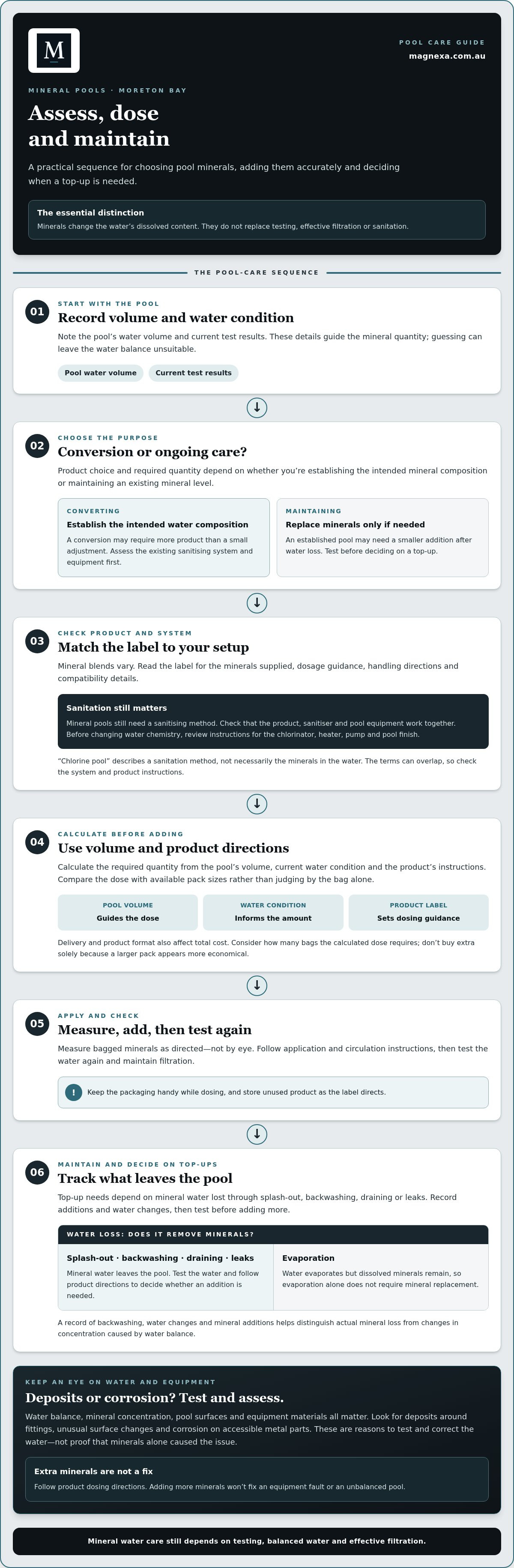
A mineral pool still needs regular water care. For pool minerals in Moreton Bay, choose a mineral salt suited to your existing pool system, and calculate the amount using the pool’s water volume. Minerals don’t remove the need to monitor water balance and filtration.
It’s easy to focus on how mineral water feels and overlook the care it requires. Routine testing and accurate dosing matter whether you’re maintaining an established pool or planning a conversion.
This guide explains the mineral pool products available, how ongoing maintenance works and what affects the amount of minerals a pool needs. It also covers supply across Brisbane, Moreton Bay, the Sunshine Coast, Ipswich, Logan and Redlands, and the Gold Coast, so you can understand the practical steps before choosing a product or planning a change.
Key Takeaways
- Mineral water still needs routine testing, balanced water and effective filtration. Build these checks into ongoing pool care.
- Choose a mineral product to suit your pool and its intended use, then calculate the dose from the pool’s water volume.
- Understand how minerals work alongside the pool’s sanitising system before changing the water or adding a new product.
- Plan for top-ups by considering water loss and maintenance needs, rather than treating the initial mineral dose as the only requirement.
- Before converting a saltwater pool, assess how its chlorinator and other equipment work with the mineral setup.
Mineral pool maintenance and health benefits
Mineral water still needs regular testing, effective filtration and suitable sanitation. Mineral treatment changes the water composition, not the need for routine pool care.
How pool minerals work
A mineral pool contains dissolved mineral salts, but sanitation remains essential. In a typical saltwater pool, a chlorinator converts salt into chlorine; a mineral pool may use a mineral blend with a compatible sanitising system. “Chlorine pool” describes the sanitation method, not necessarily the minerals in the water. These terms can overlap, so check the system and product instructions.
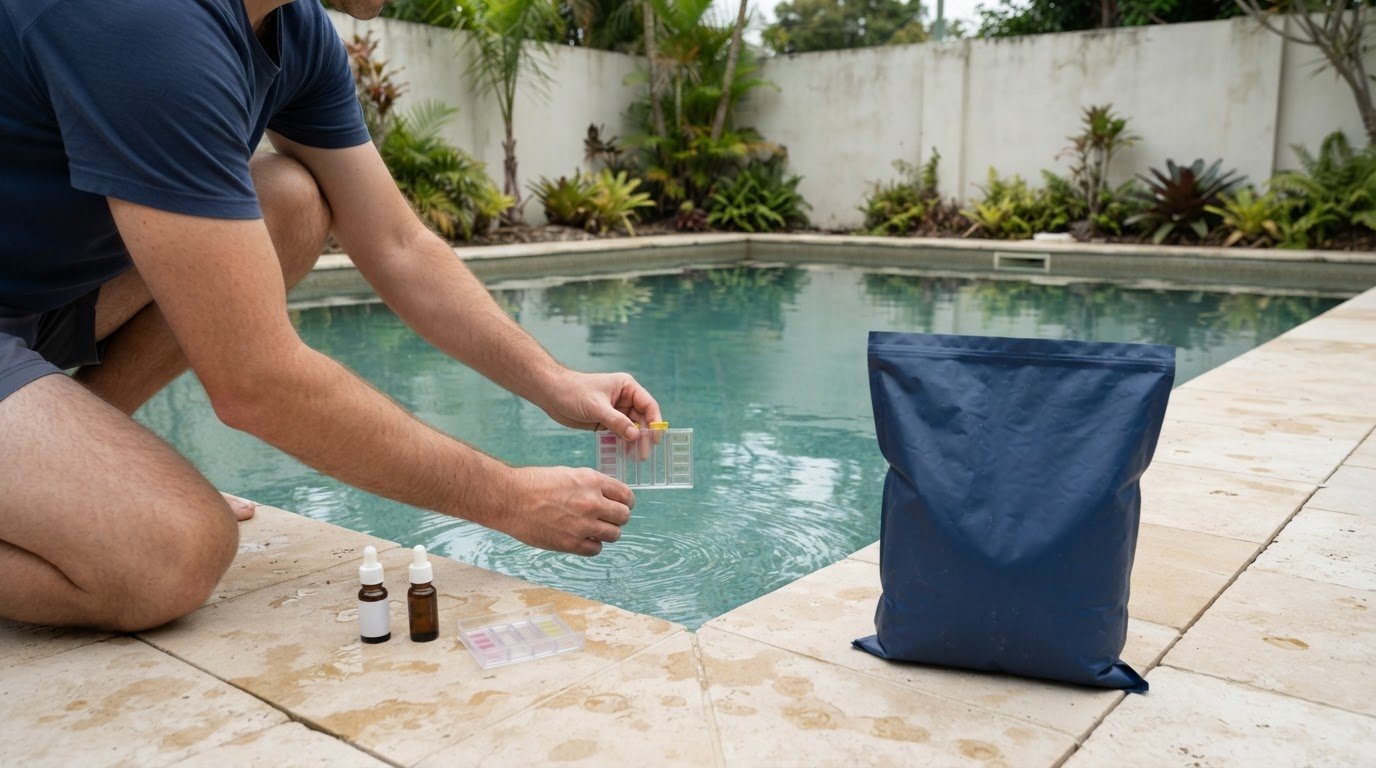
For day-to-day care, follow a consistent sequence: test the water, assess its balance, then adjust it according to the results and product directions. Run filtration as required and remove leaves and other debris before they add to the water’s load. Pool volume and current water condition guide dosing; guessing can leave the water balance unsuitable.
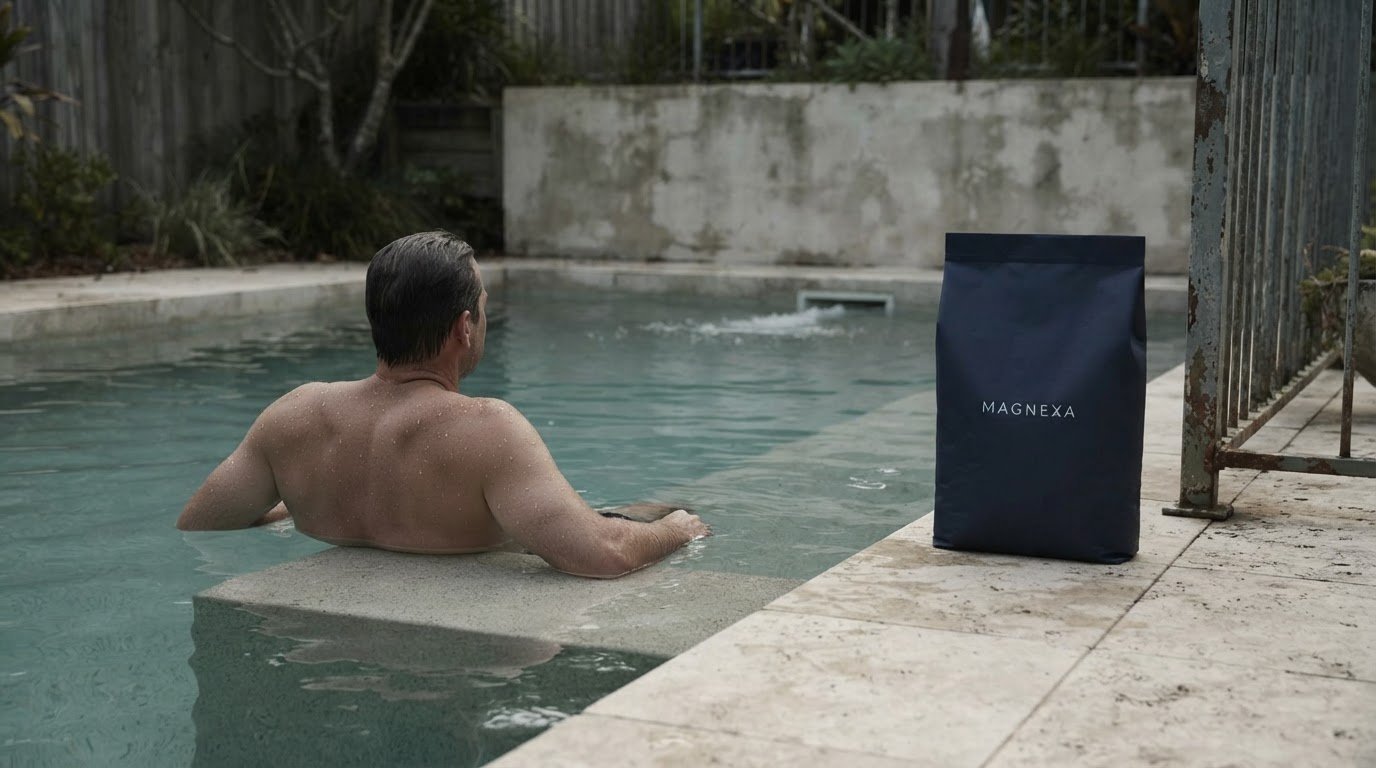
Some people choose mineral salts for the way pool water feels. Magnesium pool salts are described as softening pool water and supporting skin wellness, but they aren’t a medical treatment or a substitute for health advice. To compare the feel, note the difference before and after a properly managed change, while continuing routine testing and cleaning.
A conversion needs planning, not simply a bag of minerals added to an operating pool. To convert a chlorine or saltwater pool, identify the current sanitising system, test the water, calculate the dose from the pool’s volume, then follow the product and equipment instructions. The sanitiser and filtration routine must still suit the new water.
- Record the pool’s water volume and current water test results.
- Use those details to calculate the mineral quantity, rather than estimating.
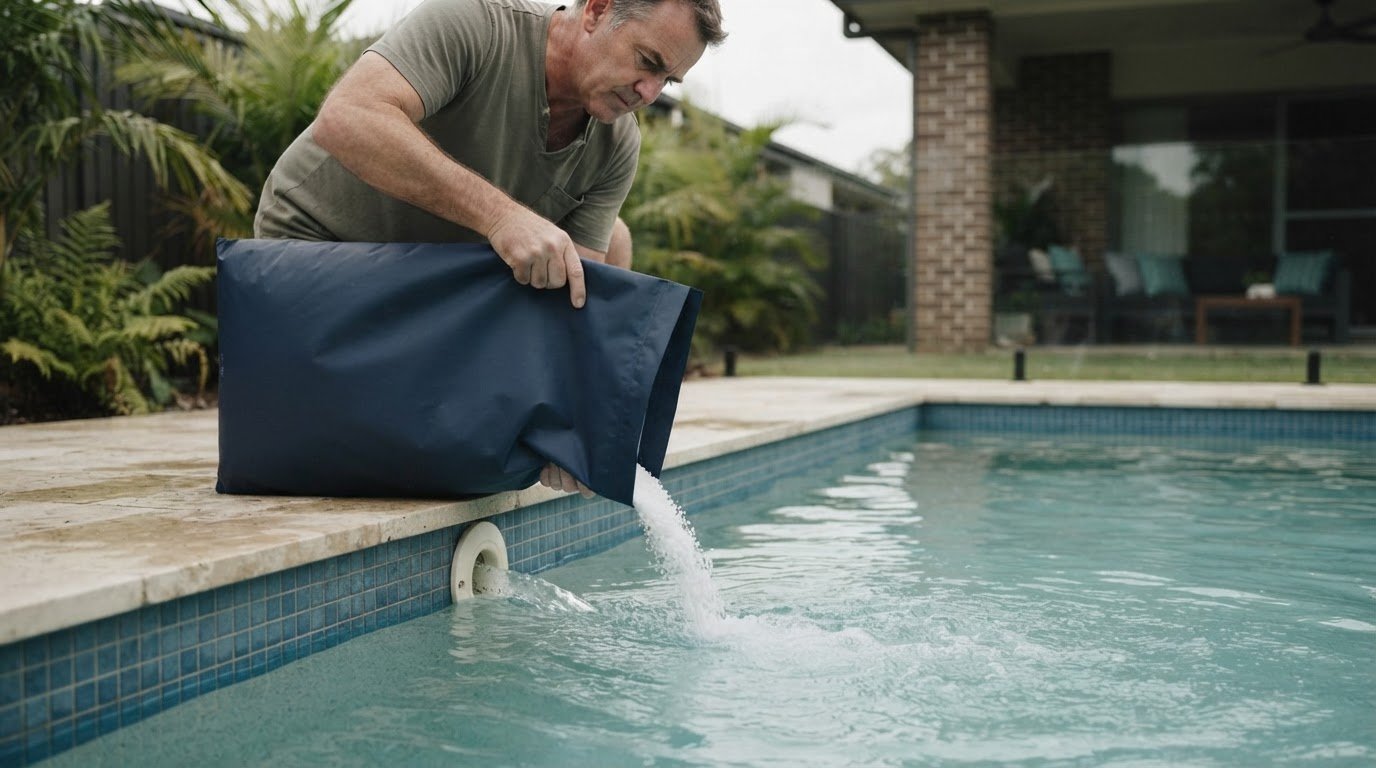
- Add the product as directed, then test again and maintain filtration.
Corrosion, scaling and surface concerns
Corrosion and scale depend on water balance, mineral concentration, surfaces and equipment materials. Poorly balanced water can leave deposits on pool surfaces or fittings, while corrosive conditions can affect metal components. Check instructions for the pool finish, heater, pump and chlorinator before changing the water chemistry.
During maintenance, look for deposits around fittings, unusual surface changes and corrosion on accessible metal parts. Treat these as reasons to test and correct the water, not proof that minerals alone caused the problem. Follow product dosing directions: adding extra minerals won’t fix an equipment fault or an unbalanced pool.
Pool products
Pool mineral products vary in composition, packaging and intended use. In Moreton Bay, compare the product instructions with your pool’s volume and existing sanitising system before choosing.
Start with the product’s purpose. A conversion needs enough minerals to establish the intended water composition, while an established pool may need a smaller addition after water loss. Read the label for dosing guidance and compatibility details. The pool’s volume and current water condition determine the appropriate amount.
Next, check the product form and handling directions. Measure and add bagged minerals according to the instructions, rather than pouring by eye. Keep the packaging handy while dosing so you can refer to the amount, application method and any circulation directions. Store unused product as directed on the label.
Use a simple selection process:
- Record the pool’s volume and current water test results.
- Identify whether you’re converting the pool or maintaining its existing mineral level.
- Compare the label’s dosage guidance with the required quantity.
- Review compatibility instructions for the sanitiser and pool equipment.
Pool mineral product costs
The total cost depends on the quantity required, product format and delivery. A conversion may need more product than a small adjustment because the starting mineral level differs. First calculate the dose from your pool’s volume and product directions. Then compare the quantity needed with available pack sizes, rather than judging cost by the bag alone.
For Moreton Bay pools, delivery also affects the final cost. Consider how many bags the dose requires and whether one order covers that quantity. Don’t buy extra solely because a larger pack appears more economical. Compare the product quantity your pool needs with the intended use.
Ongoing top-up costs
Top-up needs depend on how much mineral water leaves the pool through splash-out, backwashing, draining or leaks. Evaporation removes water but leaves dissolved minerals behind, so it doesn’t by itself require mineral replacement. After water loss, test the pool and follow product directions to decide whether an addition is needed.
Keep a record of mineral additions and water changes. For example, note when you backwash, then test before adding more minerals. This helps distinguish actual mineral loss from a change in concentration caused by water balance. Regular testing makes top-up decisions more precise and helps avoid unnecessary product use.
When comparing pool products, match the dose to the pool rather than guessing from a standard pack. Review pool mineral product options as part of planning the required quantity for your Moreton Bay pool.
What are pool minerals and how do mineral pools work?
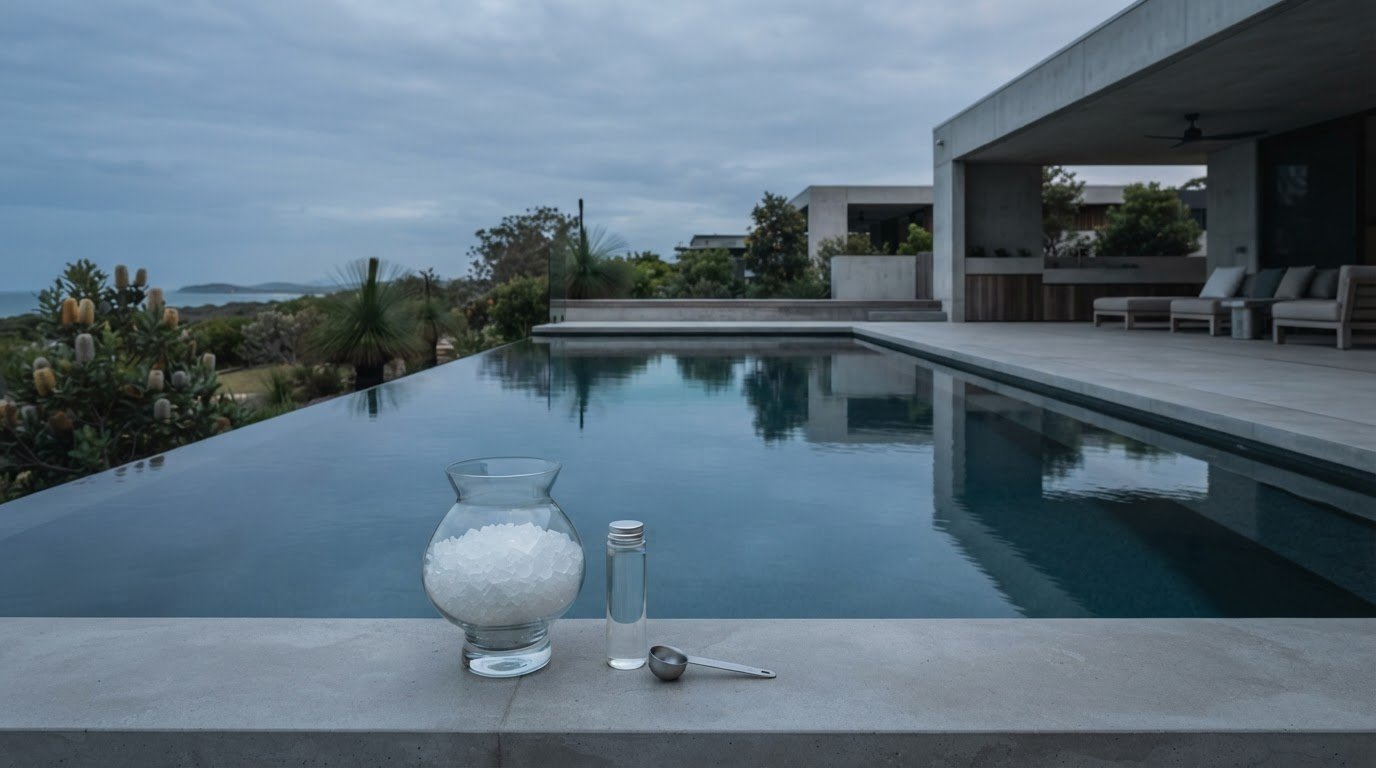
Pool minerals are dissolved salts added to swimming pool water to create a mineral composition. Blends vary, so the product label tells you which minerals they supply and how to use them. A mineral pool still needs a sanitising method. Minerals alone don’t replace testing, filtration or sanitation.
Think of the pool as two systems working together: water treatment and sanitation. Minerals affect the water’s dissolved content. The sanitiser controls microorganisms, while the pump and filter circulate and clean the water. For example, a pool can contain mineral salts and still use a chlorinator to produce chlorine. The exact setup depends on the product and equipment.
“Saltwater pool” describes water containing salt, often used with a saltwater chlorinator. “Chlorine pool” describes a sanitation approach, which may involve adding chlorine directly or generating it with equipment. “Mineral pool” describes water treated with a mineral blend. These categories can overlap, so identify the product and sanitiser instead of relying on the pool’s label.
To understand a mineral system, follow the water’s path. The pump draws water through the circulation system, then the filter traps debris. Sanitising equipment treats the circulating water, and return outlets send it back into the pool. Minerals dissolve in the water; they don’t act as a physical filter. Each component has a separate job.
Mineral content can affect how water feels, but comfortable-feeling water isn’t proof of correct sanitation. Keep testing and follow the product’s directions for dosing and care. If the water looks cloudy, for example, its appearance alone won’t reveal the cause. Check test results, circulation and filter condition before changing the mineral dose.
Before adding minerals, use this practical sequence:
- Find the pool’s volume from its plans or reliable measurements.
- Read the mineral product instructions and calculate the required dose.
- Check how the existing sanitiser and equipment are intended to operate.
- Add the product as directed, then circulate and test the water.
That sequence matters during a conversion. Adding minerals to an existing chlorine or saltwater pool doesn’t automatically change its sanitising method. Understand whether the chlorinator will remain in use and how its instructions apply to the new water. Use the mineral blend’s label and equipment manual to guide the setup.
For a Moreton Bay swimming pool, the distinction is straightforward: minerals describe the water treatment, while sanitation and filtration still need their own working components. Understanding those roles helps you assess product instructions, plan a conversion and maintain consistent water care.
How much do pool minerals cost in Moreton Bay, including ongoing top-up costs?
The mineral budget depends on the required dose, product quantity and delivery. For a conversion, calculate the full initial dose using the pool’s water volume and product directions. For an established mineral pool, the amount depends on actual mineral loss. These requirements can differ substantially, so estimate them separately.
Start with your pool volume, then use the product’s dosing instructions to calculate the required quantity. Compare it with available bag sizes and work out how many bags cover the dose. The total product cost depends on the quantity purchased. Don’t substitute a standard pool size for calculating your own volume.
For a Moreton Bay address, include delivery in your purchase calculation. Add the delivery charge shown for the order to the product cost. When comparing order sizes, consider the full delivered total and the quantity your pool actually needs. Surplus product ties up money and requires suitable storage and handling.
Ongoing top-up costs
Top-up spending depends on mineral water lost from the pool, not simply the passage of time. Splash-out, backwashing, draining and leaks can remove water containing dissolved minerals. Evaporation leaves minerals behind, so topping up after evaporation alone can add more than needed. Test the water after water loss before deciding whether to add minerals.
Keep a simple record to make future purchases easier to estimate. Note when you backwash, drain or refill, then record the water test and any minerals added. For example, after a partial refill, test before dosing. This links product use to an actual change rather than an assumed routine, helping prevent unnecessary additions.
Keep the initial conversion and ongoing additions as separate budget items. The conversion calculation uses the pool’s starting water and target dose. A later top-up is based on the measured condition after water loss. This makes a seasonal budget more useful than treating every purchase as a repeat of the original conversion order.
To estimate your own total, work through these steps:
- Measure or confirm the pool’s water volume.
- Calculate the required dose using the product instructions.
- Match the quantity to pack sizes and include delivery in the purchase total.
- For future additions, test after water loss and calculate only the needed top-up.
Pool mineral costs in Moreton Bay depend on the quantity, packaging and delivery for the initial purchase, then on measured losses for later additions. Keep your calculations with your water-care records. This gives you a practical basis for budgeting without buying minerals your pool doesn’t need.
Are mineral pools compatible with existing saltwater chlorinators and pool equipment?
A mineral pool can use existing equipment when the product and system instructions are compatible. Check the chlorinator, pump, filter, heater and pool surface before changing the water.
A saltwater chlorinator generates chlorine from salt dissolved in pool water. Mineral blends change the water’s dissolved content, so check whether the chlorinator is designed to operate with that composition. The product label and equipment manual provide the relevant limits. Don’t assume every saltwater chlorinator suits every mineral blend.
Start with the chlorinator model and its operating instructions. Check the required water conditions and any restrictions on mineral salts. Compare these with the mineral product’s dosing and use instructions. If the equipment has a cell, consult the manufacturer’s guidance on water chemistry and cleaning. A mismatch can affect operation or maintenance.
Other equipment matters as well. Heaters, pumps, filters and automatic dosing systems all contact pool water. Check their manuals for material compatibility and cleaning requirements. For example, a heater may have specific water-balance conditions, while a dosing system may need adjustments if the sanitation method changes. Consider the pool surface materials before conversion, too.
Use this sequence before adding minerals:
- Record the chlorinator brand and model, plus other equipment details.
- Read the equipment instructions for water and mineral requirements.
- Compare those requirements with the mineral product directions.
- Test the pool water and calculate the dose from its volume.
- After dosing, operate and maintain equipment according to its instructions.
Compatibility means more than being able to dissolve minerals in the pool. The chlorinator must still sanitise the water as intended, and filtration must continue circulating it. If converting from manually added chlorine, establish how sanitation will work after the change. Mineral salts alone don’t replace chlorine or filtration.
Watch for warning signs after a change. A chlorinator fault, unusual deposits on a cell or scale on a heater calls for testing and a review of the equipment instructions. Don’t respond by adding extra minerals. Check the water balance and follow the cleaning procedure for the relevant component.
For a Moreton Bay pool, make the compatibility decision from the actual product label, chlorinator model and equipment manuals. That gives you a practical basis for keeping existing components or planning a change. Explore mineral pool products when you’re comparing products for your setup.
Salt water pools have been around for more than 30 years, while Bribie Island Aquatic Leisure Centre in Moreton Bay has three pools. Woodford swimming pool in Moreton Bay has 2 toddler wading pools. These examples do not determine compatibility; equipment manuals and product directions remain the basis for a specific pool.
Magnexa: magnesium pool salt
Magnexa supplies magnesium pool salt and healthy pool salts for pool owners considering mineral water or planning a conversion. The range includes Pool minerals 10kg and Pool minerals 25kg, giving you bag-size options for calculating the quantity your pool needs.
Magnesium pool salts are intended to soften pool water and support skin wellness. They don’t replace sanitation, filtration or routine water testing. Before choosing a product, use your pool’s volume and the product directions to work out the dose, then consider whether the 10kg or 25kg bag suits that requirement. SEQ Delivery supports supply across South East Queensland.
If you’re comparing mineral salt options for your pool, visit Magnexa online.
Make the next pool-care decision with confidence
Before changing your pool, decide what you want the water treatment to achieve and how it fits your existing setup. This makes the choice practical: compare product directions with your pool’s needs instead of choosing by label alone. For pool minerals in Moreton Bay, start with the pool volume, equipment details and your planned water-care routine.
Magnexa offers magnesium pool salt, Pool minerals 10kg and Pool minerals 25kg. Use those product options as a starting point when considering a mineral treatment or planning a conversion. The right next step is to match the product information with your pool’s requirements and make a measured decision.
Contact Magnexa about mineral pools to discuss the available options for your pool. With a considered product choice and a consistent care routine, you can move ahead with a setup that suits how you use your swimming pool.
Frequently Asked Questions
Which pool mineral systems are available in Moreton Bay, Queensland?
Available options include magnesium pool salt, healthy pool salts, mineral bags and starter packs for conversions. Magnexa supplies Pool minerals 10kg and Pool minerals 25kg. Its SEQ delivery covers Brisbane, Moreton Bay, Sunshine Coast, Ipswich, Logan, Redlands and the Gold Coast. A mineral product is only one part of the setup: consider the blend alongside your pool’s existing sanitising system and equipment.
How much mineral salt is needed for a pool, and how often should it be added?
The quantity depends on your pool’s water volume, the product’s dosing directions and the current mineral content. Use a dosing calculator or product guidance to calculate the initial amount instead of estimating from bag size. There’s no fixed top-up timetable: splash-out, backwashing or draining can affect mineral content. Test after these events and add minerals only when results and product directions call for it.
What are the benefits and drawbacks of mineral pools for skin, swimming and maintenance?
Magnesium pool salts are intended to soften pool water and support skin wellness, which may appeal to swimmers who prefer that water feel. They don’t remove the need for sanitation, filtration or routine water care. Consider the practical requirements before switching: the blend must suit your equipment, and you’ll need to follow its dosing directions. For skin concerns, seek appropriate health advice rather than relying on a pool product.
What maintenance, water testing and mineral levels does a mineral pool require?
Test the water regularly and follow the mineral product’s directions for target levels and dosing. Monitor sanitation and water balance, keep filtration operating as intended, and remove debris. After a refill or significant water loss, test again before adding minerals. Evaporation leaves dissolved minerals behind, while draining removes mineral-containing water. Base additions on test results, not the calendar alone.
Frequently Asked Questions
More articles