Pool minerals for Sunshine Coast delivery and start-up
20 October 2026 · 15 min read
A magnesium mineral pool may offer a different swimming experience, but it isn’t a medical treatment. For pool minerals on the Sunshine Coast, focus on choosing the right mineral treatment, calculating the dose for your pool and allowing the system to circulate before swimming.
It’s reasonable to want to know whether magnesium minerals may benefit your skin or help you feel more comfortable in the water. Those outcomes shouldn’t be treated as guaranteed health effects. Water balance and the correct mineral quantity matter.
This guide explains what magnesium mineral pools may offer, how to arrange supply and delivery across the Sunshine Coast, and what to plan for during conversion and start-up. You’ll also learn which details affect dosing and how to take the next steps without guessing.
Key Takeaways
- Magnesium mineral water may feel gentler on skin, eyes and hair, but treat wellness claims as possible benefits rather than medical outcomes.
- Calculate the mineral dose for your pool before adding minerals; the required quantity depends on the pool’s water volume.
- Compare 10 kg and 25 kg bag formats when planning a mineral conversion and delivery to the Sunshine Coast.
- Mineral pools still need sanitisation. Their systems generate some chlorine, and low mineral or salt levels can affect chlorine production.
- After adding minerals, run the pool system continuously for 24 hours before swimming.
A MAGNESIUM MINERAL POOL CAN DO WONDERS FOR YOUR HEALTH?
Magnesium mineral pools are associated with comfort benefits, but they don’t replace medical care. Test mineral levels and water chemistry routinely, and retest after adding minerals or changing the water, following your pool system’s instructions.
Magnesium pool benefit claims
Common claims include water that feels gentler on skin, eyes and hair than harsher pool water. Some sources also describe mineral water as gentler for people with skin conditions such as eczema. These are comfort claims, not evidence that a pool treats a condition.
Magnesium is involved in more than 300 biochemical functions in the body. That role does not establish that swimming in magnesium-treated water delivers a health benefit. Claims that magnesium exposure relaxes muscles or reduces fatigue and tearing should also be treated as possible benefits, not promised results.
Consider the pool’s mineral composition and water balance rather than relying on wellness language alone. Chlorine remains essential for sanitation, even when a mineral pool is promoted as a gentler swimming option.
Magnesium absorption and mineral levels
Transdermal absorption means a substance enters the body through the skin. Swimming in magnesium water alone doesn’t show how much magnesium, if any, reaches the body. Don’t use pool exposure as a substitute for dietary or medical advice about magnesium.
“Dead Sea magnesium” describes a geographic origin. Origin alone doesn’t show whether a mineral product suits a particular pool conversion. For a practical comparison, focus on the product’s stated mineral composition and the levels your pool requires.
Magnesium and potassium are different minerals. A pool’s magnesium reading cannot tell you its potassium level or establish anything about a swimmer’s mineral status. Test pool water for the levels and chemistry relevant to your pool system.
Low salt or magnesium levels can affect chlorinator output. If the system cannot produce enough chlorine, the water may turn green. Retest after mineral additions and water changes, and respond to measured results rather than judging water quality by appearance alone.
Mineral and saltwater pool trade-offs
Both mineral and saltwater pools use chlorine to help keep water clean. Mineral pools are described as using less chlorine than traditional chlorine and saltwater pools, but they still need effective sanitation. A lower-use claim doesn’t mean chlorine can be ignored.
A mineral pool may suit swimmers seeking a different feel in the water. Saltwater systems may be more familiar if you already manage salt levels and chlorinator output. Either way, equipment performance depends on maintaining suitable water chemistry.
Compare the ongoing testing and adjustments involved, not just the pool’s name. Check mineral and salt readings, maintain the required chlorine output, and investigate cloudy or green water promptly. This gives you a clearer basis for weighing comfort against routine care.
Pool supplies delivered to the Sunshine Coast
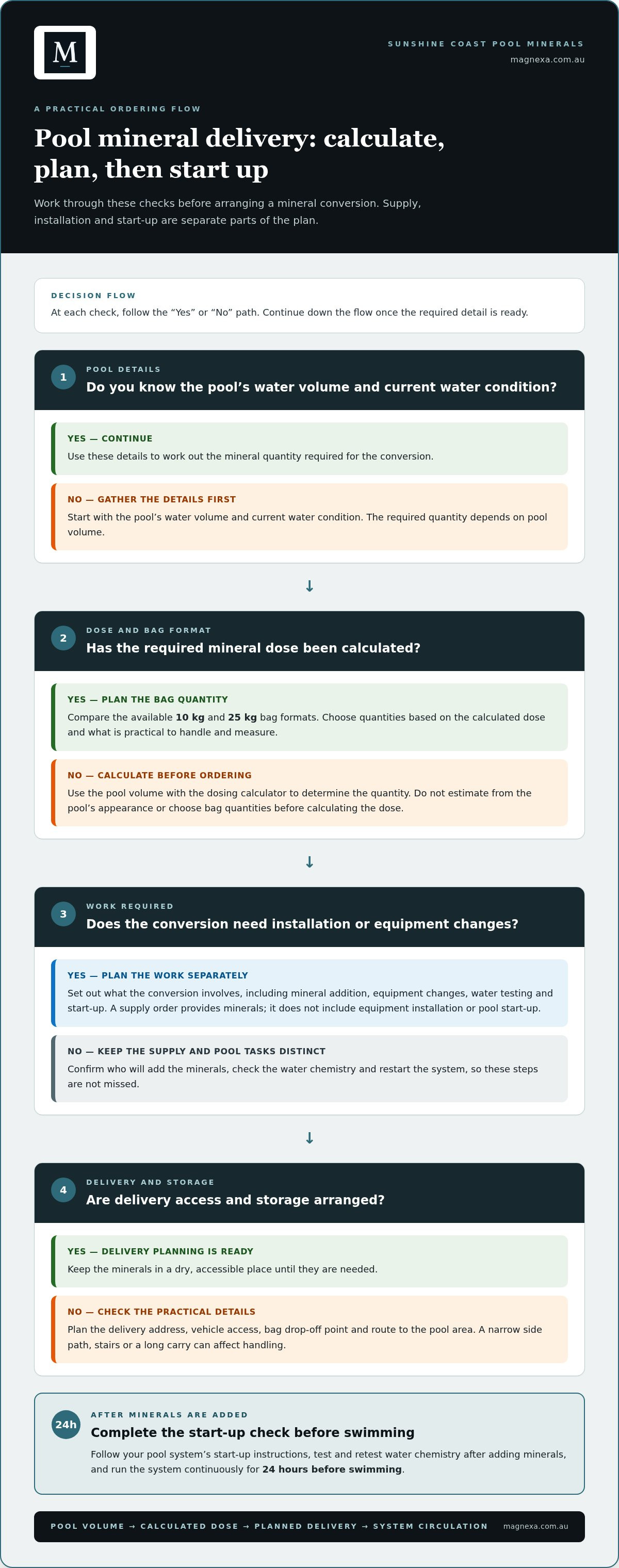
Pool minerals can be delivered across the Sunshine Coast, while installation and start-up are separate tasks. Plan your order around pool volume, the required mineral dose, bag quantities and delivery access. This helps distinguish buying pool supplies from arranging equipment work or a conversion.
Before ordering pool minerals for the Sunshine Coast, consider the product format, dosing method and delivery arrangements. If your conversion also requires installation, define the work involved, including mineral addition, equipment changes, water testing and start-up. These are separate requirements, so plan the supply and work your pool needs.
Start with your pool’s water volume and current water condition. These details determine the mineral quantity required for a conversion. Magnexa’s dosing calculator helps translate pool volume into a quantity to order. Avoid estimating from the pool’s appearance or choosing bag quantities before calculating the dose.
Next, plan for delivery. Note the delivery address, vehicle access, where the bags can be placed and how you’ll move them to the pool area. A narrow side path, stairs or a long carry from the drop-off point can affect handling. Keep the storage spot dry and accessible until dosing.
Bag size affects how an order is divided. Pool minerals are offered in 10 kg and 25 kg formats, which gives pool owners different quantities to work with. Use the dose calculation to determine the total requirement, then consider which bag format makes handling and measuring practical. The number of bags depends on the pool’s required mineral quantity.
Treat delivery and installation as distinct parts of your plan. A supply order provides the minerals; it doesn’t include equipment installation or pool start-up. Before work begins, set out the steps required for your conversion, including who will add the minerals, check water chemistry and restart the system. Clear responsibilities help prevent missed steps.
On the Sunshine Coast, local delivery planning also means accounting for the timing of the conversion. Have the pool volume, dose calculation and bag quantity ready before arranging supply. Keep the minerals stored safely until they’re needed, then follow the pool system’s start-up instructions after addition. The system must run continuously for 24 hours before swimming.
For a supply order, use the pool mineral delivery option as the next step. Have your pool volume and calculated mineral requirement ready so you can plan the appropriate bag quantity and delivery. This keeps the order focused on the actual conversion needs rather than a guess.
What pool minerals are available on the Sunshine Coast, Queensland?
For a mineral pool conversion, the main choice is a magnesium-based pool mineral treatment. The right quantity depends on your pool’s water volume and target mineral level. Measure the pool volume, then calculate the required amount before ordering. A rough estimate can leave the water short of the intended mineral level.
Pool salt and magnesium minerals serve different purposes. A salt chlorinator uses salt to generate chlorine, while a mineral conversion changes the water’s mineral content. The names can cause confusion because both products are added to pool water. Identify your existing system, then match the product to its intended use and dosing instructions.
For a magnesium conversion, check the mineral treatment’s stated composition and recommended dose. Compare that dose with your pool volume and existing water condition. A pool that already contains minerals may need a different addition from a newly filled pool. Water testing gives you a more useful starting point than appearance alone.
Consider how the supply is packaged and handled. Bag size affects lifting, storage and measuring, but not the pool’s calculated mineral requirement. A larger pool may need several bags, while a smaller addition may be easier to portion from smaller bags. Calculate the total first, then choose a practical combination.
Keep the following checks together before selecting a mineral treatment:
- Record the pool’s water volume and current water readings.
- Confirm whether the job is a mineral conversion or routine salt replacement.
- Calculate the required mineral quantity from the pool volume.
- Match the treatment to the pool system’s instructions.
- Plan where bags will be stored and how they’ll be moved to the pool.
Plan Sunshine Coast delivery around the address, access and order quantity. Make sure there’s a suitable place to receive and store the bags before use. If the delivery point is separate from the pool area, plan the carrying route. Keep the bags dry until dosing, and have the required quantity ready before beginning the conversion.
After adding minerals, the pool system must run continuously for 24 hours before swimming. That start-up period makes timing part of the order decision. Calculate the dose, arrange the supply, prepare the storage spot and schedule the addition when the pool can remain unused during circulation. This sequence keeps selection, delivery and use aligned.
Magnesium Pool Conversions is based on the Sunshine Coast in Queensland, Australia. That local base gives readers a point of reference when deciding whom to contact about a mineral conversion. Location alone does not specify which treatments are currently available, the quantities held or delivery arrangements, so confirm those details directly before planning a purchase. Keep the pool volume and current water readings ready when making an enquiry; those details help frame a discussion about the amount needed and the treatment suited to the pool system.
Are mineral pools compatible with existing salt chlorinators and pool equipment?
A mineral conversion doesn’t automatically make every existing salt chlorinator compatible. Start with the chlorinator’s operating instructions and the mineral treatment’s required water levels. The key question is whether the system can produce enough chlorine at your pool’s actual salt and magnesium levels. Low levels can reduce chlorine production and leave the water vulnerable to turning green.
Check the equipment before adding minerals. Identify the chlorinator model, read its stated operating range and note the current water readings. Compare those readings with the mineral treatment requirements. This gives you a practical basis for deciding whether your existing system can run with the converted water. Don’t assume a chlorinator’s salt setting also measures magnesium.
The mineral dose and chlorinator performance are related through water chemistry, but they aren’t the same measurement. Reaching a target mineral level doesn’t automatically mean the salt level is suitable for chlorine generation. Test both relevant levels and follow your pool system’s instructions. If the chlorinator reports low salt, respond to that reading rather than relying on the magnesium dose.
Low salt or magnesium levels can prevent pool chlorinators or other equipment from producing enough chlorine to keep the water clean. A green pool can result when sanitation falls short. Compatibility is therefore an operating question, not simply whether a chlorinator is installed. The system must run within its stated conditions while the pool maintains suitable water chemistry.
Use this sequence before conversion:
- Record the chlorinator make and model.
- Read its operating instructions for the required water conditions.
- Test the pool water and note current salt and mineral readings.
- Calculate the mineral quantity from the pool volume.
- After dosing, check readings again and monitor chlorine production.
For example, a pool with a salt chlorinator and low salt readings needs attention to its salt level, even if magnesium has been added. Don’t treat more magnesium as a substitute for salt required by the chlorinator. Conversely, a suitable salt reading doesn’t confirm that the pool has reached its intended mineral level. Each result answers a different question.
Also keep the whole circulation system in view. The chlorinator works as part of the pool’s equipment, so check the pump and system instructions during start-up. Once minerals are added, the system must run continuously for 24 hours before swimming. Use that circulation period to review the water readings and confirm the system is operating as directed.
Do mineral pools still require chlorine or other sanitiser
Yes. A magnesium mineral pool still needs sanitation. Its system generates chlorine to help keep water clean and prevent algae and bacteria. Minerals change the water’s composition, but they don’t remove the need to manage chlorine production and water chemistry.
Mineral pools are described as using less chlorine than traditional chlorine and saltwater pools. “Less” doesn’t mean chlorine-free. Keep the chlorinator operating as directed, and test the water according to your pool system’s instructions. A mineral reading alone can’t show whether the pool has enough chlorine for sanitation.
Keep the readings separate. Mineral and salt levels affect whether a chlorinator can produce enough chlorine, while a chlorine test shows the sanitiser level in the water. Low salt or magnesium levels may prevent the equipment from producing enough chlorine. If production falls short, algae and bacteria can become a problem and the water may turn green.
Use a consistent check after adding minerals or adjusting the system:
- Measure the pool’s relevant mineral and salt levels.
- Test chlorine using the method specified for the pool system.
- Compare each result with the system’s operating instructions.
- Adjust the pool according to those instructions, then retest.
Don’t rely on water appearance as your only test. Clear water doesn’t provide a chlorine reading, and a green appearance signals a problem that needs attention. For example, if the chlorinator isn’t producing enough chlorine because salt or magnesium levels are low, correct the water condition and check the system’s output. Adding more minerals without measuring the water can miss the cause.
Chlorine demand can vary with pool conditions, so follow the product and equipment instructions instead of applying a fixed dose by guesswork. Keep a record of readings and adjustments. A simple log helps show whether chlorine levels change after mineral additions, water top-ups or chlorinator adjustments. Use those results to guide your next test and adjustment.
After minerals are added, run the pool system continuously for 24 hours before swimming. This start-up circulation period doesn’t replace ongoing sanitation. Check the water after circulation, then continue testing and maintaining chlorine as directed. A mineral conversion is complete only when the water and chlorinator are both operating within their required conditions.
For a mineral conversion, choose magnesium pool minerals based on your pool’s calculated dose. Correct quantities help you manage the mineral reading alongside the chlorine system, rather than treating minerals as a substitute for sanitiser.
Pools By Design says lower chlorine use in mineral pools means concrete pool walls and floors need maintenance or resurfacing less often. Use enough stabilised chlorine tablets in floating dispensers for the pool size; larger pools may need extra dispensers, and tablets are advised every 7-14 days depending on water temperature and quality. With low salt, owners are advised to turn down the chlorinator cell output or percentage, because running the cell with low salt may cause damage or void the warranty.
Installing a magnesium pool conversion system can take around 2 to 3 hours, depending on existing equipment and chlorinator and cartridge variations. Recent widespread rainfall, logistical problems, employee shortages, price increases and shortages of other products have affected pool salt supply in Australia.
Magnexa: magnesium pool salt
Magnexa is the natural next step if you’re planning a magnesium mineral conversion and need the pool minerals to suit your order. The range includes magnesium pool salt and Healthy pool salts, with Pool minerals 10kg and Pool minerals 25kg bag options.
Start with your pool’s water volume and calculated mineral requirement. Then choose a bag format that makes the quantity practical to handle and add. This keeps the order aligned with your pool’s needs rather than an estimate. Magnesium pool salt supplies minerals for the conversion; it doesn’t replace chlorine or ongoing water testing.
For product details or help with your order, contact Magnexa.
Plan your pool conversion with the right supply
Make your next step a clear conversion plan. Note your pool’s water volume, the mineral quantity you intend to add and how the bags will reach the pool area. This gives you a practical basis for organising supply and scheduling the work. For pool minerals on the Sunshine Coast, match your order to the pool’s calculated needs rather than choosing a quantity by guesswork.
Magnexa offers magnesium pool salt, including Pool minerals 10kg and Pool minerals 25kg bags. Choose the format that suits your calculated requirement and handling needs. The Dosing Calculator can help determine the mineral quantity for your pool.
If you’re ready to work out the supply for your conversion, contact Magnexa about pool minerals. A clear plan puts the next decisions in order, so you can move ahead with the pool conversion at your own pace.
Frequently Asked Questions
Which Sunshine Coast pool shops sell pool minerals?
Magnexa supplies magnesium pool minerals directly, with delivery across South East Queensland, including the Sunshine Coast. Its range includes 10 kg and 25 kg bags. If you’re comparing supply options, distinguish mineral products from ordinary pool salt, as they serve different purposes. Before ordering, note your pool volume and the product quantity you need. Magnexa’s Dosing Calculator can help work out the mineral amount for your pool.
What mineral concentration is recommended for a mineral pool?
Use the target concentration specified for the mineral product and conversion method, rather than applying one figure to every pool. The required amount depends on your pool’s water volume and existing mineral levels. For example, a pool that already contains magnesium may need a different addition from a freshly filled pool. Use Magnexa’s dosing calculator with your pool details, then follow the product’s dosing directions to calculate the amount to add.
Frequently Asked Questions
More articles