SEQ Pool Mineral Suppliers for Softer-Feeling Water
25 October 2026 · 15 min read
Mineral pool water still needs chlorine. When comparing SEQ pool mineral suppliers, check that the mineral product suits the pool system. Magnexa’s magnesium minerals work alongside a reduced chlorine level, supporting a softer feel without eliminating chlorine.
If you want a softer-feeling swim, the mineral product is only part of the decision. Equipment compatibility and your pool’s existing setup also matter. This guide explains how mineral pools work, what to consider when choosing a supplier, and what’s involved in converting an existing pool. It also covers mineral quantities and ongoing water care, so you can assess the practical steps before choosing a supply option.
Key Takeaways
- Mineral pools use dissolved minerals to generate chlorine, but still need a minimal amount of chlorine for sanitisation.
- Match the mineral blend to a chlorinator cell rated for that blend before planning a conversion.
- The amount of minerals needed depends on the pool, so work out the required quantity before estimating the total supply cost.
- Compare suppliers by product type, bag size, delivery details and how clearly they explain what their mineral blend is suited to.
- Mineral levels need monitoring over time, alongside routine water testing and filtration-system upkeep.
Pool minerals
Mineral pool systems use dissolved minerals, such as magnesium and potassium, in the water. A mineral chlorinator generates chlorine from those minerals to sanitise the pool. Minerals don’t replace chlorine. Mineral pools still need chlorine to maintain sanitisation. That distinction matters when comparing systems or planning a conversion from a conventional salt pool.
The mineral product must suit the equipment. A chlorinator cell needs a manufacturer rating for the particular mineral type in the pool. A standard salt chlorinator rated only for sodium chloride operates outside its specification with a magnesium product. Filter media must also match the system manufacturer’s specification. Check compatibility before adding minerals.
Converting an existing pool typically involves adding a mineral system or mineral generator to its filtration system. The minerals don’t change pool hydraulics, so the pool uses the same circulation pump. Before the first mineral dose, check the chlorinator cell rating and filter media specification against the intended product. This helps identify any equipment changes needed.
- Mineral blend: Identify whether the pool uses magnesium, potassium or another specified mineral combination.
- Chlorinator: Match the cell rating to that particular blend, rather than assuming a sodium-chloride rating applies.
- Filter media: Follow the system manufacturer’s specification for the filtration setup.
- Sanitisation: Keep chlorine generation and the pool’s ongoing sanitisation requirements in view.
Mineral systems can also operate alongside supplementary oxidation, such as ozone or advanced oxidation. In that arrangement, the mineral chlorinator supplies residual sanitiser. Supplementary oxidation doesn’t remove the chlorinator’s role. Understand how each part contributes to water treatment before changing the system.
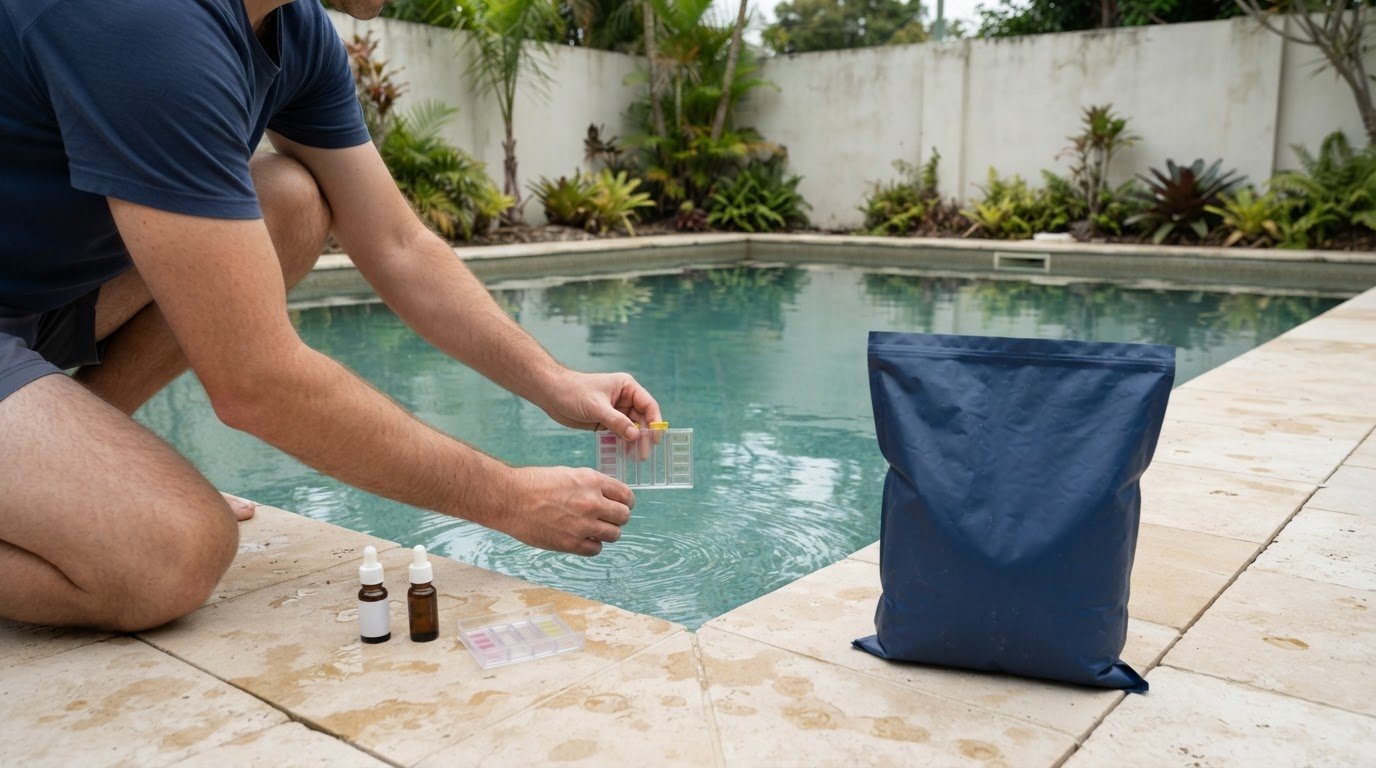
Regular care still includes water testing, filtration-system upkeep and general pool maintenance. Mineral pools aren’t maintenance-free. Use the test kit for your system to track mineral levels. Top up when the test kit shows they have decreased, following the system instructions rather than a fixed calendar schedule. This bases each addition on measured pool water.
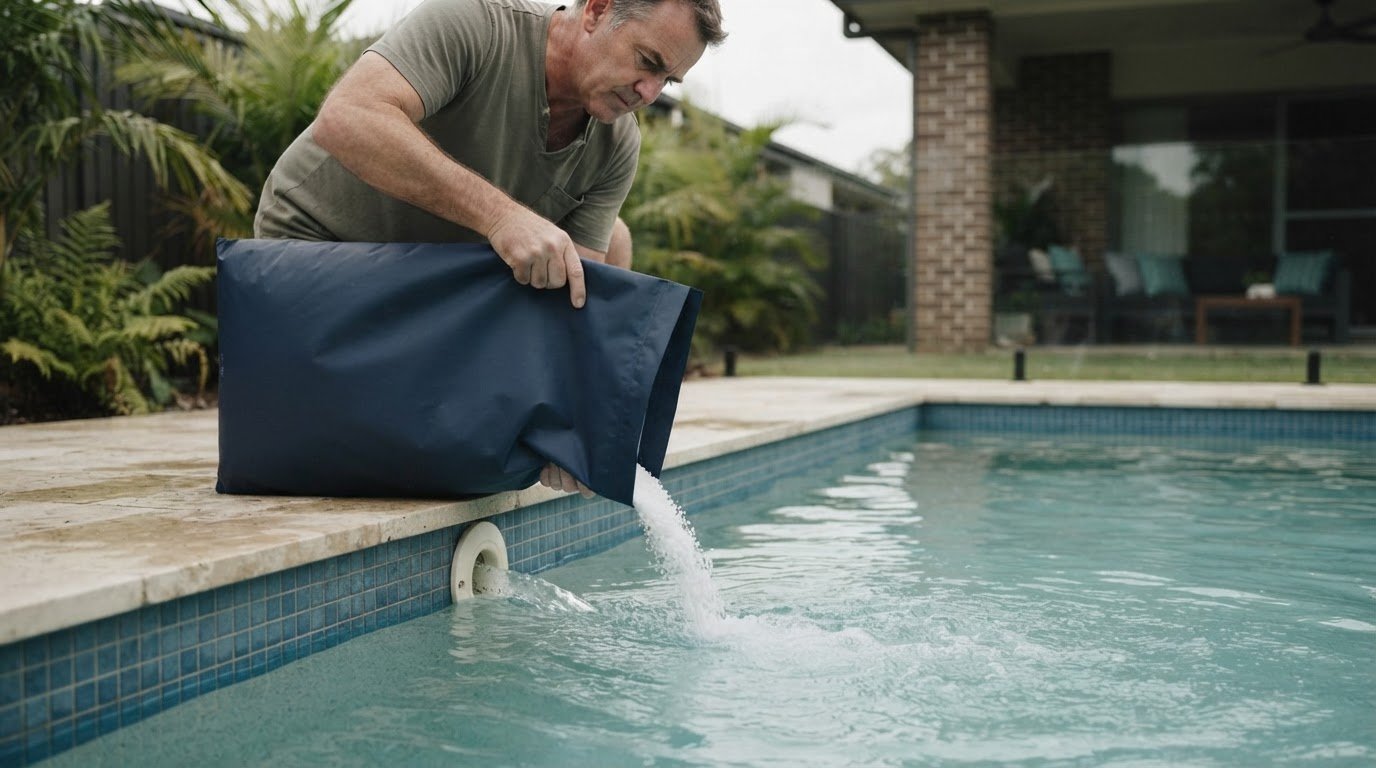
How do you add pool minerals and maintain the recommended levels? Use the mineral system’s test kit to check whether levels have fallen, then add minerals according to the system instructions. Retest and continue the pool’s normal water-care routine, including filtration upkeep and sanitisation.
For pool owners comparing SEQ pool mineral suppliers, start by confirming the product and equipment requirements. A softer swimming experience depends on more than the mineral name on the bag. The chlorinator rating, filter specification and measured mineral level all affect how the system operates.
How much do pool minerals cost per bag and per pool in South East Queensland?
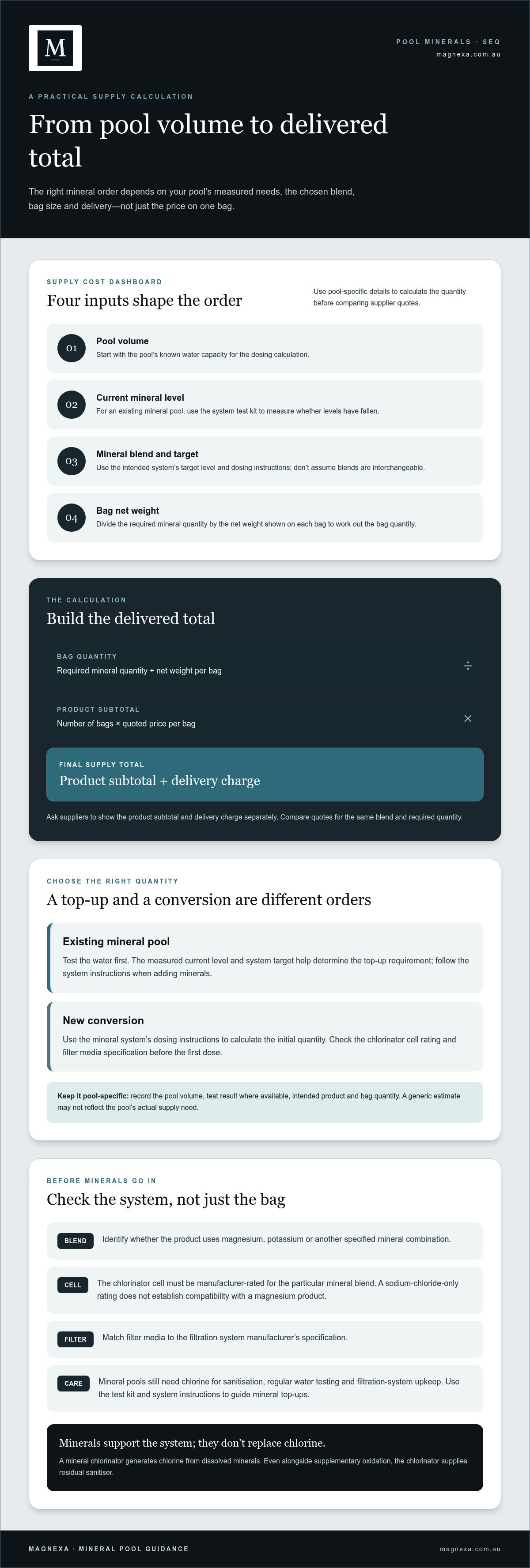
In South East Queensland, the total for a mineral conversion depends on how much mineral the pool needs. Bag price and pool cost are different calculations. A bag has a unit price; the pool total depends on the quantity required, the selected blend and any delivery charge. Work out the required amount before comparing quotes, rather than treating one bag price as the full conversion cost.
Start with the pool’s water volume and the mineral system’s target level. The difference between the current mineral level and the target determines how much more to add. If the pool is already operating as a mineral pool, use its test kit results to assess whether levels have fallen. A measured result is more useful than estimating a top-up from the pool’s appearance.
For a new conversion, use the mineral system’s dosing instructions to calculate the initial quantity. Then divide that amount by the net weight shown on each bag to work out how many bags are needed. If the calculation requires a partial bag, follow the system instructions for accurate dosing and storage of any remaining product.
- Pool volume: Use the pool’s known water capacity as the starting point for the dosing calculation.
- Current level: For an existing mineral pool, use the test kit reading to determine the top-up requirement.
- Blend: Use the mineral system’s target and instructions, since blends aren’t interchangeable by assumption.
- Supply total: Multiply the number of bags required by the quoted price per bag, then account for delivery charges.
Delivery can affect the final amount paid in South East Queensland. Ask for the product subtotal and delivery charge to be shown separately in the quote. That makes it easier to compare suppliers on the same basis. A low unit price may not produce the lowest delivered total if the order needs more bags or carries a delivery fee.
Keep the calculation specific to the pool, not a generic example. A small top-up after testing and an initial conversion are different supply needs. Record the pool volume, test result where available, intended product and bag quantity. These details help calculate the order and prevent buying excess product before the system’s required level is known.
Before ordering, compare the bag quantity with the dosing instructions and include delivery in the final calculation. For a practical starting point, review the available pool mineral options alongside the amount your pool requires.
Keep procurement research separate from the arithmetic for an individual pool: bag quantity, quoted unit price and delivery remain the figures to compare. Full open-market tenders for Seqwater are advertised on the Queensland Government Supplier Portal. If you are checking that route, treat it as tender information rather than a substitute for a pool-specific supply quote. For a direct comparison, ask suppliers to price the same blend and required quantity, and keep the delivery charge as a separate line so the final amount reflects the order you need.
Which SEQ suppliers offer delivery, and what are their delivery fees and areas?
Delivery is a key part of comparing pool mineral suppliers across South East Queensland. Check that the delivery area covers your address and understand how the total is calculated. Magnexa delivers across Brisbane, Moreton Bay, the Sunshine Coast, Ipswich, Logan and Redlands, and the Gold Coast. Four bags or more travel free; the price shown is the total payable.
Don’t treat “South East Queensland delivery” as a complete coverage description. Check whether the supplier’s stated area includes your pool’s address. Magnexa serves Brisbane, Moreton Bay, the Sunshine Coast, Ipswich, Logan and Redlands, and the Gold Coast. Enter your postcode during reservation to see whether your location is covered.
Delivery fees can depend on the destination and the order. Compare the charge against the same order quantity and address each time. A per-order charge, a location-based fee and a fee included in the product total affect the final amount differently. Ask for a delivered total with the mineral quantity and delivery shown separately, so the product price doesn’t obscure the transport cost.
Use these steps to compare SEQ delivery options:
- Enter the delivery location. Use the pool’s suburb or postcode to establish whether it falls within the supplier’s stated service area.
- Set the order quantity. Base it on the pool’s dosing requirement, not an arbitrary bag count.
- Separate product and freight. Record the mineral subtotal and delivery fee as distinct amounts.
- Compare like with like. Use the same address, blend and bag quantity for each supplier.
For example, a pool owner comparing two deliveries should use one delivery address and the same required mineral quantity. If one supplier’s quote bundles freight into its total, ask for the freight component to be itemised. That lets you compare transport costs without confusing them with a different product quantity or mineral blend.
Before placing an order, confirm the delivery address, the number of bags and where the products will be left. Access matters for heavier pool-supply orders. A narrow driveway, locked gate or restricted drop-off point can affect how a delivery is completed. Include those details when arranging delivery, rather than assuming a driver can reach the pool area.
For SEQ pool mineral suppliers, compare whether delivery covers your address and how the full order total is presented. Magnexa delivers across Brisbane, Moreton Bay, the Sunshine Coast, Ipswich, Logan and Redlands, and the Gold Coast. The price shown is the total payable, and four bags or more travel free.
Which pool mineral brands and products do local suppliers stock?
Pool mineral ranges differ by mineral blend, intended system and product format. Magnesium and potassium are examples of naturally occurring minerals used in pool water. Some products combine minerals, while others focus on a particular mineral. Compare the stated composition, not just the wording on the front of the bag. A “mineral” label alone doesn’t tell you whether a product suits your pool system.
Start with the chlorinator requirements. The cell needs a manufacturer rating for the mineral type being used. A standard salt chlorinator rated only for sodium chloride is outside its specification with a magnesium product. Check the product details against the chlorinator documentation before buying. This is more useful than choosing a familiar name without confirming equipment compatibility.
Product formats can serve different purposes. A conversion quantity establishes the pool’s initial mineral level. A top-up replaces minerals after testing shows they have decreased. Some suppliers also package products for conversions. Read the instructions for the intended application, because an initial dose and a maintenance addition are different tasks.
- Single-mineral products: Identify the named mineral, such as magnesium or potassium, and check the system’s compatibility requirements.
- Mineral blends: Read the ingredient or composition details and match them to the chlorinator rating.
- Conversion formats: Check the dosing instructions for a new mineral setup and the required initial quantity.
- Top-up formats: Use test-kit results to determine whether the pool needs additional minerals.
Bag weight affects how a product fits your order. Smaller bags can make a partial top-up easier to handle; larger bags may suit a higher calculated requirement. Compare net weight and dosing instructions, then calculate how many bags meet the pool’s needs. Don’t assume products with different weights provide the same quantity or mineral composition.
Some pool products address water balance rather than supplying the main mineral product. Borates, for example, can act as a pH buffer and work with an algorithmic pH dosing system to simplify pH maintenance. That is separate from adding magnesium or potassium. Check the product purpose before treating an additional water-care product as part of the mineral dose.
For a practical comparison, record the product name, mineral composition, bag weight, intended use and system compatibility. Then compare those details across the products available from local suppliers. This makes product claims easier to assess and helps distinguish a mineral conversion product from a pH-management product. Choose by specification first, then by format and supplier.
How do SEQ pool mineral suppliers compare on price, product quality and customer reviews
Compare suppliers against the same pool requirements, product quantity and delivery address. A bag price alone doesn’t show the total cost of a mineral order. Product composition, bag weight and delivery charges also affect the comparison. Keep those details separate so a lower product price doesn’t hide a higher delivered total.
For price, compare the cost per bag and the full order total. Base the quantity on the pool’s dosing requirement, not an assumed standard order. Include delivery in the calculation, and note whether the quote lists freight separately. If two quotes cover different bag weights or mineral compositions, they aren’t directly comparable until those differences are clear. A comparison of SEQ pool mineral suppliers is more useful when each quote uses the same order details.
Product quality is about fit and specification, not a broad quality label. Check the mineral composition and intended pool system. A chlorinator cell should be rated by its manufacturer for the mineral type being used. A standard salt chlorinator rated only for sodium chloride is outside its specification with a magnesium product. Filter media should also match the system manufacturer’s requirements.
- Composition: Compare the named minerals and blend details on each product label.
- Equipment fit: Match the blend to the chlorinator cell’s manufacturer rating.
- Order basis: Compare equal quantities and bag weights for the same pool requirement.
- Delivered total: Separate the product subtotal from the delivery charge.
Customer reviews can add context about the buying experience, but separate personal impressions from product specifications. A comment about delivery communication, for example, doesn’t establish whether a mineral product suits a particular chlorinator. Look for detailed comments about the same type of purchase, such as bag condition on arrival or how clearly an order was explained.
Read review dates and descriptions together. An account of a mineral order may be more relevant than a comment about a different product. Look for repeated, specific themes across reviews rather than relying on one strongly positive or negative experience. Treat claims about water feel as personal impressions, not a substitute for checking product and equipment requirements.
A simple comparison table can keep the decision grounded. Record each supplier’s product name, mineral composition, bag weight, quoted quantity, delivery charge and relevant review themes. This makes differences between quotes visible. It also stops a favourable review or low bag price from outweighing an equipment-compatibility detail that matters to the pool.
Choose a supplier whose product specifications suit the pool and whose delivered quote clearly covers the required quantity. If one quote lacks a clear product composition or delivery breakdown, compare it only once those details are available. For SEQ pool mineral suppliers, a like-for-like comparison is more useful than a ranking based on price or star ratings alone.
Magnexa: magnesium pool salt
Magnexa supplies magnesium pool salt for pool owners seeking softer-feeling water. Its range includes Healthy pool salts and Pool minerals in 10kg and 25kg bags. Choose a bag format based on the quantity your pool’s mineral system requires, using its dosing guidance to plan the order.
If you’re converting a pool, compare the mineral blend with your chlorinator’s rating before adding it. For an existing mineral pool, use the system’s test kit to guide top-ups. Magnexa’s SEQ Delivery option supports local supply needs across South East Queensland.
For a magnesium-based mineral option, review the available bag sizes and choose the quantity that fits your pool. Visit magnexa.com.au to view the range or contact Magnexa.
Make your next pool-care decision with a clear plan
Before placing an order, write down what you want to change about your pool and what the current system requires. That gives your next step a practical purpose, whether you’re planning a mineral conversion or maintaining an existing setup. Comparing SEQ pool mineral suppliers is more useful when you have a specific blend and quantity in mind, rather than choosing from a product name alone.
Magnexa offers magnesium pool salt, with Pool minerals in 10kg and 25kg bags. Choose the option that fits your intended use and pool system. A measured plan keeps the decision focused on the water you want and the product format that suits the job. For help taking that next step, contact Magnexa about pool minerals. A considered choice now gives you a straightforward starting point for your pool’s mineral care.
Frequently Asked Questions
Which suppliers sell pool minerals in South East Queensland?
Magnexa supplies pool minerals across South East Queensland. If you’re comparing SEQ pool mineral suppliers, consider whether the supplier’s mineral type suits your pool system and whether delivery covers your area. Magnexa’s range includes magnesium pool salt and mineral products in different bag sizes. Its regional delivery covers local pool owners, rather than interstate or nationwide orders. Match the product to your pool’s needs before selecting a quantity.
Where are pool mineral suppliers located in Brisbane, Gold Coast and Sunshine Coast?
Magnexa’s South East Queensland delivery coverage includes Brisbane, the Gold Coast and the Sunshine Coast, as well as Moreton Bay, Ipswich, Logan and Redlands. This regional model means a supplier’s delivery area can matter more than whether it has a shopfront near your suburb. Enter your postcode during the reservation process to see whether your location is covered. The reservation requires no payment upfront.
What types of pool minerals are available in SEQ, including magnesium and mineral blends?
Pool mineral systems can use magnesium, potassium or mineral combinations, but the available product depends on the supplier. Magnexa’s range centres on magnesium pool minerals, not a selection of different mineral blends. Its published batch information gives the magnesium chloride and elemental magnesium content, plus moisture, insolubles and heavy-metal details. Use those specifications to understand the product, then match it to your pool system’s requirements.
Frequently Asked Questions
More articles